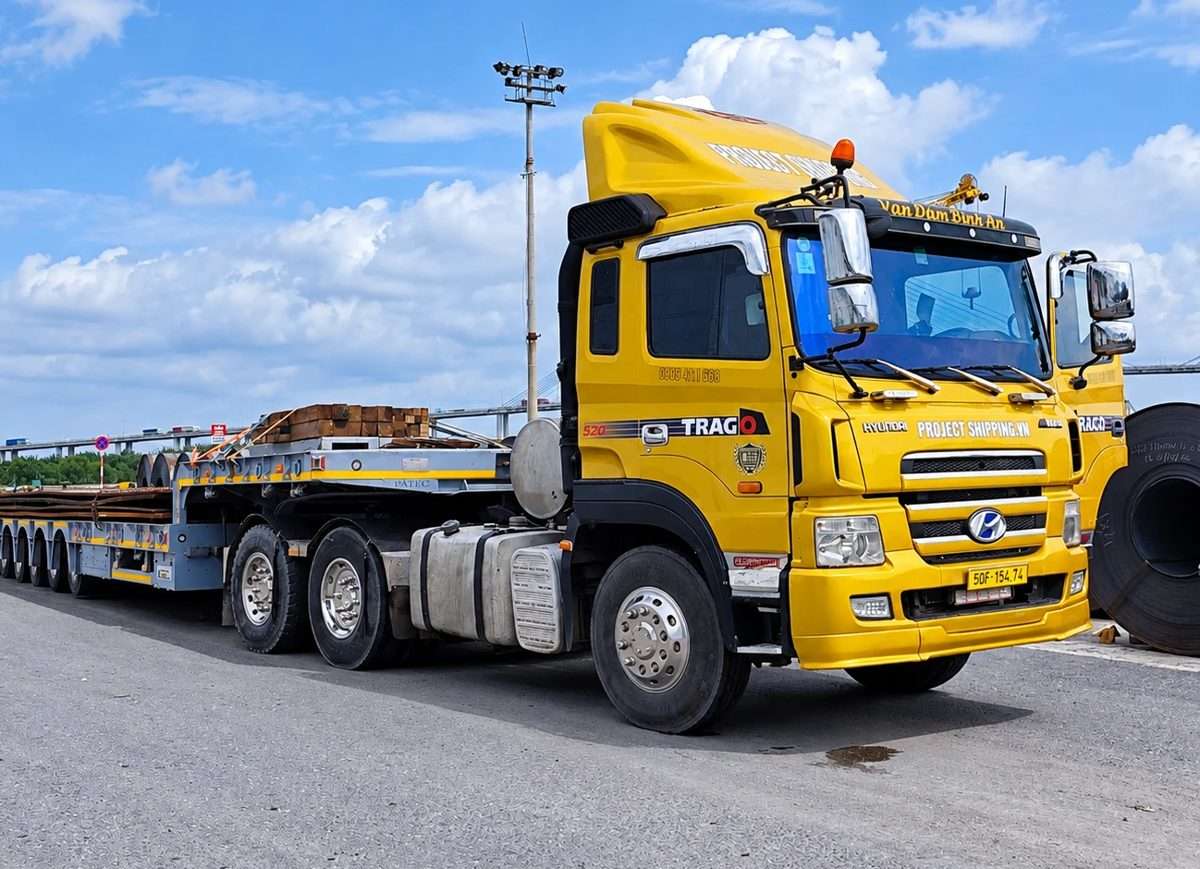
Japan → Vietnam · Kobe · Yokohama · Nagoya · Used and new machinery · Import customs
A used excavator can look cheap in Kobe and become a storage bill in Ho Chi Minh City. Shipping Japan to Vietnam rarely fails at sea. It fails on the machine’s age, its papers and the truck at discharge. We run that Vietnam side.
For Japanese forwarders, machinery dealers, EPC contractors and Vietnamese importers. · Two real excavators from Kobe
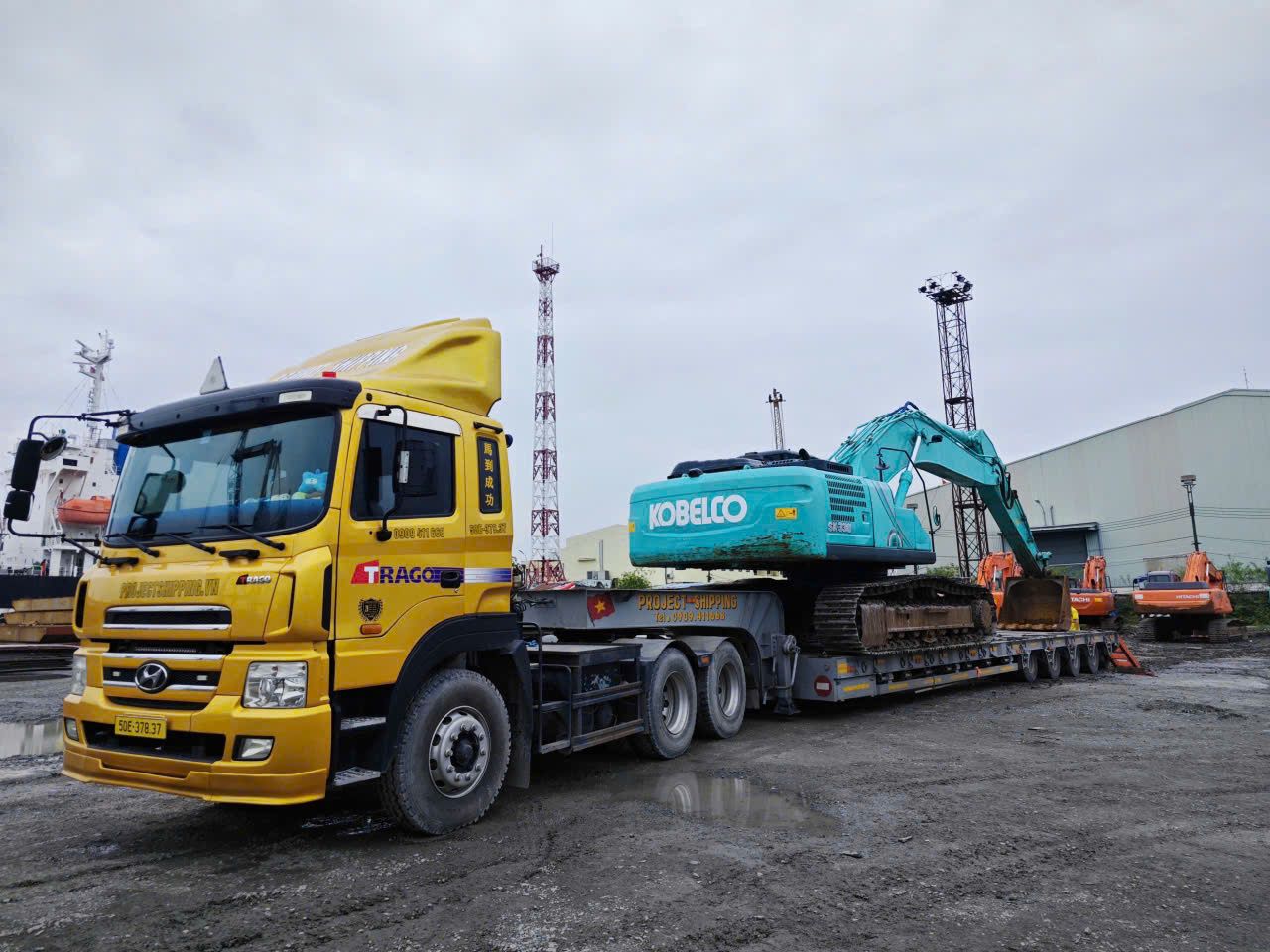
You have found a machine in Japan and a yard or factory waiting in Vietnam. Booking the sea leg takes one email. The harder questions are whether customs will accept the machine, and which truck can carry it out of the port.
This guide to shipping Japan to Vietnam starts from our own files. You will see two used excavators that loaded at Kobe in 2026, the age test a machine must pass, the proof that customs asks for, and the height sum that decides your truck.
These are the Japan-loaded imports we found in the customs records on our current system. Three files is a small sample, so we show them as examples, not as a volume claim. Customer names are removed.
| Cargo | Mode | Route | Customs cleared |
|---|---|---|---|
| Used Kobelco SK330 excavator, 1 piece, 34.7 t | Conventional vessel, unpacked | Kobe → Tan Thuan Dong, lowbed to Cat Lai ward | 28 May 2026 |
| Used Komatsu PC200 excavator, 1 piece, 19.6 t | Conventional vessel, unpacked | Kobe → Tan Thuan Dong, lowbed to Cat Lai ward | 16 June 2026 |
| Small consignment, 12 packages, 113.4 kg | Air | Osaka → Ho Chi Minh City | 6 March 2026 |
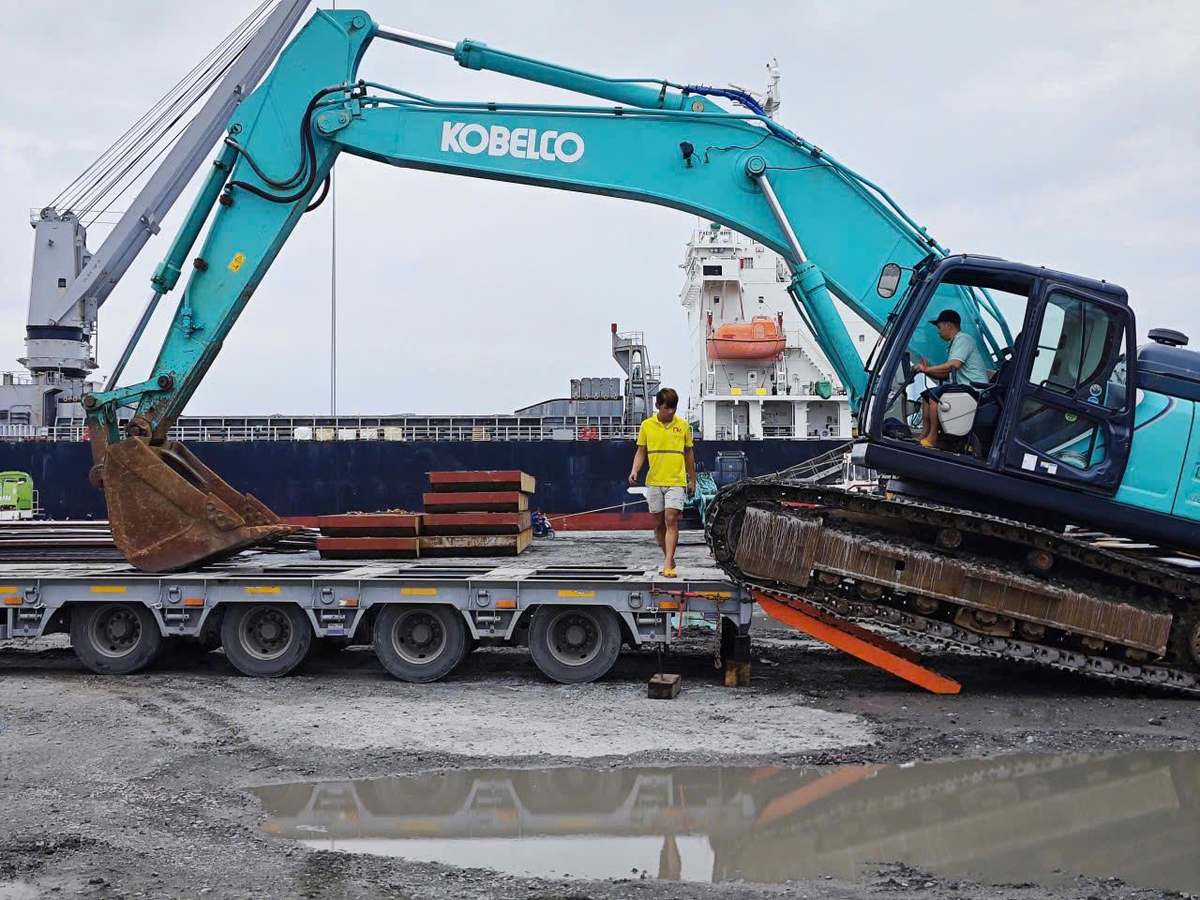
Three points from these two excavators apply to most plans for shipping Japan to Vietnam:
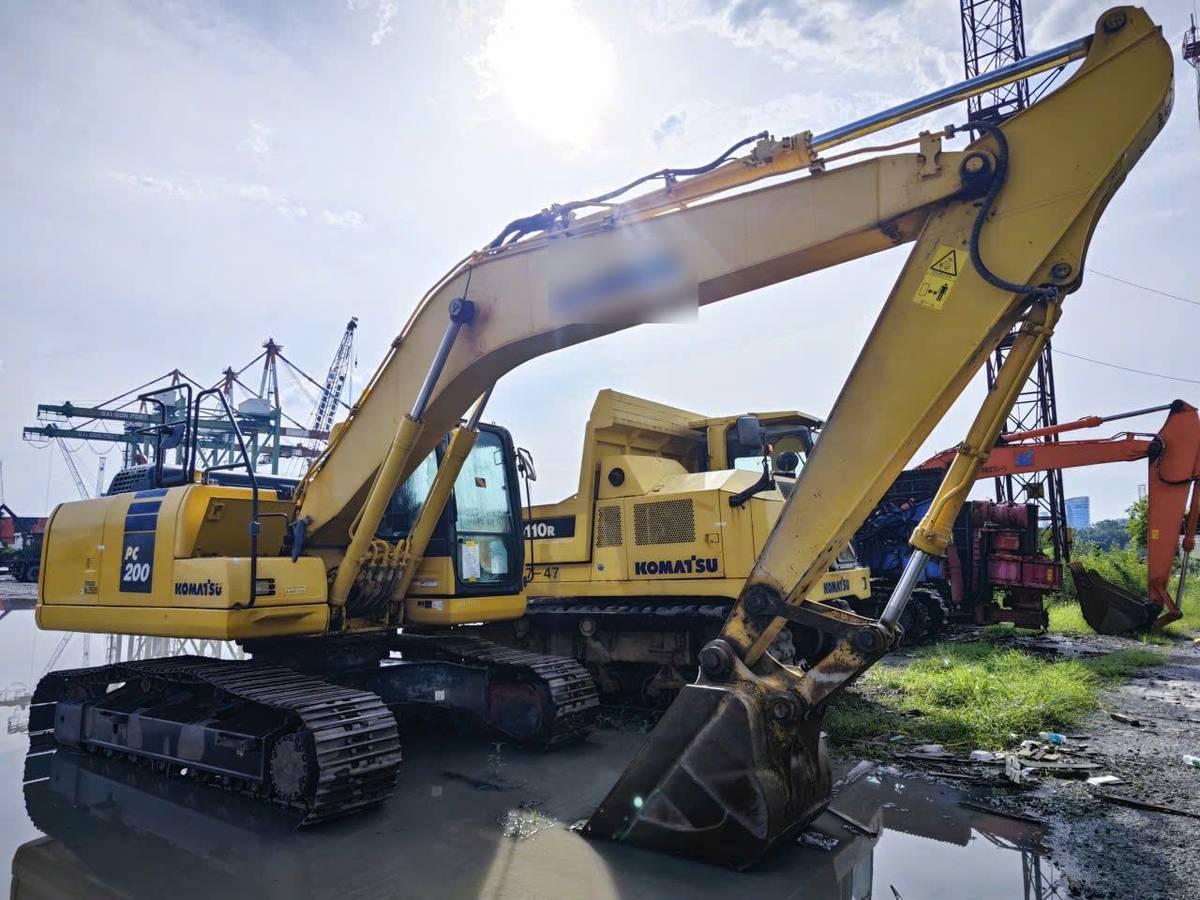
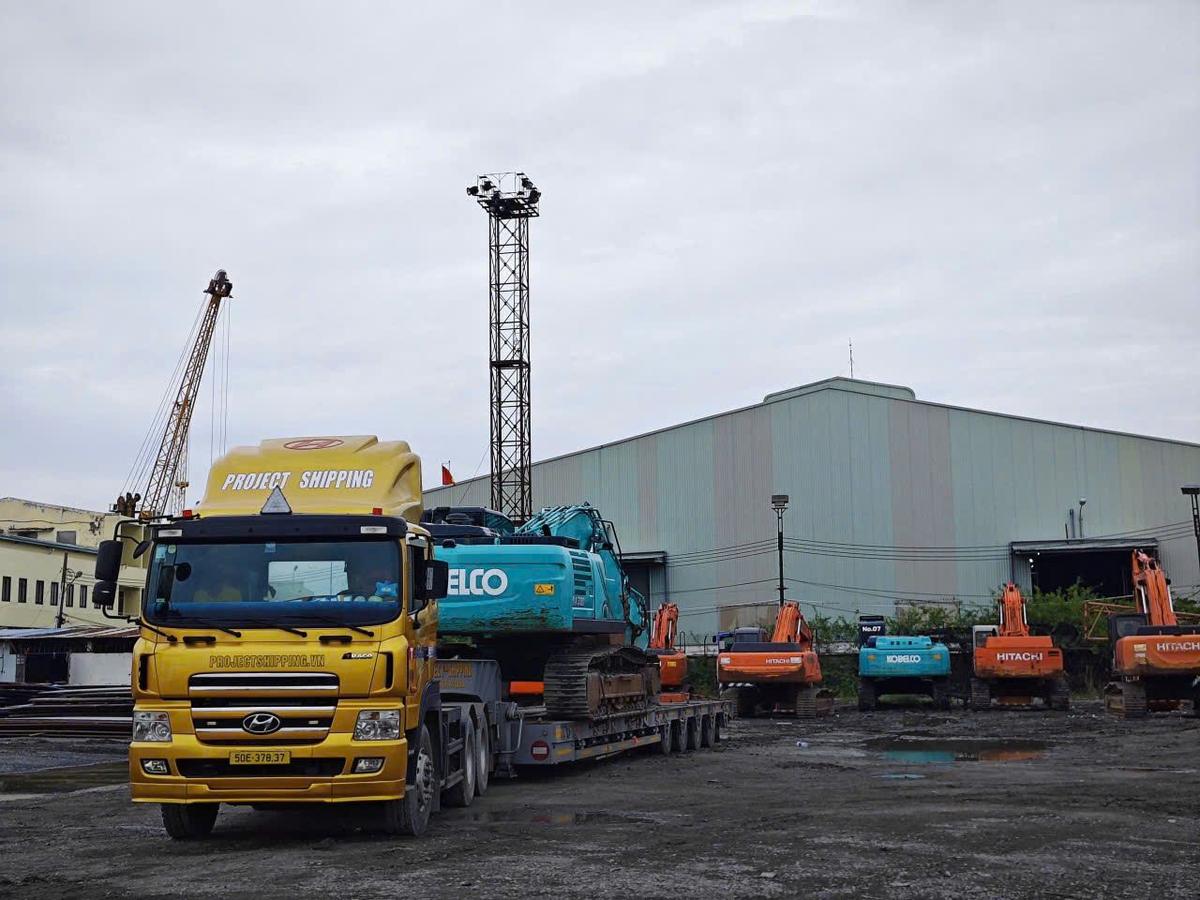
Most machinery in shipping Japan to Vietnam enquiries is second-hand. The working text for used machinery is Circular 56/2026/TT-BKHCN, in force since 5 September 2026. It tests age, standards and purpose.
| Test | The rule | What it means for a Japanese machine |
|---|---|---|
| Age, general rule | 10 years for HS chapters 84 and 85 not listed separately | Excavators (HS 84.29) fall here |
| Age, listed groups | 20 years for machine tools (HS 84.56 to 84.63), 15 or 20 years for other listed groups | Many Japanese CNC lathes and machining centers get the longer limit |
| How age is counted | Year of arrival at the Vietnamese border minus year of manufacture | Sailing date does not count. A delay past New Year adds one year |
| Proof | Original maker’s letter, or an inspection certificate | Japan is a G7 country, so the maker’s letter route is open to you |
| Purpose | Direct use in the importer’s own production in Vietnam | A dealer importing stock for resale does not fit this wording easily |
Condensed from the circular. Always check the full 8-digit HS line and description. Our import machinery to Vietnam guide has the full age table, the over-age route and when the circular does not apply.
Also send L×W×H, weight and the site address, and we add the truck type and road permit.
About 6 to 16 days at sea, depending on the port pair and whether the cargo transships. Our own Japan sample has no reliable ETD-to-ETA record, so we show public estimates here and say where each one comes from.
| Lane | Sea transit (estimate) | Source |
|---|---|---|
| Yokohama (JPYOK) → Ho Chi Minh City (VNSGN) | About 9 days 10 hours | Fluent Cargo |
| Yokohama → Cat Lai (VNCLI) | About 16 days 22 hours, with 1 transfer | Fluent Cargo |
| Kobe (JPUKB) → Ho Chi Minh City | About 9 days 23 hours | Fluent Cargo |
| Kobe → Cat Lai | About 15 days 4 hours | Fluent Cargo |
| Nagoya (JPNGO) → Da Nang (VNDAD) | About 6 days 18 hours | Fluent Cargo |
| Yokohama → Hai Phong (VNHPH) | 9 to 11 days | A Vietnamese forwarder’s table, 2022 |
| Nagoya → Hai Phong | 7 to 15 days | A Vietnamese forwarder’s table, 2022 |
Published figures for the same lane disagree by several days, so ask for the service and the vessel, not a route average. These figures are for container services. Conventional vessels and Ro-Ro carriers sail less often, so confirm the sailing before you promise an arrival, above all on a machine close to its age limit.
The total time for shipping Japan to Vietnam also includes the Vietnam side. A new oversize permit takes about 2 working days once documents are complete, and a physical customs check on an excavator takes longer than a normal file.
For shipping Japan to Vietnam, our pricing desk holds 14 sea rate lines received from agents by email. All 14 are to Hai Phong: Yokohama 8, Kobe 5 and Osaka 1. Nagoya and Yokohama to Hai Phong are also on our priority list for OOG lanes.
Source: agent rate emails on our pricing desk. These are quotes we received, not a sailing schedule, and some lines have expired.
When shipping Japan to Vietnam, choose from the largest piece as it will actually be packed or parked. Measure the height at the boom, not the cab. Then pick from this table.
| Cargo from Japan | Usual equipment | What decides it |
|---|---|---|
| Spare parts, small machines | 40′ HC FCL, LCL or air | Fits inside; check weight per box |
| CNC machines, presses | 20′ or 40′ open top | Loaded from above; floor rating and center of gravity |
| Wide machines, mid-size excavators | 40′ flat rack | Width over the rack, weight within rack payload |
| Large excavators, cranes | Conventional vessel or Ro-Ro | Length and weight beyond a normal rack; machine can walk or be towed |
| Production lines, tanks, transformers | Breakbulk or heavy-lift vessel | Too big for any rack; crane reach at the port |
Rack sizes and payloads are in our flat rack container dimensions guide. For self-driven units, see Ro-Ro shipping in Vietnam. For the larger lifts, see breakbulk and heavy lift in Vietnam.
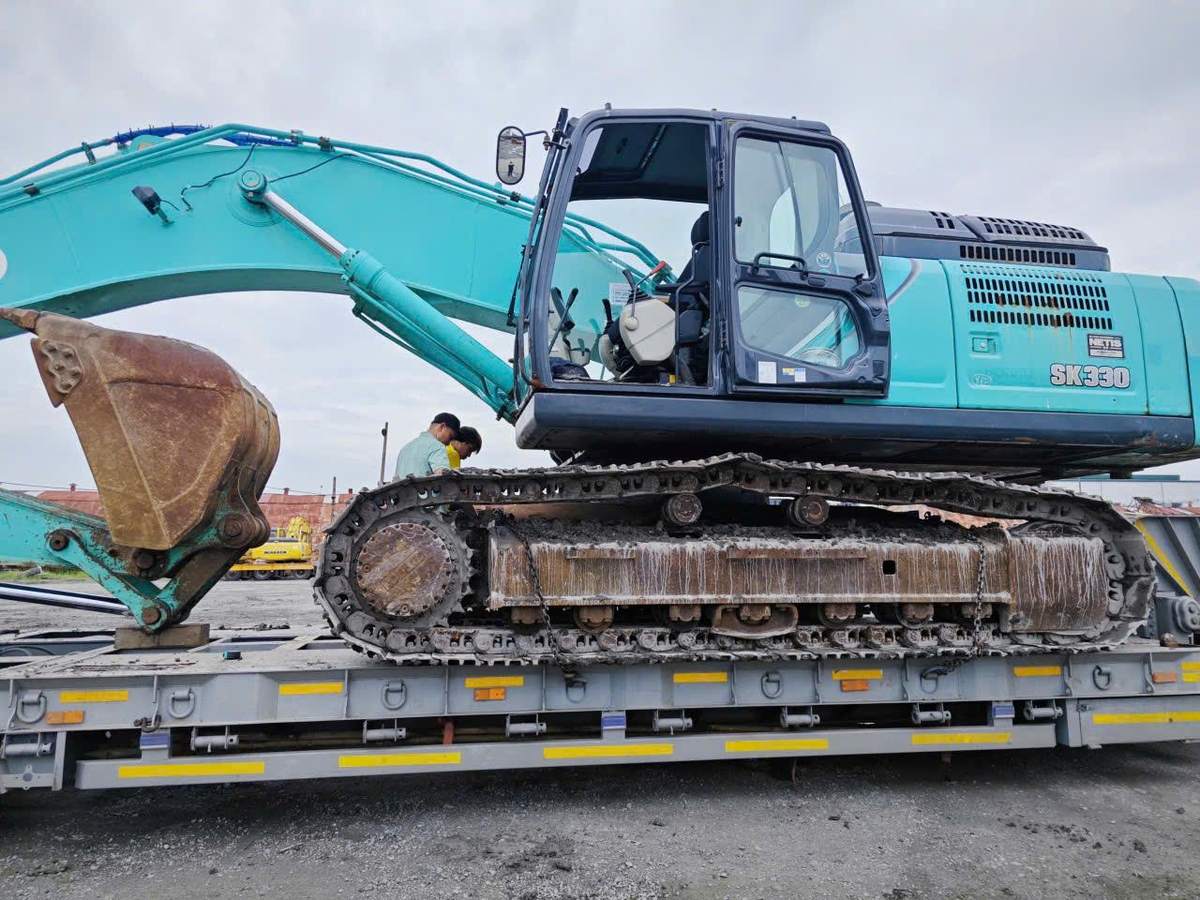
For shipping Japan to Vietnam, pick the port from the site and the piece, not from the lowest ocean rate. Our excavators landed at river ports because those ports take unpacked machinery and sit close to the yard.
| Vietnam port | Best for | Watch out for |
|---|---|---|
| Tan Thuan, Ben Nghe, Lotus (Ho Chi Minh City) | Unpacked machinery and breakbulk for southern sites; our trucks made 245 breakbulk and OOG moves from these ports in 18 months | Crane booking, trailer access to the berth, discharge order |
| Cat Lai | Flat racks and open tops to factories around Ho Chi Minh City and Dong Nai | Night truck windows and a customs supervision step for FR and OT |
| Cai Mep–Thi Vai | Mainline services, breakbulk and heavy lifts in the south | Longer road leg to Ho Chi Minh City sites |
| Hai Phong and Lach Huyen | Northern sites from Bac Ninh to Quang Ninh; all our current agent rate lines from Japan land here | Check the terminal on the arrival notice: the road leg differs |
| Da Nang | Projects in central Vietnam | Check the service first; fewer choices |
A machine shipped to the wrong end of Vietnam can cost more on the road than it saved at sea. Our Vietnam ports overview compares every main gateway for OOG cargo.
We clear imports under our own customs agent license, recognized by Vietnam Customs (Decision 247/QĐ-TCHQ, 26 February 2025). Filing runs on VNACCS, and each declaration lands in the green, yellow or red channel.
Shipping Japan to Vietnam gives you more than one possible preference. Compare them by HS code and use the lower rate the goods qualify for.
| Route | Paper | What to check |
|---|---|---|
| VJEPA (Vietnam–Japan) | Form VJ, issued in hard copy; no self-certification | Regional value content of at least 40%, or a change of tariff heading at 4 digits. Ministry of Industry and Trade summary |
| AJCEP (ASEAN–Japan) | Form AJ | Same check against the other schedule |
| CPTPP and RCEP | Rules differ by agreement | Ask us which paper applies on your line before the cargo sails |
How our excavator files ran after the vessel:
Check condition before the truck leaves. A fault found at the yard means sending a technician out before the inspection can pass.
Under Circular 12/2025/TT-BXD, as amended by Circular 19/2026/TT-BXD, a load needs a road permit when the loaded vehicle exceeds any of these limits. The official text of Circular 12/2025/TT-BXD has the full rules.
| Limit | Oversize or overweight when |
|---|---|
| Length | Over 20.0 m |
| Width | Over 2.5 m |
| Height | Over 4.2 m (over 4.35 m for container vehicles) |
| Gross weight | Vehicle and cargo over 48 t |
The trap is that these limits apply to the truck and the machine together. Here is the sum we use, with a Komatsu PC300-8 from a real enquiry: 11.18 × 3.29 × 3.45 m, 31.5 t.
| Sum | Working | Result |
|---|---|---|
| Height from the road | Deck 1.48 m + blocks 0.10 m + machine 3.45 m | 5.03 m, over the 4.2 m limit, and a permit written for 4.9 m would stop the job |
| Gross weight | Prime mover 8.93 t + trailer about 7 t + machine 31.5 t | About 47.4 t before blocks and chains, so axle load must be checked |
| Width | Track edge 3.29 m | Over 2.5 m, permit needed |
A 31.5 t machine sounds light against a 48 t limit. With the truck added, it is close to the line. A lower deck or a new permit based on the measured figure solves it, but only if you find this before the crane or the ramp is booked.
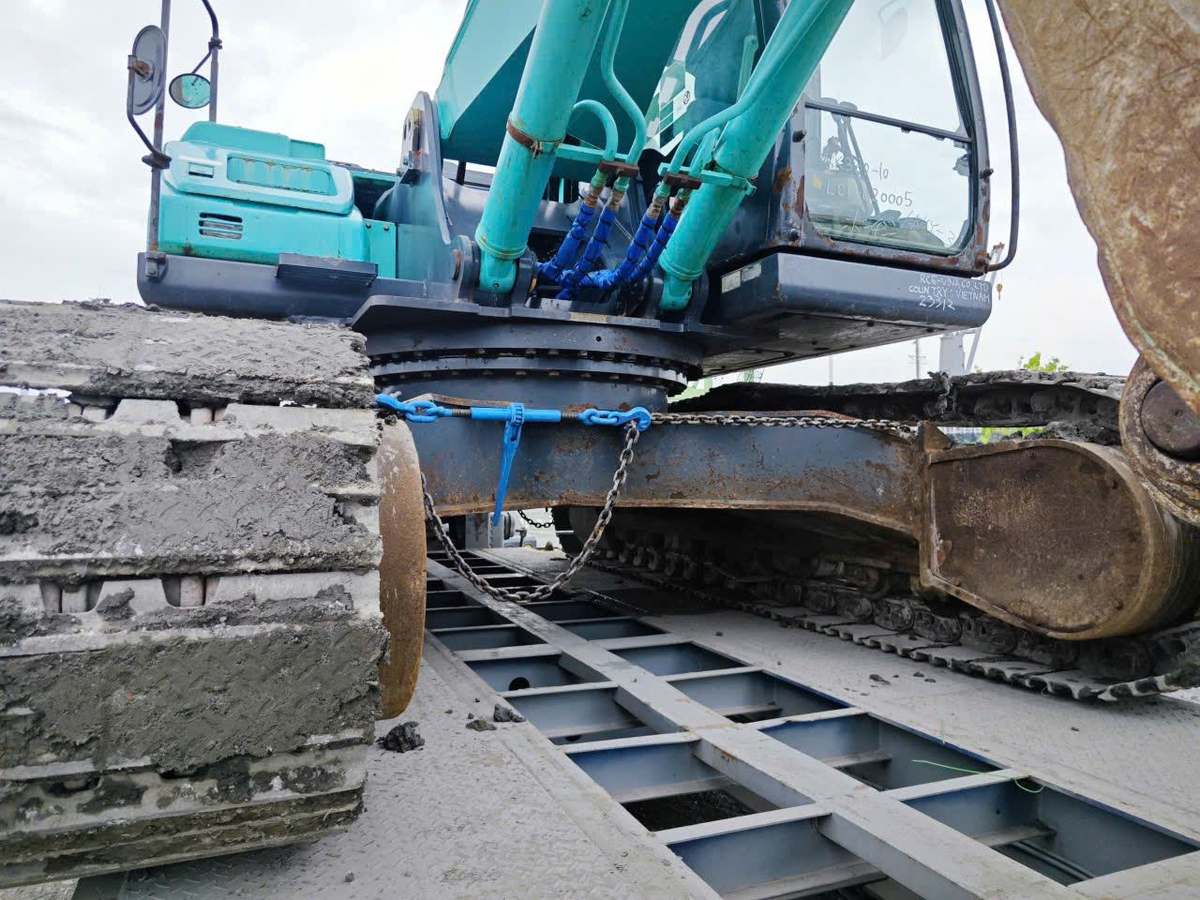
| Equipment | Capacity | Typical use |
|---|---|---|
| Own 6-axle lowbed | 62 t, 14.5 m deck, 3.2 m wide | Large excavators, presses, long frames |
| Own 4-axle lowbeds (2 units) | 44 t each | Mid-size excavators, tanks, wide flat rack cargo |
| Hydraulic modular trailers | Up to 270 t per 6-axle trailer, through partners | Heavy units beyond lowbed capacity |
| Mobile cranes and SPMT | Cranes 25–500 t, through partners | Lifting at port, transloading and site installation |
Our heaviest single piece so far is 135 t. Route surveys and escorts are covered on our heavy haulage in Vietnam page.
Rates on this lane change often, so we quote per enquiry and do not publish them. On a used machine, the ocean rate may be the smaller share of the total cost of shipping Japan to Vietnam.
| Cost element | What moves the price |
|---|---|
| Ocean freight | Equipment type, lost slots for OOG, carrier, season |
| Destination local charges | THC, D/O, CIC, cleaning, set by each carrier. See our Vietnam local charges tables |
| Port handling | Lifting, customs supervision, fuel at the berth, storage after free time |
| Customs and inspection | Declaration, physical check, machine inspection, proof of age |
| Trucking | Distance, width and weight, truck type, night-only windows |
| Permit and escort | Size of the load, route, police escort when required |
| Duty and VAT | HS line, C/O form, project exemption |
The fastest way to a firm number is the model, the year, the measured size and weight, and the site address.
Forwarders in Japan usually own the shipper and the sea leg of shipping Japan to Vietnam. We act as their Vietnam desk for import, customs and delivery.
Partners can read our short page at projectshipping.vn/agents or download the company profile (PDF).
Used-machine age limits by HS heading, proof customs need, duty and VAT.
Machinery import guide →Real Busan transit days and C/O forms for heavy machinery.
Korea to Vietnam →Real Genoa files, transit days, Cai Mep cranes and EVFTA origin for breakbulk.
Europe to Vietnam →Transit days, border gates and Form E for project cargo from China.
China to Vietnam →Documents, green, yellow and red channels, used machinery and duty exemption.
Import customs guide →Tony Tuan, CEO: WhatsApp +84 909 411 668 · ceo@projectshipping.vn
Nura Tu, Overseas Department: WhatsApp +84 906 770 650 · overseas@projectshipping.vn
Calling from Vietnam: 0909 411 668
Last updated: November 2026





© 2017 – 2026 Project Shipping. Design by Thiết kế Web DC