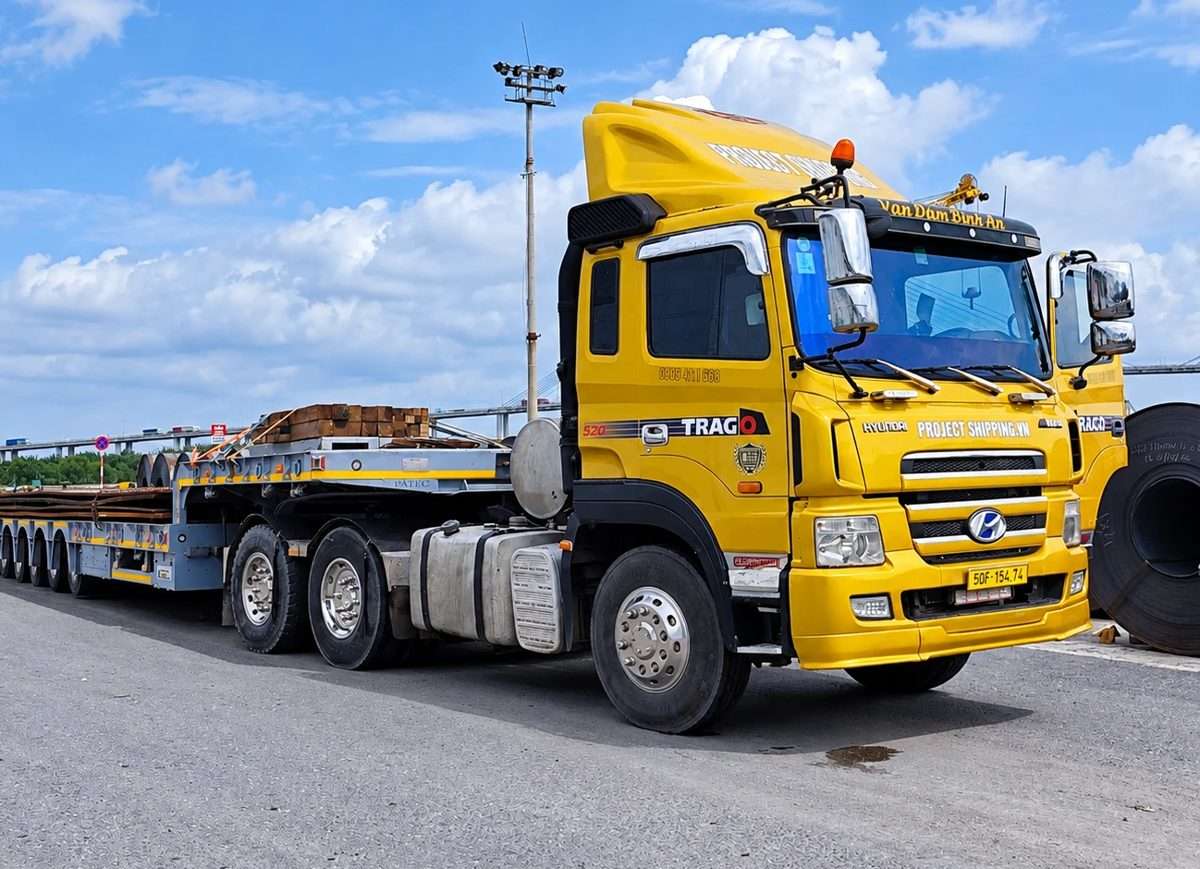
China → Vietnam · Flat rack · Open top · Breakbulk · Import customs
Shipping China to Vietnam for plant equipment, steel structures and oversized machinery: we take over at Cat Lai, Cai Mep or Hai Phong, clear import customs and truck the cargo to site.
For Chinese forwarders, EPC contractors and equipment suppliers delivering to projects in Vietnam. · Import document checklist
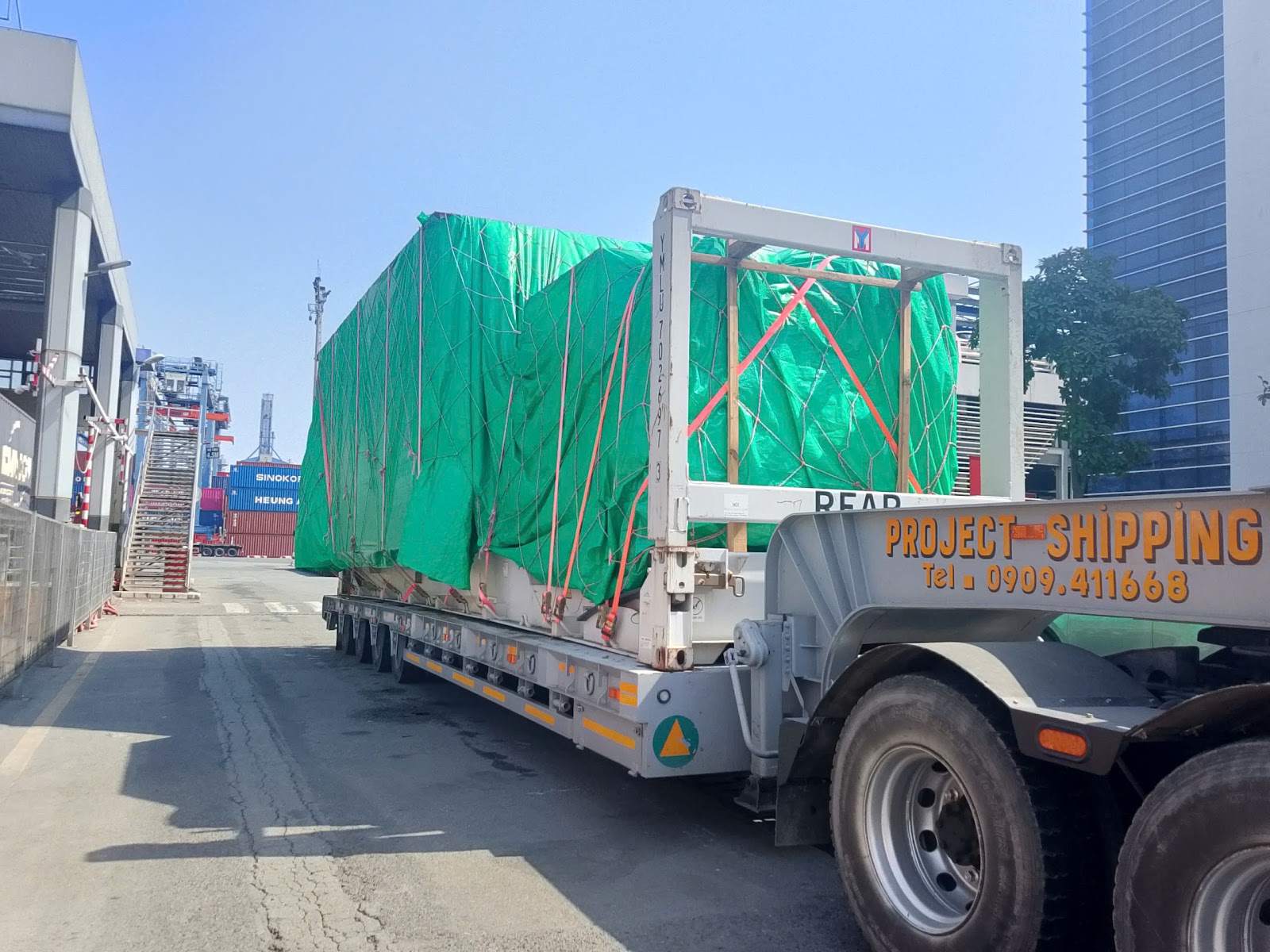
China is the largest source of plant equipment arriving in Vietnam. Transformers, boiler parts, crushers, steel frames and production lines come from Chinese factories and Chinese EPC contractors every week.
The sea leg from China to Vietnam is short. Most of the risk sits on the Vietnam side: the import declaration, the road permit for a 3.5 m wide unit and the crane at a site with no hardstand.
This page covers the Vietnam side of shipping China to Vietnam for project and OOG cargo. Below you will find real transit times from our rate desk, the three mistakes that keep oversized imports at the port longest, and the documents customs will ask for.
In shipping China to Vietnam, choose the mode from the largest single piece, not the total volume. One crate that is 3.2 m wide moves the whole lot from dry boxes to flat racks, and changes the truck and the permit in Vietnam.
| Cargo from China | Usual equipment | What decides it |
|---|---|---|
| Spare parts, panels, cable, small machines | 20′ / 40′ / 40′ HC dry FCL, or LCL | Fits inside the box; volume and weight per container |
| Tall machines, frames, coils | 20′ / 40′ open top | Too tall for a high-cube box; loaded by crane from above |
| Wide or heavy units | 20′ / 40′ flat rack | Width over the box, side loading, or weight on a small footprint |
| Transformers, vessels, long steel | Breakbulk on a multipurpose vessel | Piece too big or too heavy for any rack; crane reach at port |
| Excavators, cranes, trucks | Ro-Ro or flat rack | Self-propelled or towable; Ro-Ro sailings are less frequent |
| Urgent cargo to northern Vietnam | Truck through a land border gate | Origin in southern China, site near Hanoi or the north |
For rack sizes and payloads see flat rack container dimensions and the open top container guide. Pieces that fit no rack are covered in what breakbulk cargo means.
Almost every main Chinese port has weekly sailings to Ho Chi Minh City and Hai Phong. The table shows the transit days that agents quoted to our rate desk, port to port, as the median per lane.
| Port of loading (LOCODE) | To Ho Chi Minh City | To Hai Phong (VNHPH) |
|---|---|---|
| Shekou / Shenzhen (CNSHK, CNSZX) | about 3 days | 2 to 3 days |
| Nansha, Guangzhou (CNNSA) | about 3 days | about 3 days |
| Xiamen (CNXMN) | about 4 days | about 4 days |
| Shanghai (CNSHA) | about 6 days | about 6 days |
| Ningbo (CNNGB) | about 6 days | about 5 days |
| Qingdao (CNTAO) | about 8 days | about 7 days |
| Tianjin Xingang (CNTXG) | about 12 days | about 12 days |
Source: 7,600+ ocean rate lines for shipping China to Vietnam, received from agents by our pricing desk; median quoted transit per lane. Direct and transshipment services are mixed, so a single sailing can be faster or slower.
On the Vietnam side, the port you choose matters more than the sailing time:
Our Vietnam ports overview compares all main gateways for OOG cargo.
Trucks cross between southern China and northern Vietnam every day. The main gates are Huu Nghi (Lang Son) opposite Youyiguan near Pingxiang, Lao Cai opposite Hekou, and Mong Cai opposite Dongxing.
Road makes sense when the factory is in Guangxi, Guangdong or Yunnan and the site is in the north. It skips the port, the vessel cut-off and the terminal queue.
For oversized cargo the picture changes. An OOG load needs a permit on each side, and it often changes trucks at the border yard. For heavy units bound for southern Vietnam, a short sailing to Cat Lai or Cai Mep is usually simpler. Send us the cargo size and both addresses and we will tell you which route we would choose, and why.
For flat rack, open top and breakbulk imports we include the truck type, the road permit and what the terminal needs at discharge.
A flat rack from Qingdao or Shanghai is routine for the carrier. The delays start at discharge, when the cargo meets the Vietnamese terminal and the road.
At Cat Lai, every flat rack and open top passes a customs supervision step at the terminal, even when the cargo is within gauge. It adds a fixed charge per container, so we include it in the quote from the start.
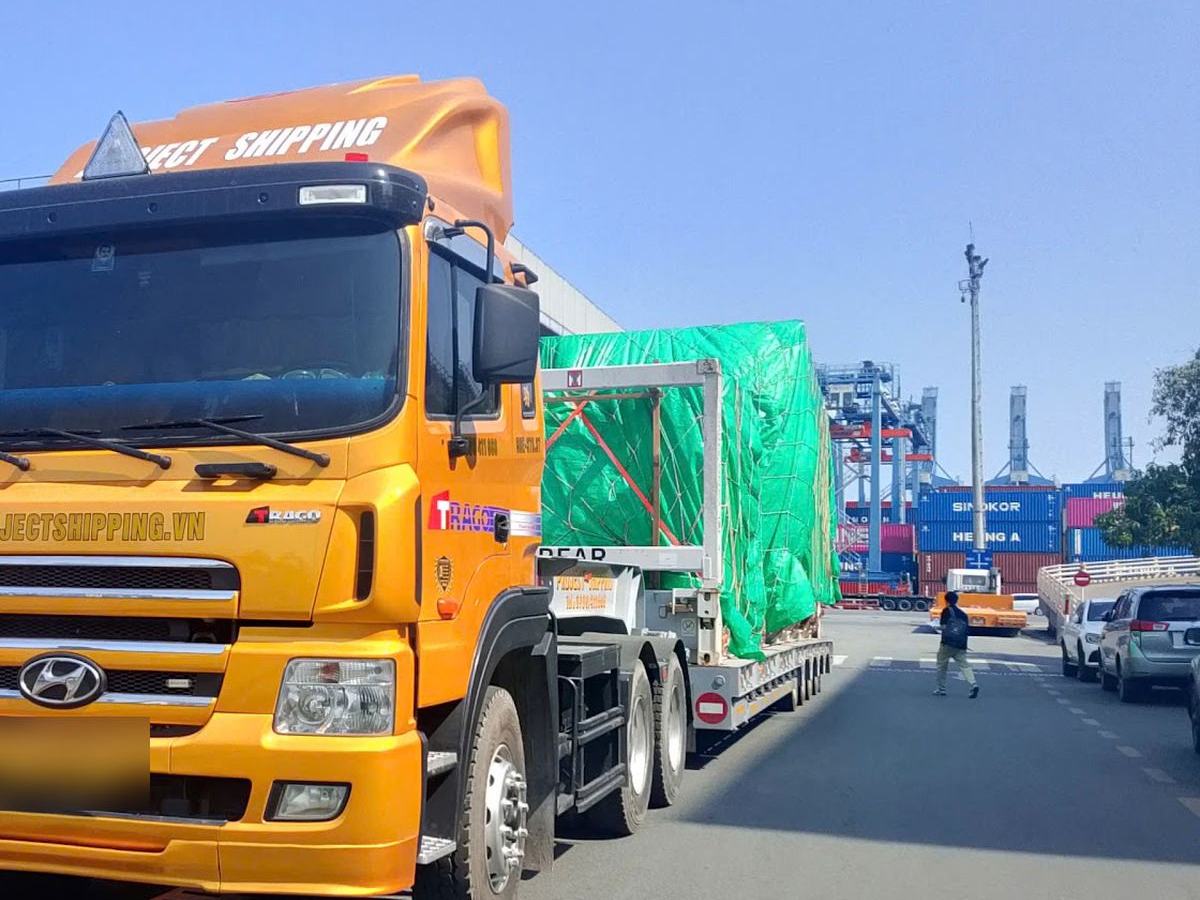
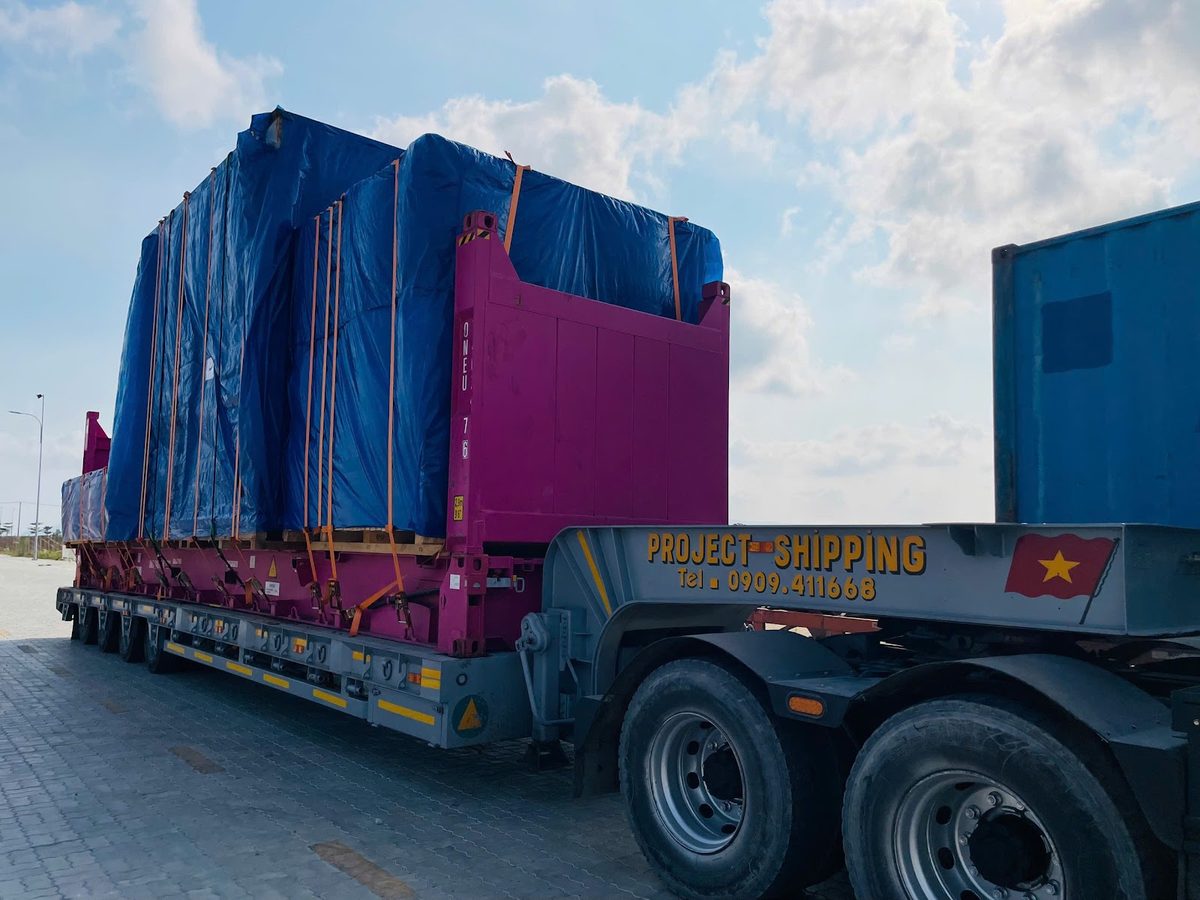
Once the cargo is off the vessel, the Vietnamese road rules apply. Under Circular 12/2025/TT-BXD, as amended by Circular 19/2026/TT-BXD, a load needs a road permit when the loaded vehicle exceeds any of these limits.
| Limit | Oversize / overweight when |
|---|---|
| Length | Over 20.0 m |
| Width | Over 2.5 m |
| Height | Over 4.2 m (over 4.35 m for container vehicles) |
| Gross weight | Vehicle and cargo over 48 t |
Read the official text of Circular 12/2025/TT-BXD for the full rules. Two points matter most for imports from China:
| Equipment | Capacity | Typical use |
|---|---|---|
| Own 6-axle lowbed | 62 t, 14.5 m deck | Transformers, presses, long frames |
| Own 4-axle lowbeds (2 units) | 44 t each | Machines, tanks, wide flat rack cargo |
| Hydraulic modular trailers | Up to 270 t per 6-axle trailer | Heavy units beyond lowbed capacity |
| Mobile cranes and SPMT | Cranes 25–500 t | Lifting at port, transloading and site installation |
Our heaviest single piece so far is 135 t. More detail on routes, escorts and surveys is on our heavy haulage in Vietnam page.
We clear imports under our own customs agent licence, recognised by the General Department of Vietnam Customs (Decision 247/QĐ-TCHQ, 26 February 2025). Clearance runs on the VNACCS system, and each declaration lands in the green, yellow or red channel.
When shipping China to Vietnam project cargo, these are the documents we ask for before the vessel arrives:
| Document | Why customs needs it |
|---|---|
| Commercial invoice | Customs value; must match the contract and the payment |
| Packing list | Pieces, weights and sizes; checked against the B/L and at inspection |
| Bill of lading | Consignee and cargo details; must match the declaration |
| C/O Form E | Preferential duty under the ASEAN–China Free Trade Area |
| Catalogue or technical sheet | Supports the HS code for machines and parts |
| Sales contract | Needed when the importer claims an exemption or the price is questioned |
The same documents logic applies in the other direction; our export from Vietnam guide covers HS codes and C/O forms for outbound cargo. The Vietnam Customs portal publishes the current tariff and procedures.
Many Vietnamese power, cement and steel projects use Chinese EPC contractors or Chinese equipment packages. The cargo then arrives in many lots, from several factories, over months.
What usually helps on these jobs:
Our project cargo logistics in Vietnam page shows the full door-to-site scope, and the power transformer transport page covers one of the most common heavy imports from China.
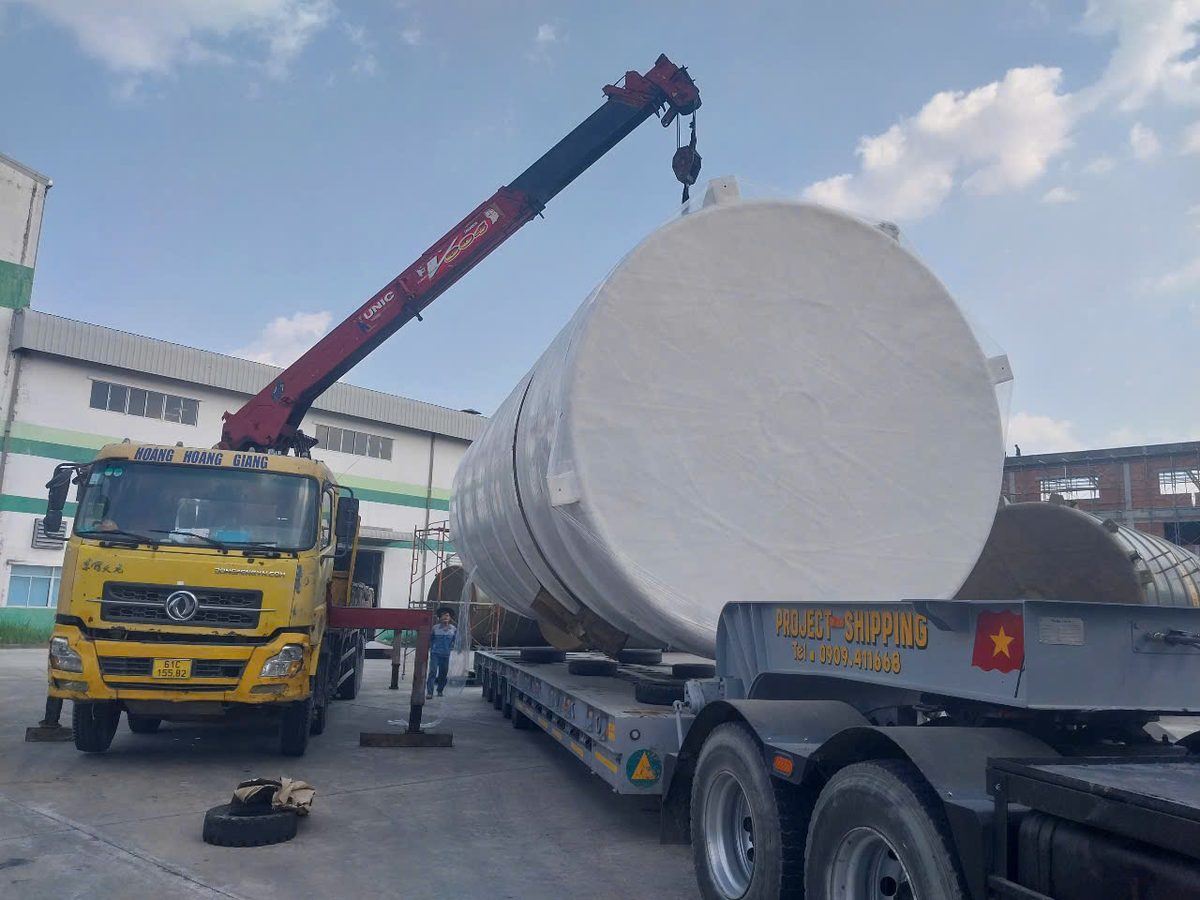
Ocean rates on the main lanes change every week, so we quote them per enquiry rather than publish them. For project and OOG cargo, the ocean rate is often the smaller part of the cost of shipping China to Vietnam.
| Cost element | What moves the price |
|---|---|
| Ocean freight | Equipment type, lost slots for OOG, carrier, season |
| Destination local charges | THC, D/O, CIC, cleaning; set by each carrier. See our Vietnam local charges tables |
| Port handling for OOG | Lifting, customs supervision, storage after free time |
| Import customs | Declaration, inspection channel, C/O and exemption paperwork |
| Trucking | Distance, width and weight, truck type, night-only windows |
| Permit and escort | Size of the load, route, police escort when required |
| Crane at site | Capacity, radius, ground conditions, waiting time |
| Duty and VAT | HS code, C/O Form E, project exemption |
The fastest way to a firm number is a drawing with the packed size and weight of every piece, plus the site address.
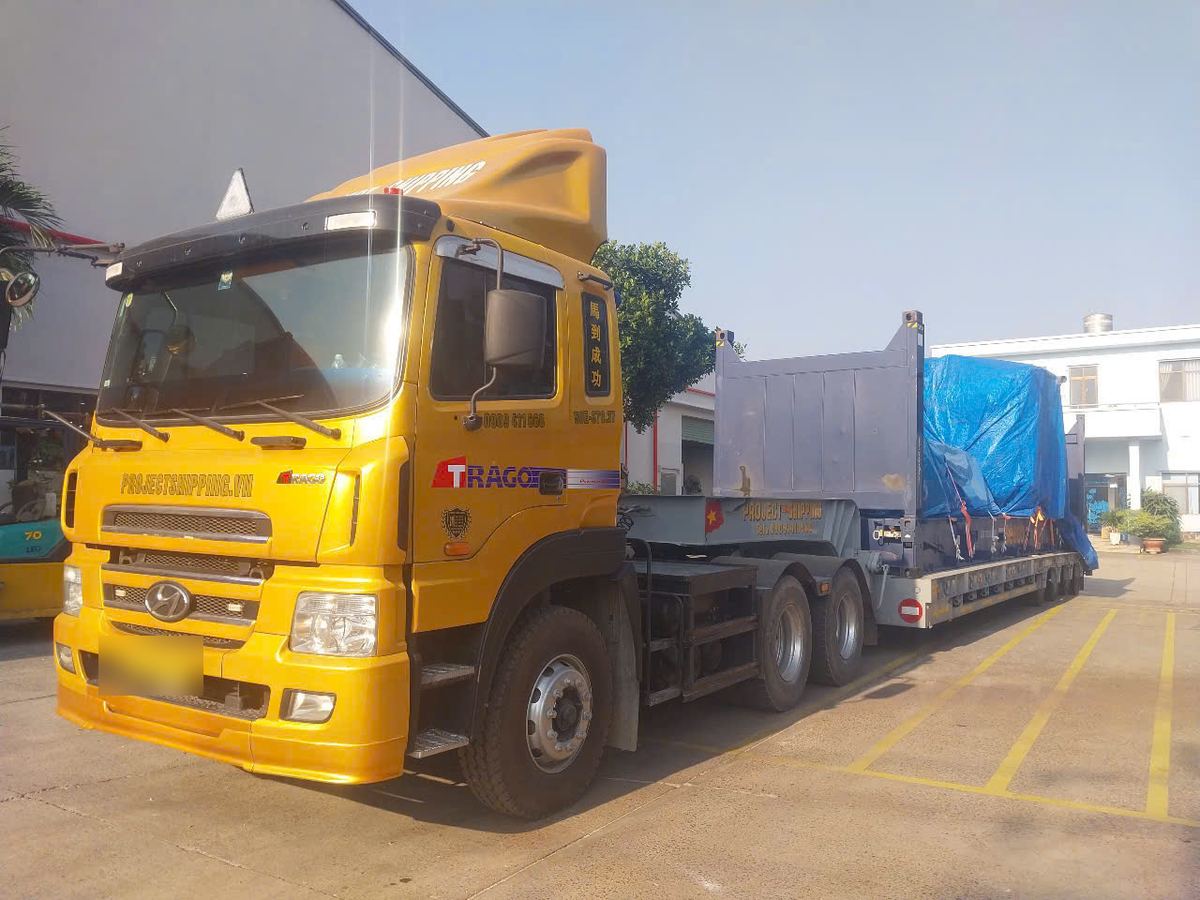
China-based forwarders are the largest group in our agent network. Most of them own the shipper and the ocean leg of shipping China to Vietnam; we act as their Vietnam desk for import, customs and delivery.
Partners can read our short page at projectshipping.vn/agents or download the company profile (PDF).
Documents, green/yellow/red channels, used machinery and duty exemption for project cargo.
Import customs guide →Tony Tuan, CEO: WhatsApp +84 909 411 668 · ceo@projectshipping.vn
Nura Tu, Overseas Department: WhatsApp +84 906 770 650 · overseas@projectshipping.vn
Calling from Vietnam: 0909 411 668
Last updated: October 2026





© 2017 – 2026 Project Shipping. Design by Thiết kế Web DC