Ports guide · OOG · Breakbulk · Ro-Ro
Which terminal takes flat racks, which one discharges heavy lifts hook-to-truck, and what slows cargo down at the gate, from the people who truck it out.
For freight agents, EPC contractors and project shippers. · Jump to the port table

Vietnam ports are not one market. A 40′ flat rack that clears easily at one terminal can wait two days at another because of gate width, a missing authorization letter or a crane booked on the wrong shift. This guide sorts the main gateways by what they mean for out-of-gauge (OOG), breakbulk and Ro-Ro cargo, and it is based on jobs we have run, not on brochures.
We are a Ho Chi Minh City forwarder with our own lowbed fleet and a licensed customs desk. Most of what follows comes from our trucking records: where the cargo was picked up, where it went and what held it up.
The table lists the gateways that matter for project and OOG cargo. Codes are UN/LOCODEs as used on bills of lading; individual terminals inside a cluster also carry their own customs location codes, which we handle on the declaration.
| Port / cluster | Region | UN/LOCODE | Typical OOG and project use |
|---|---|---|---|
| Cat Lai (Tan Cang) | Ho Chi Minh City | VNCLI | Busiest container gateway in the south. Flat racks and open tops for Binh Duong, Dong Nai and Long An. |
| SP-ITC, VICT, SPCT | Ho Chi Minh City | VNSGN (city code) | Container terminals that also see OOG units and Mafi roll trailers. |
| Tan Thuan, Ben Nghe, Lotus | Ho Chi Minh City (old District 7) | VNSGN (city code) | River ports for breakbulk: steel plate, structures, machinery, often discharged ship-to-truck. |
| Hiep Phuoc | South of Ho Chi Minh City | by terminal | Flat racks and project lots heading to Long An. |
| Cai Mep–Thi Vai (CMIT, TCIT, TCTT, SSIT, Gemalink) | Ba Ria–Vung Tau | VNCMT | Deep-water mainline calls, OOG containers, heavy-lift and breakbulk calls. |
| Phu My | Ba Ria–Vung Tau | by terminal | Breakbulk and general cargo near the Phu My industrial belt. |
| Hai Phong (incl. Lach Huyen) | North | VNHPH | Northern gateway for OOG containers, Ro-Ro vehicles and breakbulk. |
| Da Nang | Central | VNDAD | Central gateway; many central projects are also served by road from the south. |
Not sure which code your carrier uses for Vietnam ports? Ask us. A wrong place of delivery on the booking means a second truck move or a terminal transfer fee, and the fix is cheaper before the vessel sails.
Among Vietnam ports, the busiest for southern cargo are in or near Ho Chi Minh City. The city has three kinds of terminal, and each behaves differently for OOG work.
Cat Lai handles the largest container volume in the south, so it is where most flat racks and open tops for the Binh Duong, Dong Nai and Long An industrial zones arrive. The terminal is efficient, but the city around it is the constraint. Heavy and oversize trucks run inside time windows, and the flyovers on the main exit routes set the height limit.
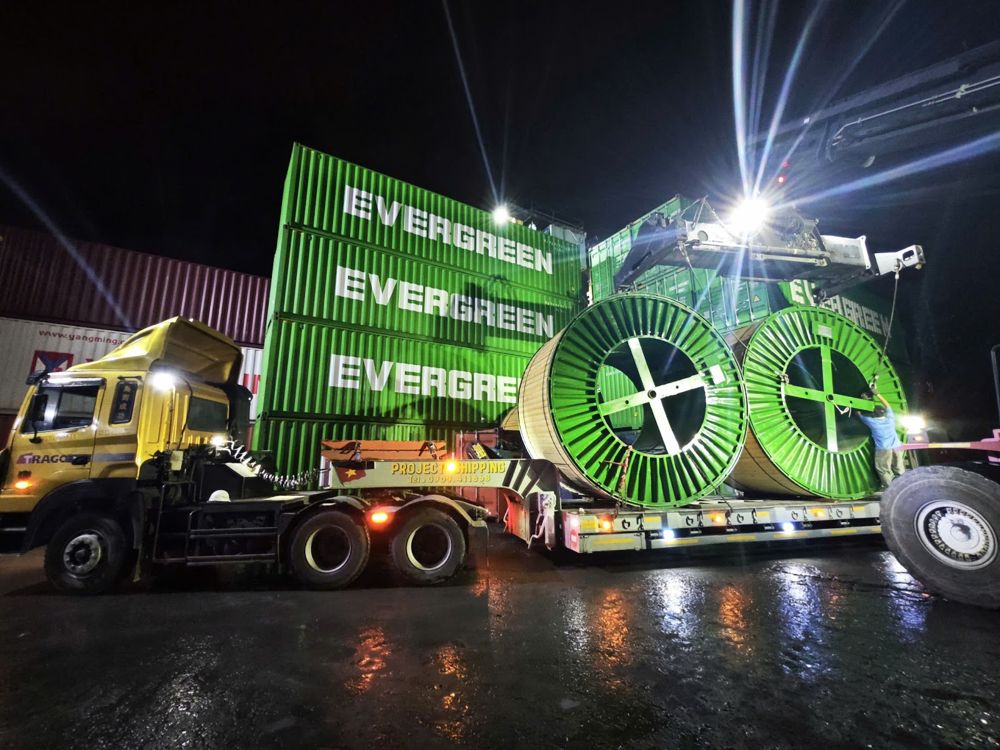
Recent OOG work from this gateway includes 4 × 40′ flat racks to Xuan Bac, Dong Nai (September 2026), a tower crane on a 40′ flat rack to National Route 13 (March 2026) and 6 cable reels on two lowbeds to Khanh Hoa in central Vietnam (July 2026).
These terminals receive mainline and feeder calls, and they regularly see over-width flat racks and Mafi roll trailers. In September 2026 we picked up 2 × 40′ flat racks loaded with excavators at SP-ITC for delivery to Di An. At SPCT our crew has lashed a cylindrical unit of more than 60 t on a Mafi trailer for Ro-Ro shipment.
The river ports of the old District 7 take a large share of breakbulk into Ho Chi Minh City. We have run 245 truck moves of breakbulk and OOG cargo from these ports in 18 months. Each port has its own pattern:
At these ports cargo is often discharged straight from the ship to the truck. That saves storage and a second lift, but the truck must be at the quay on the right shift. Miss the shift and the vessel moves on to the next consignee.
Hiep Phuoc sits south of the city, with direct access towards Long An. We trucked 12 × 40′ flat racks from Hiep Phuoc to Long An in November 2025 and 6 × 40′ flat racks to Huu Thanh industrial zone in January 2026.

If you have not fixed the port yet, tell us the site address. We suggest the gateway that keeps the road leg short and permit-light.
Cai Mep–Thi Vai, in Ba Ria–Vung Tau, is where the largest container ships call at Vietnam ports. The cluster includes CMIT, TCIT, Tan Cang Cai Mep Thi Vai (TCTT), SSIT and Gemalink. For OOG cargo it matters for two reasons: mainline carriers accept flat racks and open tops here without a feeder leg, and the terminals have space for heavy lifts.
The trade-off is distance. From the cluster to the industrial zones around Ho Chi Minh City is a longer road leg than from Cat Lai, so the permit and the route survey carry more weight in the plan.
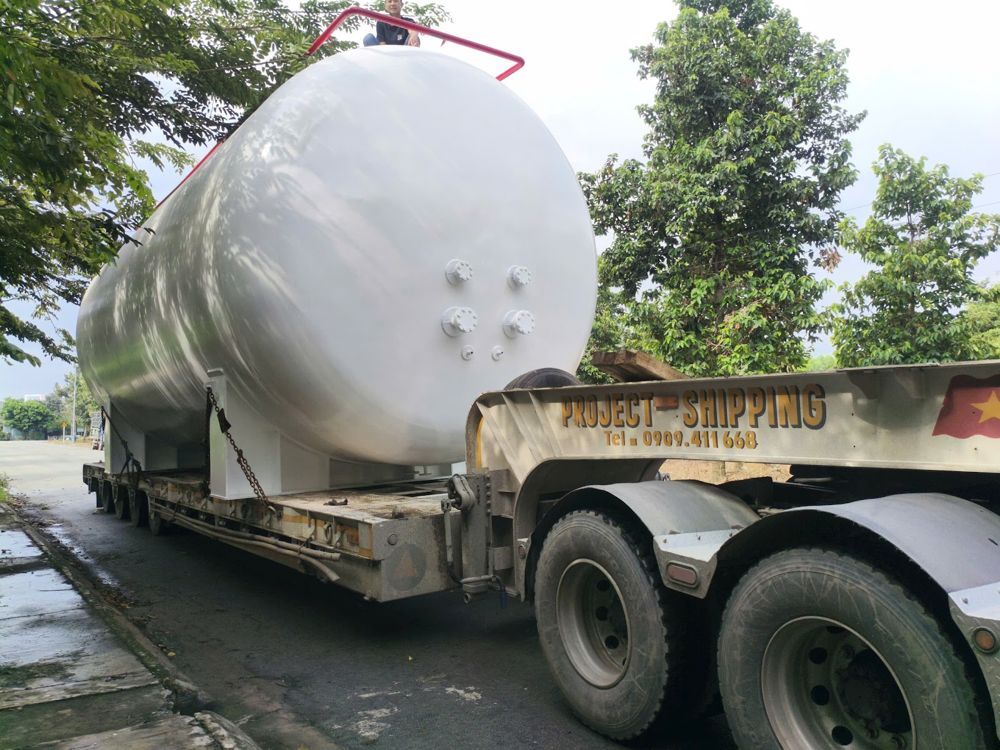
Recent jobs through the cluster:
Breakbulk that is too large for any container often comes into Cai Mep, Phu My or the port nearest the project, rather than the city. If your site is in Ba Ria–Vung Tau or southern Dong Nai, ask us to compare both options before you fix the port of discharge.
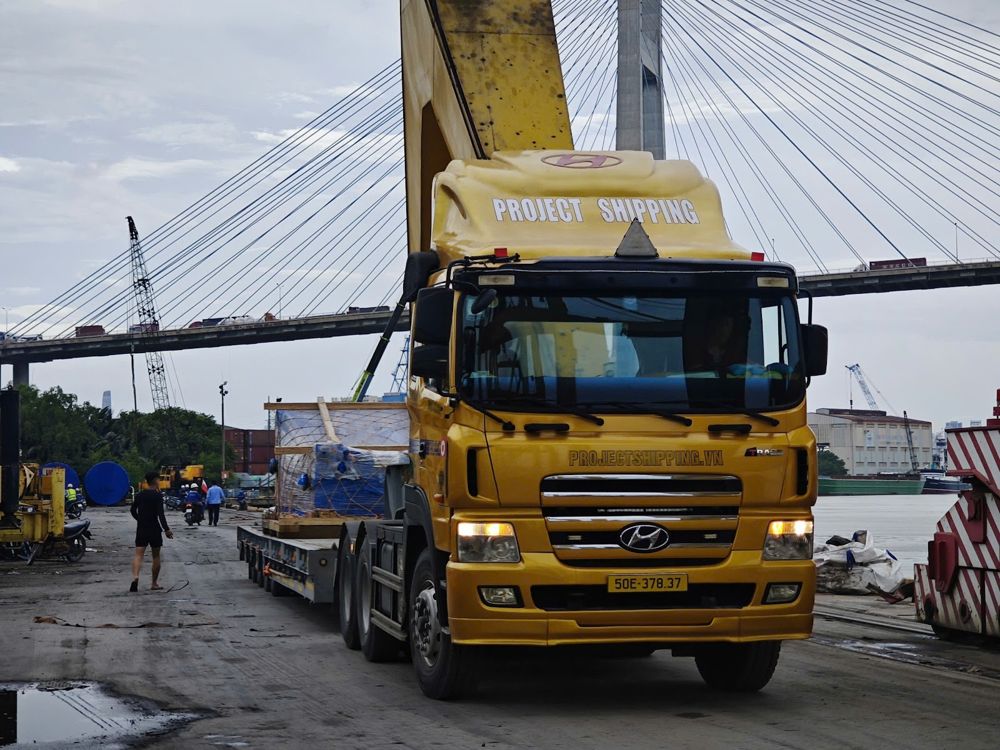
Hai Phong is the main one of the northern Vietnam ports, and Lach Huyen is its deep-water extension. For project cargo it serves the industrial zones around Hai Phong, Hai Duong, Bac Ninh and Hanoi.
Our work in the north includes:
On northern moves, the provincial road network sets the limits. Bridges on provincial roads and escort requirements are the first things we check, before the trailer type.
The central Vietnam ports have their own gateways, with Da Nang as the main one. For project sites in the central provinces, the choice is often between a direct call and a road move from the south. The answer depends on cargo size, sailing frequency and how many oversize permits the road leg needs.
We have delivered both ways by road from the south: 6 cable reels from Cat Lai to Khanh Hoa in July 2026, and a 40′ flat rack from Cat Lai to Nhon Binh industrial cluster in Quy Nhon in September 2026.

There is no single best of the Vietnam ports for OOG work. The right choice is the one that keeps the road leg short, the permit simple and the cargo off the quay.
| Your cargo | Usual gateway | Why |
|---|---|---|
| Over-width or over-height flat rack to Binh Duong, Dong Nai, Long An | Ho Chi Minh City container terminals | Shortest road leg; our standing over-width permit covers flat racks of about 3.3 m |
| Mainline OOG where the carrier does not feeder flat racks | Cai Mep–Thi Vai | Direct call, no transshipment of the OOG unit |
| Steel plate, structures, packaged machinery (breakbulk) | Tan Thuan, Ben Nghe, Lotus, or Phu My | Ship-to-truck discharge saves a lift and storage |
| Heavy lifts beyond container limits | Cai Mep–Thi Vai, Phu My or the port nearest the site | Quay space and crane capacity; shorter heavy-haul leg |
| Rolling cargo: trucks, cranes, machinery on wheels | Ro-Ro calls in Ho Chi Minh City and Hai Phong | Drive-on, drive-off; no lift needed |
| Northern sites | Hai Phong or Lach Huyen | Avoids a long north–south road move |
For the rules on oversize road permits, see our project cargo in Vietnam page. For container sizes, see the open top container guide and the flat rack container dimensions guide.
Most delays we see at Vietnam ports are paperwork and timing, not cranes. This is the list our dispatchers check before a truck leaves the yard.
Two rules cause the most trouble at Vietnam ports. First, ports do not let a truck out if the cargo is even 1 cm higher, or 1 kg heavier, than the permit allows. We weigh and measure against the permit before the truck reaches the gate.
Second, our internal rule is that the consignee sends the D/O, ETA and release documents at least 2 working days before pick-up. Without them, dispatch does not send the truck.
Flat rack and open top handling, OOG acceptance and pick-up at Vietnamese terminals.
OOG cargo →Units too large for any container, discharged ship-to-truck where possible.
Breakbulk →Terminal operators publish berth and service information on their own sites; the Vietnam Seaports Association lists member ports, and Saigon Newport runs Cat Lai and the Tan Cang terminals. We are happy to check current conditions for your vessel.
Tony Tuan, CEO: WhatsApp +84 909 411 668 · ceo@projectshipping.vn
Nura Tu, Overseas Department: WhatsApp +84 906 770 650 · overseas@projectshipping.vn
Calling from Vietnam: 0909 411 668
Last updated: October 2026



© 2017 – 2025 Project Shipping. Design by Thiết kế Web DC