Insight · Shipping modes · Vietnam
Breakbulk cargo is freight shipped as individual pieces, such as crates, steel, machinery or plant modules, that are lifted on and off the vessel one by one instead of travelling in a container or loose in a hold.
Written by our operations team from jobs run through Vietnamese ports. · Jump to the comparison table

Short answer first: if a piece is too heavy, too long or too wide for a flat rack, and it cannot drive onto a ship by itself, it will most likely move as breakbulk cargo. The rest of this guide explains how that works in practice, what it costs, which documents you need, and what changes when the port is in Vietnam.
The word comes from “breaking bulk”: unloading a ship piece by piece. Breakbulk cargo is packed, counted and handled as separate units. Each piece has its own marks, weight and dimensions, and each one is lifted by the ship’s crane, a port crane or a floating crane.
You will also see it spelled “break bulk”. Both mean the same thing. It is different from dry bulk (grain, coal, ore), which is poured or grabbed loose into the hold and has no individual pieces at all.
Most breakbulk cargo falls into a few groups. The table shows the ones we see most often in Vietnam, inbound and outbound.
| Group | Examples | Typical handling issue |
|---|---|---|
| Steel products | Plate, coils, beams, pipes | High weight per piece, weighbridge limits on the truck |
| Plant equipment | Tanks, pressure vessels, ducting, boilers, presses | Length or diameter, centre of gravity, lifting points |
| Power and energy | Transformers, generators, cable reels | Single heavy lift, road permit, escort |
| Construction equipment | Crane booms, crawler crane parts, bridge girders | Long pieces on deck, sea fastening |
| Project packages | Crates and tarped units for one plant | Many pieces, one discharge plan, marks per package |

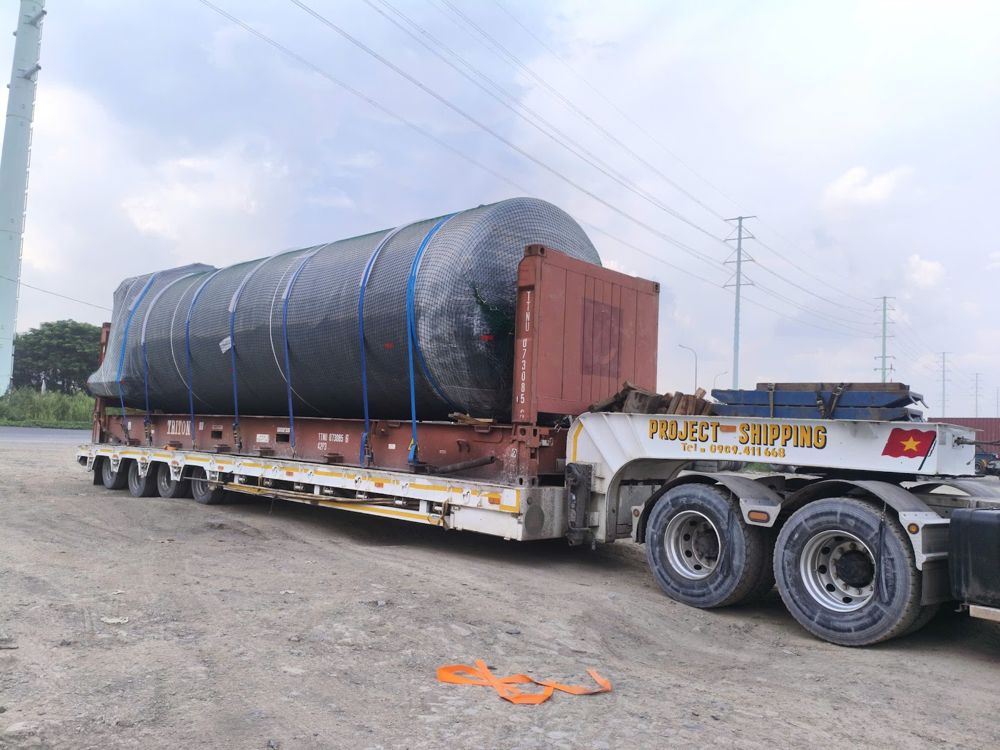
In October and November 2025 we moved several lots of large steel ducting made in Vietnam for an LNG project in the United States. One section we moved measured about 18.6 × 2.3 × 2.9 m and weighed about 14 t.
No container takes an 18.6 m piece, so the sections shipped as breakbulk cargo. One lot of 4 packages went by road from Binh Chanh, Ho Chi Minh City, to the Gemalink terminal at Cai Mep.
We reply with the mode we would use and a trucking plan within 30 minutes on working days.
Four modes, four ways of getting cargo on board. The right one depends on the shape and weight of the heaviest piece, not on the total tonnage.
| Container (incl. flat rack, open top) | Breakbulk | Ro-Ro | Dry bulk | |
|---|---|---|---|---|
| How it loads | Box lifted by quay crane | Each piece lifted with slings or spreader | Driven or towed up a ramp | Poured or grabbed into the hold |
| Best for | Cargo that fits a box or a 40′ rack | Heavy, long or wide pieces that cannot roll | Vehicles, machinery on wheels or tracks, units on Mafi trailers | Grain, coal, ore, fertiliser |
| Weight limit | 40′ flat racks often about 40–45 t payload | Set by the crane: ship’s gear, port or floating crane | Set by ramp and trailer capacity | Not piece-based |
| Sailings | Frequent liner services | Fewer; liner breakbulk or part-charter | Regular on main car-carrier routes | Charter |
| Main risk | Out-of-gauge acceptance, lost slots | Lifting, sea fastening, port delays | Lashing of static units | Contamination, moisture |
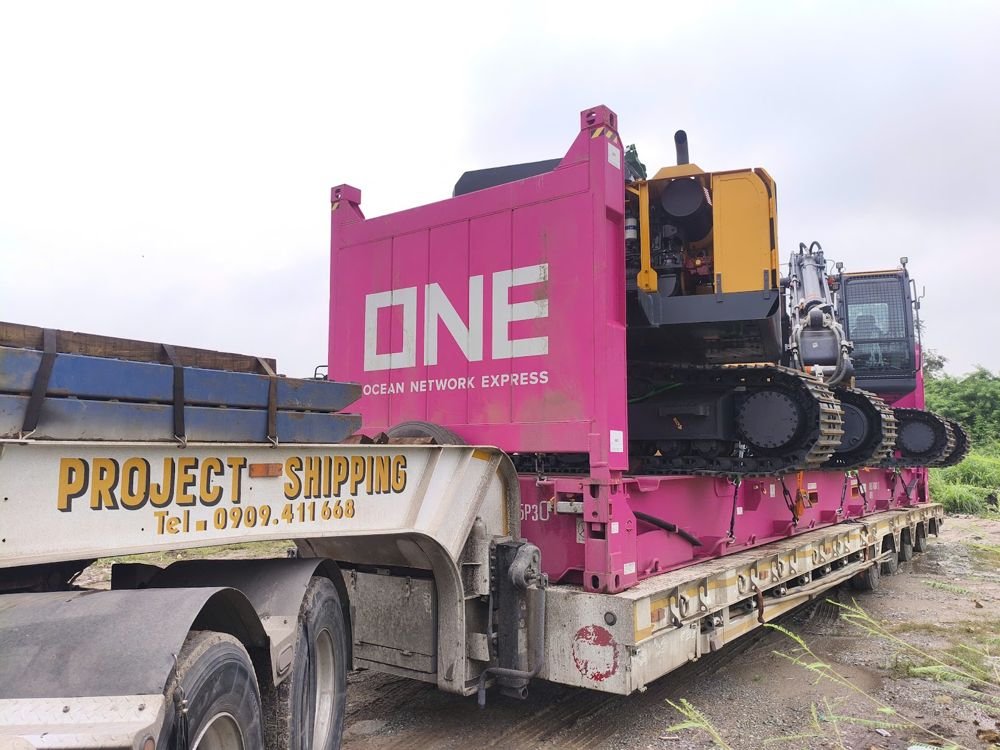

Want the numbers for racks? Our guide to flat rack container dimensions lists internal sizes and payloads.
Breakbulk is not the default. Container lines sail more often and door delivery is simpler. We recommend shipping as breakbulk cargo when one of these is true:
When the answer is breakbulk, the road leg after the port often decides the schedule. See our breakbulk and heavy lift service in Vietnam for how we plan hook-to-truck discharge and delivery.
Freight for breakbulk cargo is usually quoted per freight ton: the higher of the weight in metric tons and the volume in cubic metres (W/M). A light but bulky crate pays on volume, a dense steel piece pays on weight.
| Cost item | What it covers | Watch out for |
|---|---|---|
| Ocean freight (W/M) | Sea carriage per freight ton | Oversized crates that inflate the volume |
| Loading and discharge terms | Liner terms (carrier pays stevedoring) or FIO (shipper and consignee pay) | Who books and pays the cranes at each end |
| Heavy lift or long length additionals | Extra charge for pieces above the carrier’s weight or length limits | Thresholds differ by carrier; check before booking |
| Lashing, dunnage, sea fastening | Material and labour to secure each piece | Round or top-heavy cargo needs more points |
| Port and yard charges | Handling, storage, weighbridge | Storage if trucks are not ready at discharge |
| Road leg and permits | Truck, escort, oversize permit, route survey | Permit lead time of 3–30 working days in Vietnam |
The terms of sale also matter. Under the ICC Incoterms rules the cost and risk split between seller and buyer changes the moment a piece is lifted, so agree the Incoterm before anyone books cranes.
Breakbulk cargo needs more paperwork than a container, because every piece is handled on its own. Prepare these before the vessel is fixed:
| Document | Why it matters for breakbulk |
|---|---|
| Packing list with L × W × H, weight and marks per piece | Stowage plan, freight tons and truck allocation |
| Drawings with lifting points and centre of gravity | Crane and spreader choice; avoids a second lift |
| Commercial invoice and bill of lading | Customs and release; on-deck stowage may be noted on the B/L |
| Lashing or securing certificate | Proof the cargo was secured to plan; often required by carrier or insurer |
| Customs papers, incl. duty exemption list for projects | In Vietnam, exemption or temporary import must be set up before arrival |
Our own licensed customs agent (Vietnam Customs Decision 247/QĐ-TCHQ) checks the file before the vessel arrives, so the cargo is not waiting on the quay for a missing page.
Southern Vietnam handles most breakbulk cargo at the river terminals of Ho Chi Minh City and at Cai Mep–Thi Vai. The north uses Hai Phong.
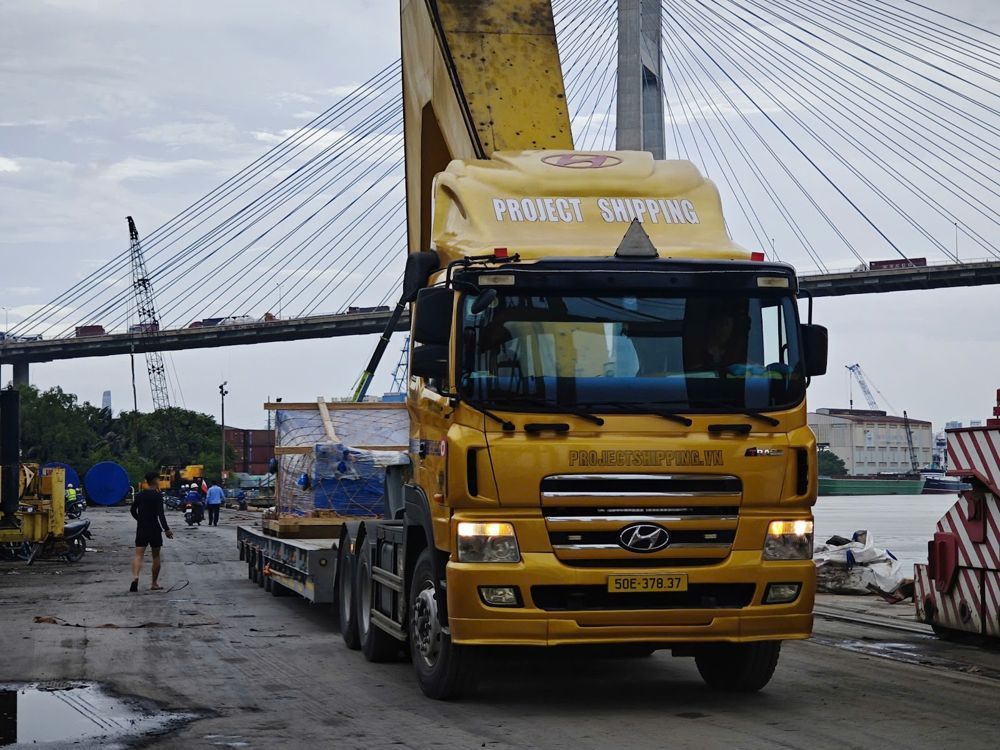
For terminal-by-terminal details, see our Vietnam ports guide.
Hook-to-truck discharge, lashing, customs and our own lowbeds in Vietnam.
Breakbulk service →Tony Tuan, CEO: WhatsApp +84 909 411 668 · ceo@projectshipping.vn
Nura Tu, Overseas Department: WhatsApp +84 906 770 650 · overseas@projectshipping.vn
Calling from Vietnam: 0909 411 668
Last updated: October 2026 · By Tony Tuan, CEO, Project Shipping



© 2017 – 2025 Project Shipping. Design by Thiết kế Web DC