Insight · Shipping modes · Vietnam
A bulk container carries loose cargo poured into a box; breakbulk carries separate pieces lifted one by one. The words sound alike, the cargo could not be more different. This guide compares bulk container, liner bag, bulk carrier, breakbulk and flat rack so you pick the right mode before you book.
Written by our operations team in Ho Chi Minh City. · Jump to the decision table

Short answer first: if your cargo flows (grain, granules, powder, beans, minerals) and you ship tens to a few hundred tonnes, a bulk container or a liner bag in a standard box is usually right. If your cargo comes in pieces that do not fit a container (steel structures, tanks, machinery), it is breakbulk or flat rack. If you ship thousands of tonnes of loose cargo at once, you are looking at a bulk carrier.
| Term | What it means | Typical cargo |
|---|---|---|
| Dry bulk | Loose cargo with no packaging, poured or grabbed into the hold of a bulk carrier | Coal, ore, grain, clinker |
| Bulk container | A 20′ box with roof hatches for filling and a hatch at the door end for discharge | Plastic granules, malt, grain, powders |
| Liner bag | A disposable inner bag fitted in a standard 20′ dry container, turning it into a bulk box for one trip | Green coffee, grains, resin, minerals |
| Breakbulk | Separate pieces, each marked and lifted one by one, too big or heavy for a container | Tanks, steel structures, machinery, ducting |
A bulk container looks like a 20′ dry container from the outside. The difference is on the roof and at the door end. Loading hatches in the roof let the cargo fall in by gravity or be blown in from a silo or hopper. A small hatch low in the door end lets it run out when the box is tilted on a tipping chassis at the receiver.
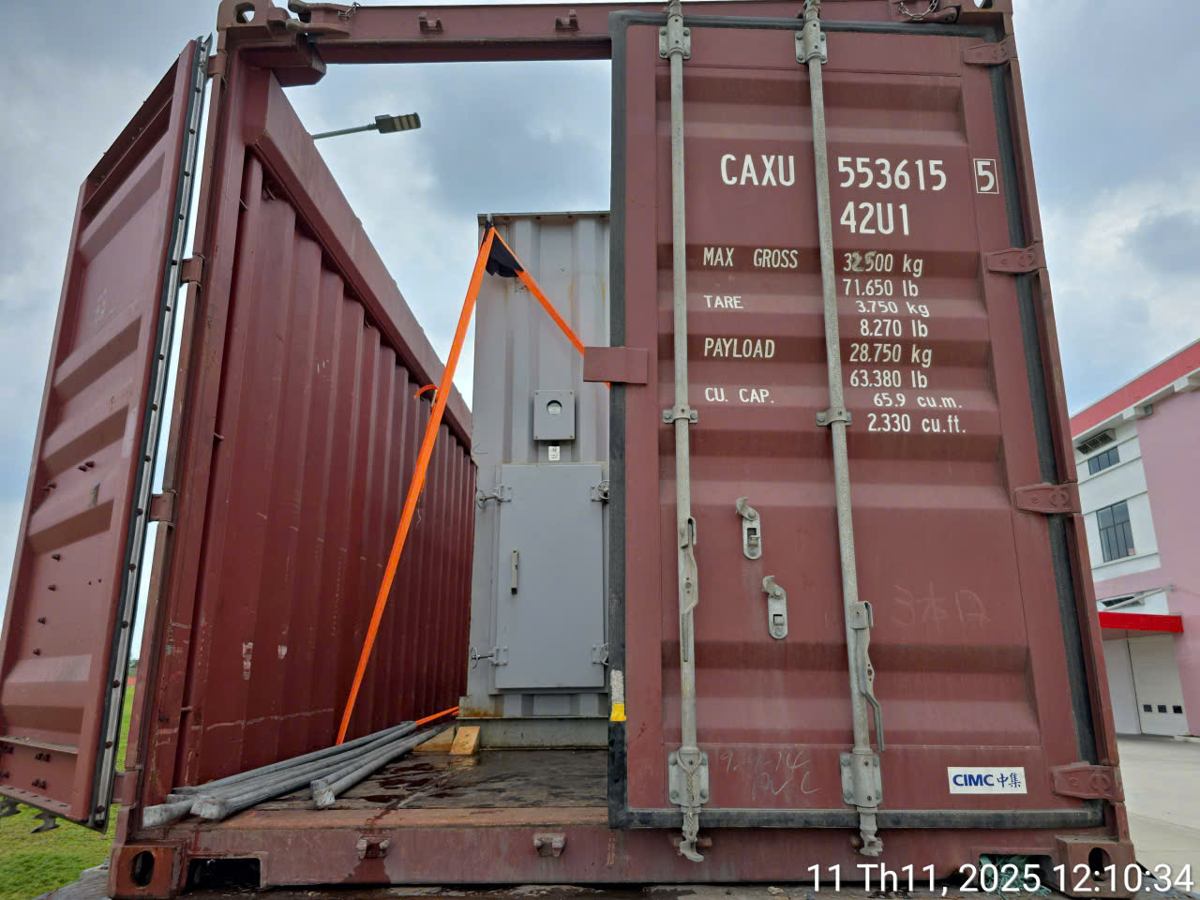
Because the cargo flows, a bulk container is filled to weight, not to volume. Most heavy granular cargo reaches the box’s payload, or the road weight limit, before the box is full. Check the maximum gross weight on the container plate and the axle limits on the road leg before you agree a quantity per box.
Bulk container equipment is not available everywhere. Many carriers keep only small fleets of dedicated bulk boxes, so for a new lane the answer is often a liner bag in a standard box instead.
A liner bag is a large polyethylene or woven bag fixed inside a standard 20′ dry container with straps and a bulkhead at the door end. It is loaded through a filling spout and discharged by tilting the container. After one trip the bag is removed and the container goes back into normal service.
For shippers who move granules or beans out of Vietnam, a liner bag is usually the practical form of a bulk container shipment.
For pieces, send L×W×H and weight per piece. We reply with the mode we would use and a trucking plan in Vietnam.
Breakbulk is the opposite of a bulk container. Each piece has its own marks, weight and dimensions, and each one is lifted by the ship’s crane, a port crane or a floating crane. Pieces too long for any container, too heavy for a flat rack, or too many for one project to fit on racks usually travel this way.
Pricing is per freight ton: the higher of weight in tonnes and volume in cubic metres. Our guide what is breakbulk cargo explains the freight ton, documents and port handling in detail.

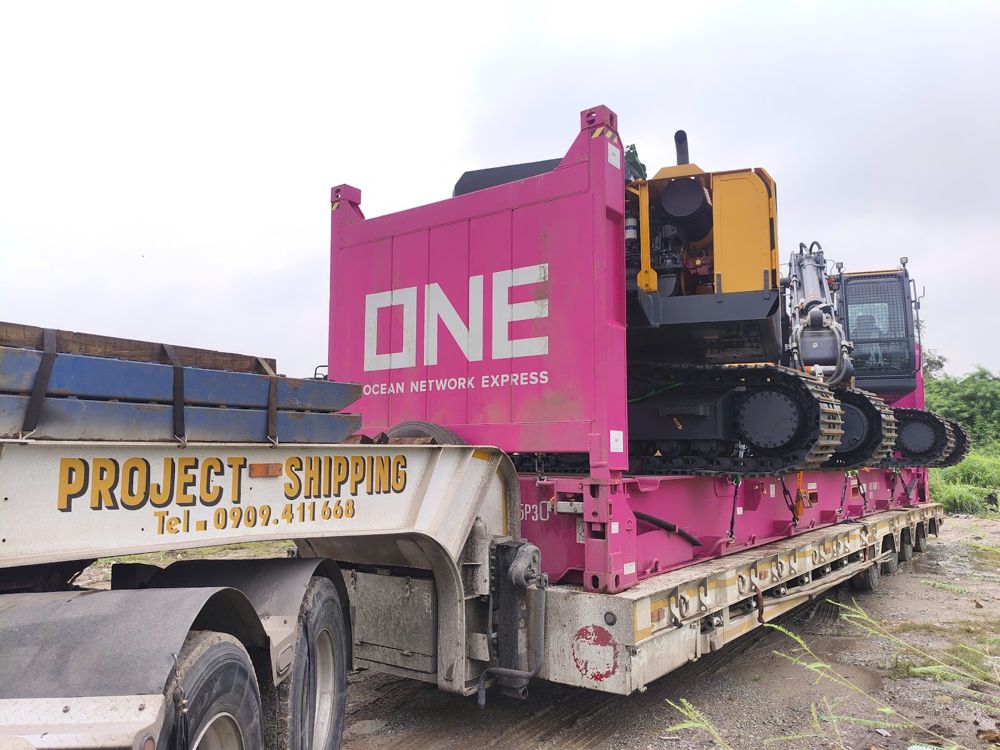
Between a bulk container and breakbulk sits a large group of cargo that is in pieces but still fits container equipment. Over-width or over-height machinery up to about 40–45 t often goes on a 40′ flat rack; tall items that fit the width go in an open top. Sailings are more frequent and door delivery is simpler than breakbulk. See flat rack container dimensions and the open top container guide.
We use this table as a first filter on enquiries. The final answer depends on the route, the equipment available and the site.
| Your cargo | Quantity | Usual mode | Why |
|---|---|---|---|
| Free-flowing granules, beans, powder | Up to a few hundred tonnes | Bulk container or liner bag | No bagging cost; filled and emptied by gravity |
| Same cargo, bagged or in big bags | Any | Standard dry container | Easy handling, no special receiver equipment |
| Loose cargo | Thousands of tonnes per lot | Bulk carrier | Whole-ship economics; needs a bulk terminal |
| Machinery, over-width or over-height | Per piece, under about 40 t | Flat rack or open top | Container sailings, door delivery on an OOG truck |
| Long or heavy pieces, plant modules | Per piece, beyond rack limits | Breakbulk | No container size limit; lifted by ship or port crane |
| Units on wheels or tracks | Per unit | Ro-Ro | Driven on board, no lift at the berth |
The two modes are priced in completely different ways, which is why comparing a quote for one with a quote for the other rarely makes sense.
| Cost item | Bulk container / liner | Breakbulk |
|---|---|---|
| Freight unit | Per container | Per freight ton (W/M) |
| Main extra | Liner bag, loading equipment, tipping chassis at destination | Lifting, lashing, sea fastening, surveys |
| Port charges | Normal container THC and local charges | Stevedoring and wharfage per tonne or per lift |
| Road leg | Standard container truck, watch the gross weight | Flatbed or lowbed, possibly a road permit and escort |
| Biggest risk | Contamination or bag failure | Damage in lifting, waiting time at the quay |
For container local charges by shipping line in Vietnam, see our Vietnam local charges tables.
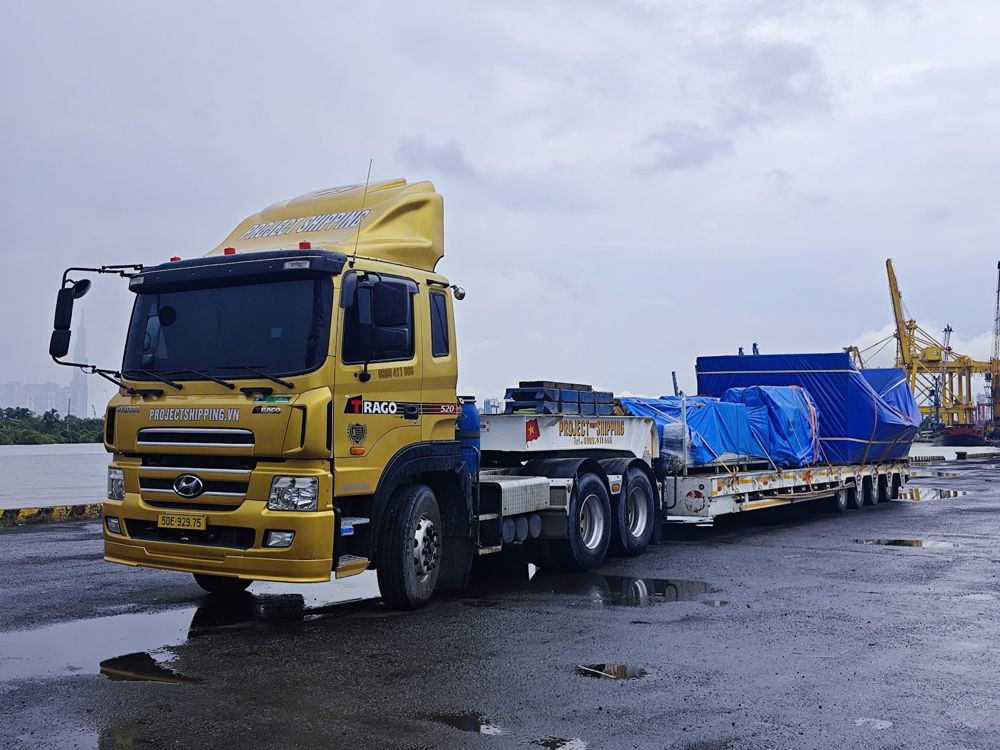
Where we fit: we handle the breakbulk, flat rack, open top and heavy haulage side of these decisions, with our own lowbeds and a licensed customs desk. For whole shiploads of dry bulk we tell you so and point you to a bulk chartering specialist; we would rather say no than quote outside our field. See breakbulk and heavy lift in Vietnam for the services we run.
Hook-to-truck discharge, lashing, customs and our own lowbeds.
Breakbulk service →Tony Tuan, CEO: WhatsApp +84 909 411 668 · ceo@projectshipping.vn
Nura Tu, Overseas Department: WhatsApp +84 906 770 650 · overseas@projectshipping.vn
Calling from Vietnam: 0909 411 668
Reference: Break bulk cargo (Wikipedia)
Last updated: October 2026 · By Tony Tuan, CEO, Project Shipping



© 2017 – 2025 Project Shipping. Design by Thiết kế Web DC