Port guide · Cai Mep–Thi Vai · OOG · Breakbulk
Which Cai Mep terminal your flat rack lands at, how far the road leg really is, and what holds OOG and breakbulk at the gate. Written by the team that trucks it out.
For freight agents, EPC contractors and project shippers. · Jump to the terminal table
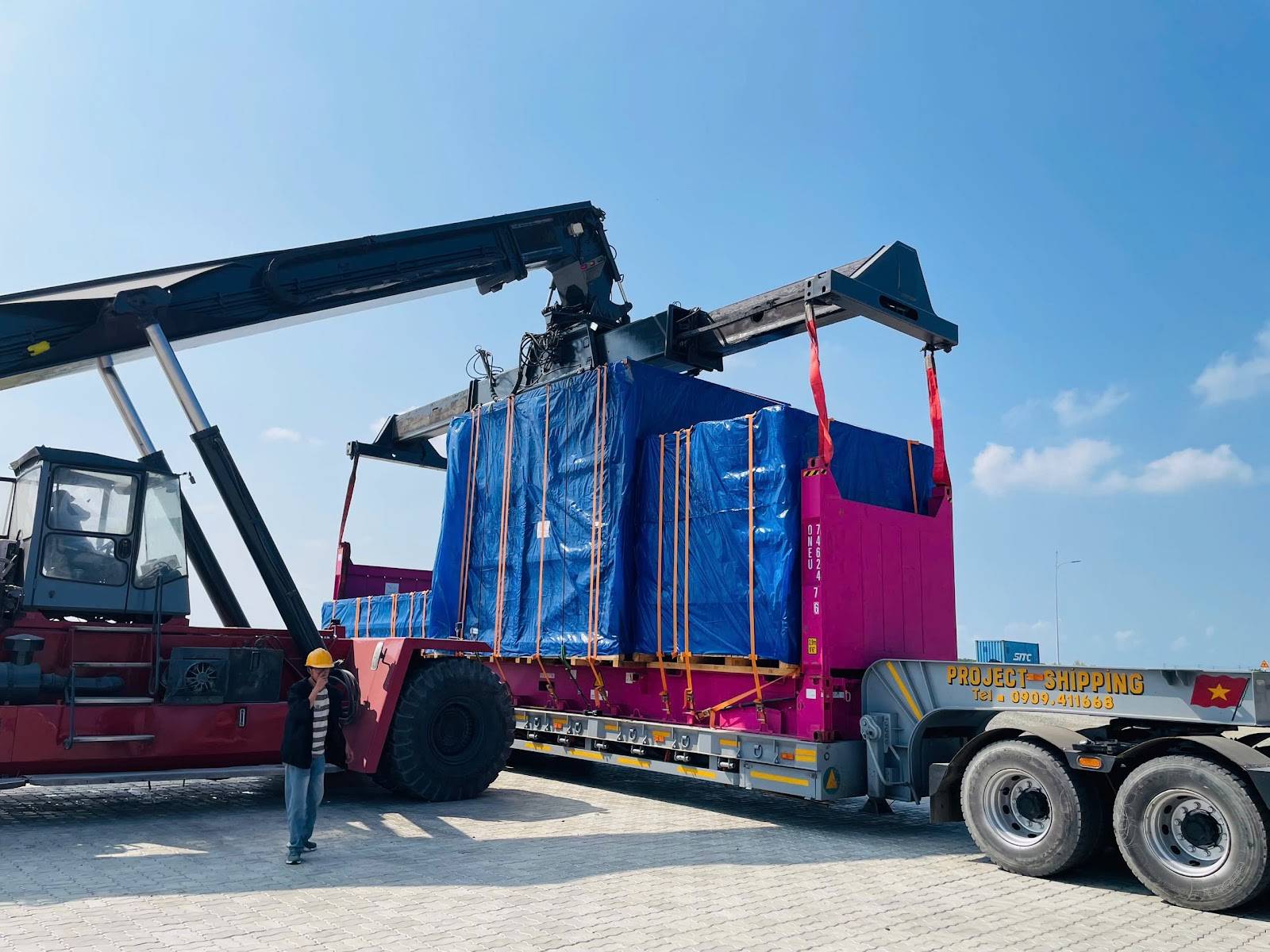
Cai Mep port is not one quay. It is a cluster of deep-water terminals along the Thi Vai river, run by different operators, with different gates and different habits. A booking that says “Cai Mep” can mean CMIT, TCIT, TCTT, SSIT or Gemalink, and the difference matters when the cargo is a flat rack 3.4 m wide.
This Cai Mep port guide sorts the cluster by what it means for out-of-gauge (OOG), breakbulk and heavy-lift cargo. Below you will also find the road distances we price against, the jobs we have run through each terminal, and the three paperwork gaps that most often hold a truck at the gate.
Cai Mep port, formally the Cai Mep–Thi Vai cluster, sits on the Thi Vai river, south-east of central Ho Chi Minh City. It was part of Ba Ria–Vung Tau province until the 2025 provincial merger. Today the terminal area is in Ho Chi Minh City wards such as Tan Phuoc and Phu My, but many bookings and documents still say “Vung Tau”.
The reason carriers come here is water depth. Saigon Newport lists a water draft at berth of 16.8 m at TCIT and 16 m at TCTT, enough for the largest ships on the Asia–Europe and transpacific loops. The city terminals on the Saigon river cannot take those vessels.
The table lists the terminals our trucks work with. Figures come from the operators’ own published data; where we could not confirm a current number, we leave it out rather than guess.
| Terminal | Operator / type | Published data | What we use it for |
|---|---|---|---|
| TCIT (Tan Cang–Cai Mep International Terminal) | Saigon Newport joint venture, container | 3 berths, 890 m, draft at berth 16.8 m, vessels to 173,724 DWT | Import flat racks to Binh Duong; export open tops and flat racks |
| TCTT (Tan Cang–Cai Mep Thi Vai) | Saigon Newport, container | 2 main berths, 600 m, draft at berth 16 m, vessels to 166,000 DWT | Import flat racks with machinery to Long An |
| CMIT (Cai Mep International Terminal) | Joint venture incl. APM Terminals, container | Shares a berth with TCTT; first commercial call at the shared berth on 8 Sep 2026 | Import flat racks to Ben Luc; export 40′ flat racks from VSIP 1 |
| SSIT (SP-SSA International Terminal) | Container | Ask us for current berth data | Export flat racks and open tops from Di An; import packages to Huu Thanh |
| Gemalink | Container, deep-water | Ask us for current berth data | Export breakbulk packages and flat racks from Ho Chi Minh City workshops |
| PTSC Phu My | General cargo and project cargo port | Main wharf 385 m, draft 14.5 m, vessels to 80,000 DWT; 2 × 40 t and 2 × 30 t Liebherr cranes | Receiving flat racks moved from SSIT; general and project cargo |
Sources: Saigon Newport (TCIT, TCTT, shared berth) and PTSC Phu My Port. Terminal data changes; we check the current position for your vessel before you book.
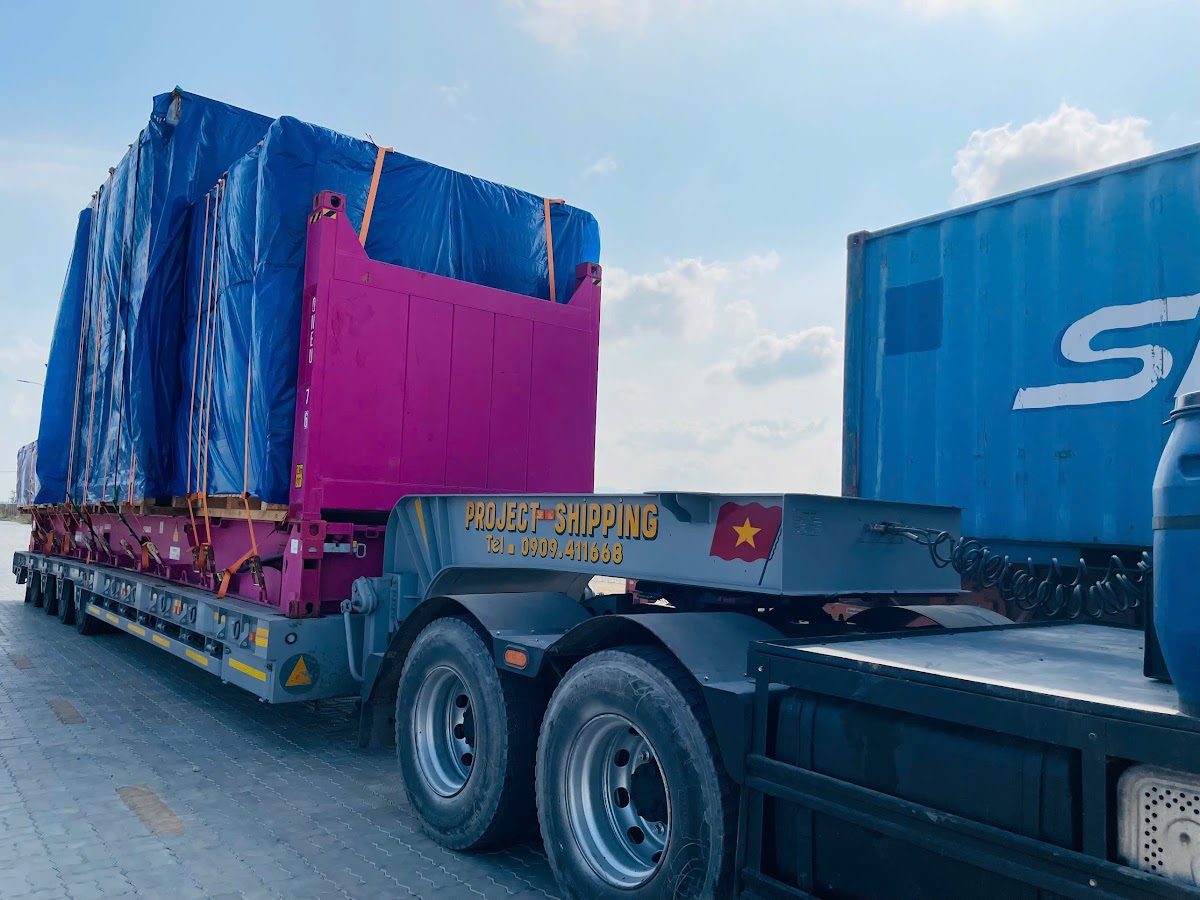
Yes. All five container terminals in the list above have handled flat racks on our jobs, and SSIT and TCIT open tops as well. The questions that decide the plan are less about the terminal and more about the carrier and the truck.
An over-width or over-height unit needs OOG acceptance from the carrier before it is loaded. Some carriers accept OOG only on mainline services, which is one reason the unit ends up at Cai Mep instead of Cat Lai. Ask us to check before you fix the port of discharge. We get acceptance before you confirm the booking.
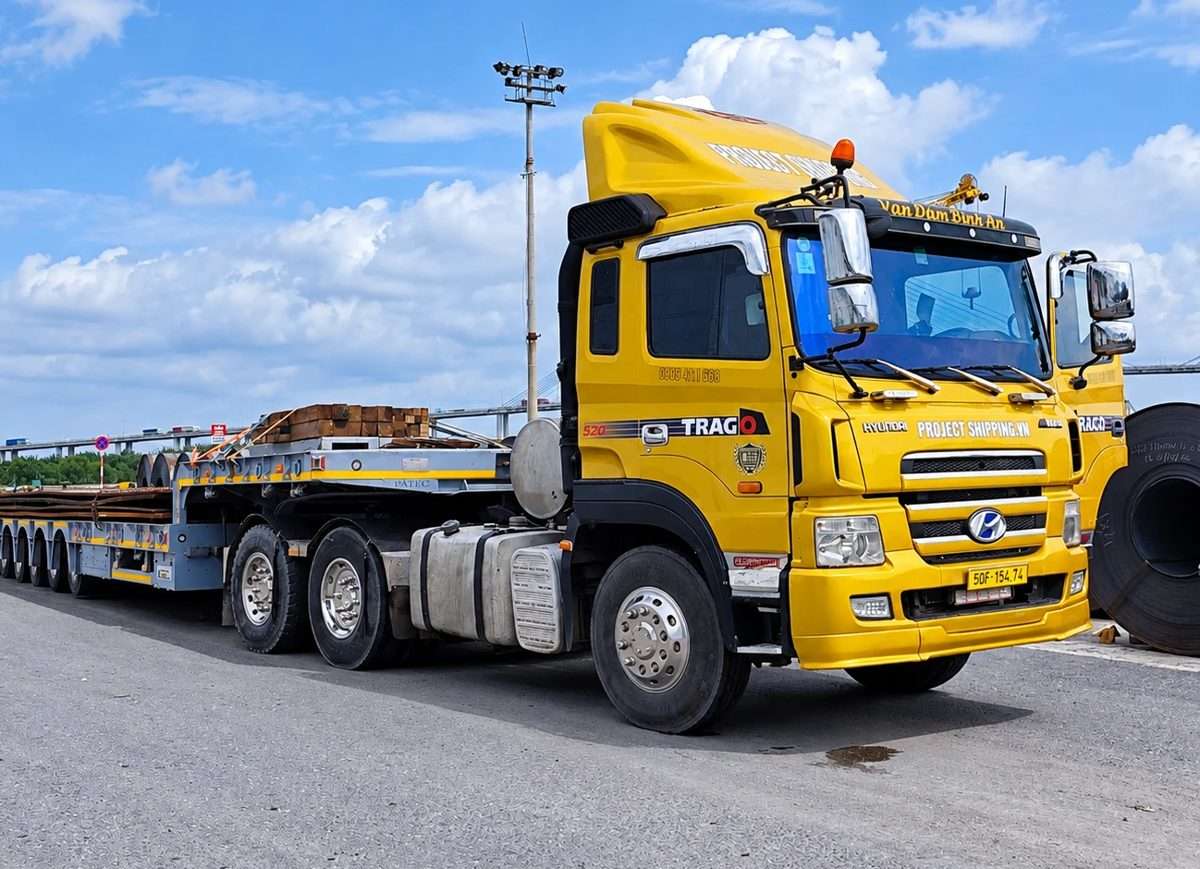
Our own trucks carry a standing over-width permit for flat racks of about 3.3 m. Wider, taller or heavier units need a permit for the exact tractor, trailer and route. The terminal will not release the unit if the cargo is even slightly over what the permit states, so we measure against the permit before the truck reaches the gate.
| Unit | Typical Cai Mep job | Trailer we plan |
|---|---|---|
| 20′ flat rack | Short, heavy pieces: drums, motors, rolls | Lowbed or flatbed, by height |
| 40′ flat rack | Machinery, crated plant, steel structure | 4-axle lowbed; 6-axle extendable when heavy |
| 40′ open top | Over-height cargo lifted in from the top | Flatbed or lowbed, by height |
| 40′ platform | Self-propelled machines and cranes | Lowbed with lashing points checked |
For container dimensions and payloads, see our flat rack container dimensions and open top container guides. For the full OOG service, see OOG cargo in Vietnam.
No terminal yet? Send the site address. We tell you whether Cai Mep or a city terminal keeps the road leg shorter.
Cargo that will not fit in any container still moves through Cai Mep port, but the right quay depends on the piece. The container terminals handle breakbulk on container ships or as part of a container call. General cargo ports such as PTSC Phu My take conventional breakbulk and project cargo vessels.
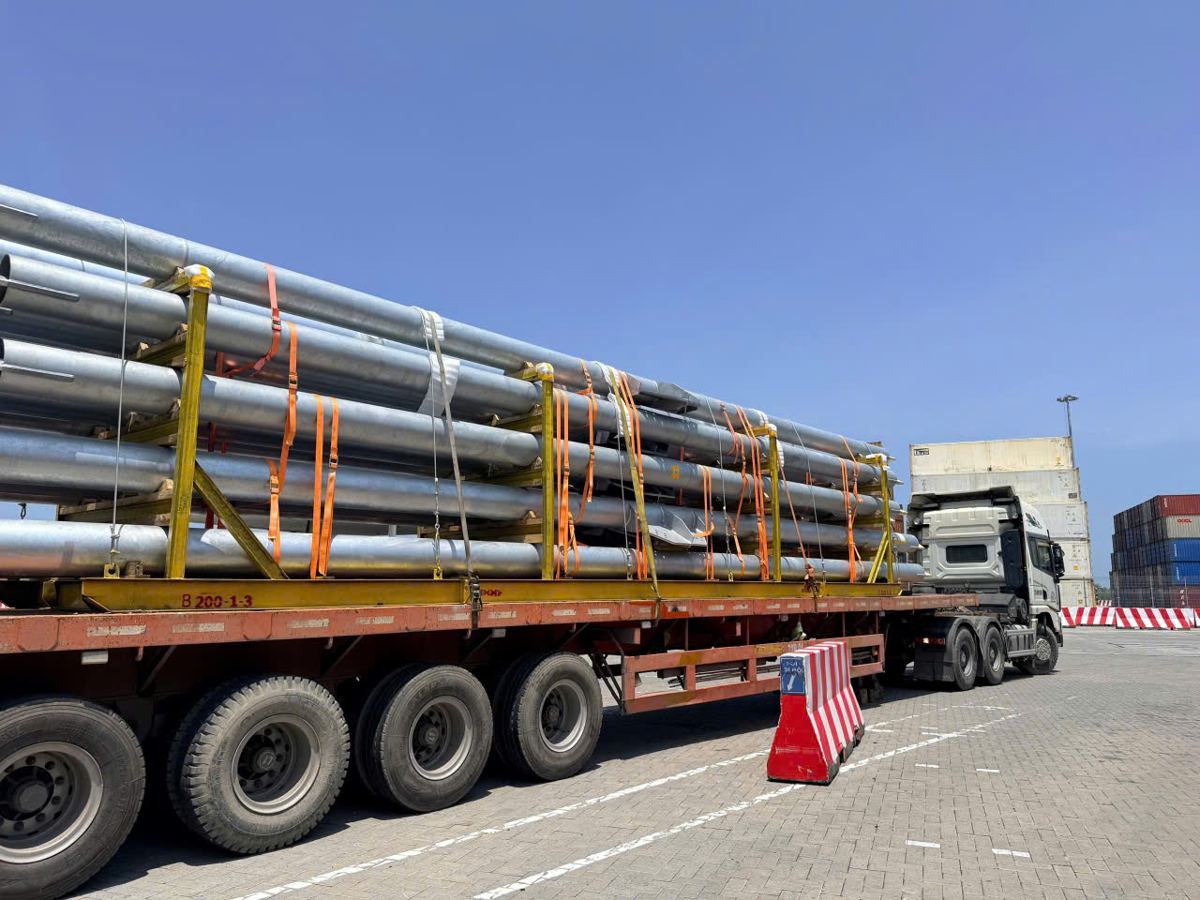
Many of our Cai Mep breakbulk jobs start in a fabrication workshop in Binh Chanh, on the west side of Ho Chi Minh City. Long cylindrical vessels and steel structure leave the workshop on lowbeds and run across the city to Gemalink. In November 2025 we moved 4 such packages in one lot, and in February 2026 a lot of 6.
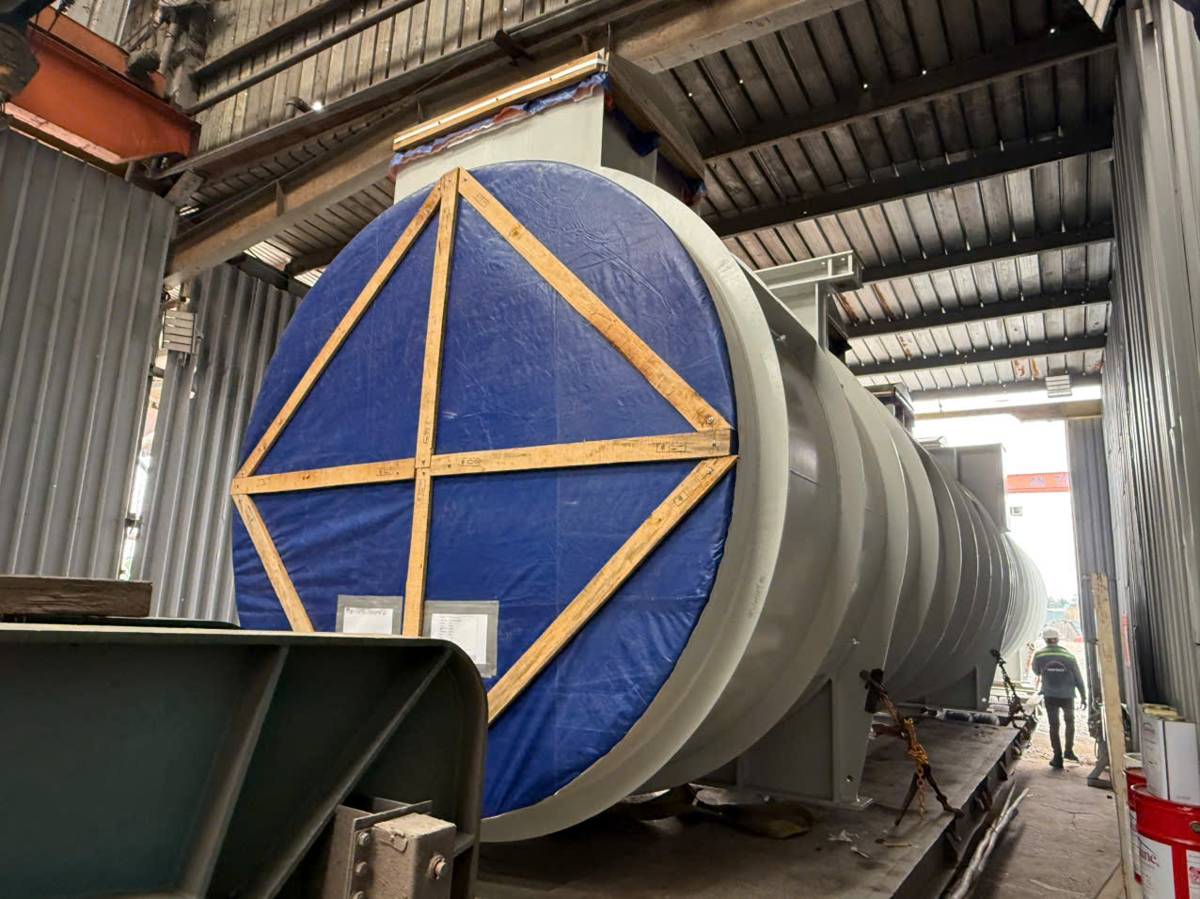
For units beyond container size, see our breakbulk and heavy lift page, and for road moves of very heavy pieces, heavy haulage in Vietnam. We arrange mobile cranes of 25 to 500 t and SPMT for the job; they are not part of our own trailer fleet.
Distance is the trade-off. Cai Mep saves a feeder leg but usually adds road kilometers compared with Cat Lai. The table shows one-way distances we use in our flat rack trucking tariff.
| To | From Cai Mep | From Cat Lai | What it means |
|---|---|---|---|
| Phu My industrial area | about 20 km | about 70 km | Cai Mep is the clear choice |
| Long Giang industrial zone | about 135 km | about 75 km | Cat Lai shorter by about 60 km |
| Minh Hung industrial zone | about 180 km | about 110 km | Cat Lai shorter by about 70 km |
| Moc Bai (Cambodian border) | about 190 km | about 120 km | Cat Lai shorter by about 70 km |
| Hoa Lu (Cambodian border) | about 240 km | about 170 km | Cat Lai shorter by about 70 km |
For sites north and west of the city, the extra 60 to 70 km from Cai Mep means more fuel, a longer permitted route and, for oversize loads, more hours inside the night time window. For sites in Phu My, Chau Duc or southern Dong Nai, Cai Mep is usually shorter. We do not apply Cat Lai rates to Cai Mep port pick-ups; each one is priced on its own route.
Trucks leave Cai Mep port on National Route 51 towards Bien Hoa and Ho Chi Minh City, or south towards Ba Ria and Vung Tau. Oversize loads follow the route written on the permit, and in the city they run inside the hours the permit allows. On jobs to Ben Luc we have run a 40′ flat rack from CMIT with an escort vehicle ahead of the truck.
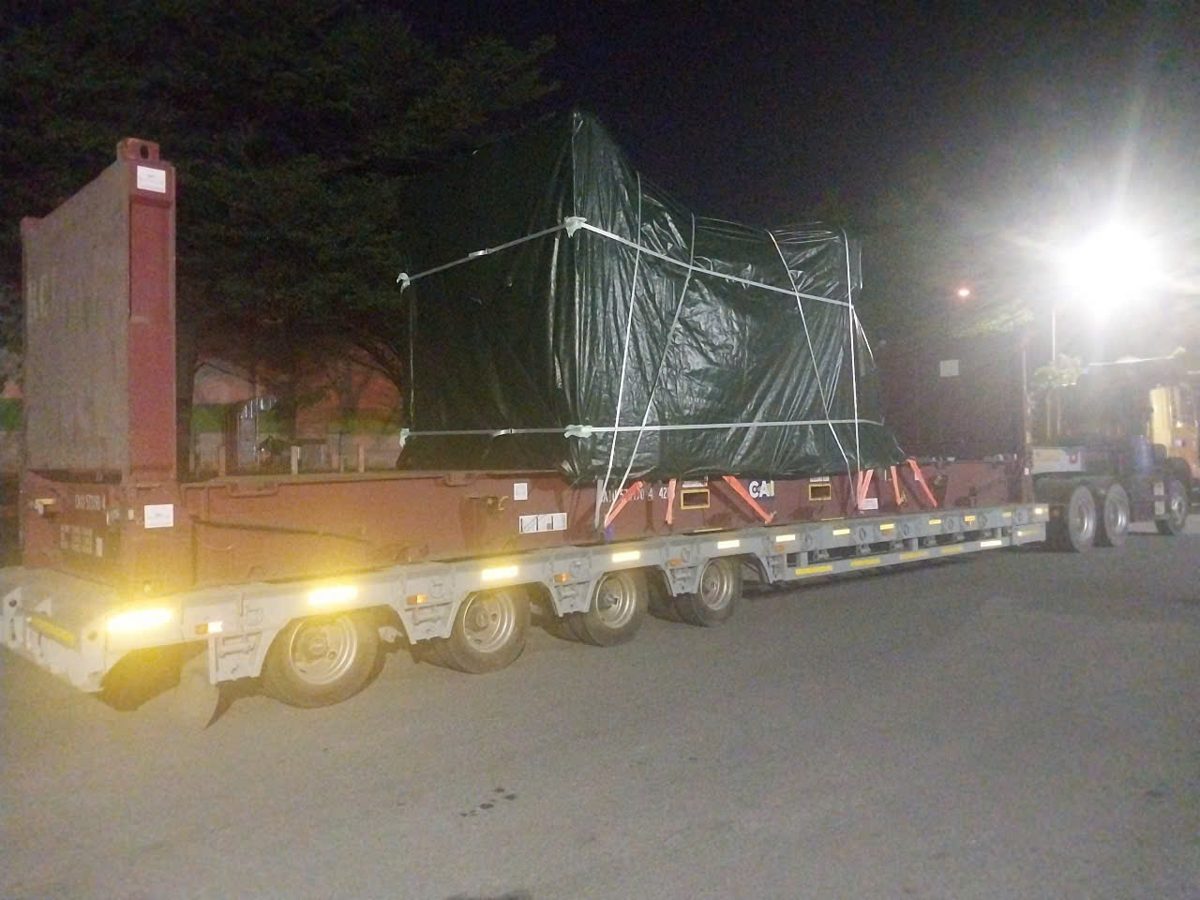
These are trucking jobs from our own records, with customer names left out. They show the mix: imports and exports, flat racks, open tops and loose breakbulk.
| Date | Terminal | Cargo | Route |
|---|---|---|---|
| Dec 2023 | CMIT | 38.8 t crane lashed on a 40′ platform | Phu My → CMIT, export |
| Oct 2025 | Cai Mep | Machinery on flat rack | Cai Mep → Dong Xuyen industrial zone, Vung Tau |
| Nov 2025 | SSIT | 8 × 40′ flat racks, and in a separate lot 4 × 40′ open tops | Di An → SSIT, export |
| Nov 2025 | SSIT → PTSC | 2 × 40′ flat racks | Transfer inside the cluster |
| Nov 2025 | Gemalink | 4 breakbulk packages | Binh Chanh → Gemalink, export |
| Jan 2026 | SSIT | 1 × 40′ flat rack and 1 package | SSIT → Huu Thanh industrial zone |
| Feb 2026 | Gemalink | 6 breakbulk packages and 1 × 20′ flat rack | Binh Chanh → Gemalink, export |
| Feb–Mar 2026 | CMIT, TCTT | 40′ flat racks with machinery | To Phu An Thanh and Ben Luc industrial areas |
| Jul 2026 | TCIT | 2 × 40′ open tops and 1 × 40′ flat rack | Di An → TCIT, export |
| Aug 2026 | TCIT | 4 × 40′ flat racks | TCIT → My Phuoc–Tan Van area, import |
| Sep 2026 | Gemalink | 1 × 20′ and 1 × 40′ flat rack | Di An → Gemalink, export |
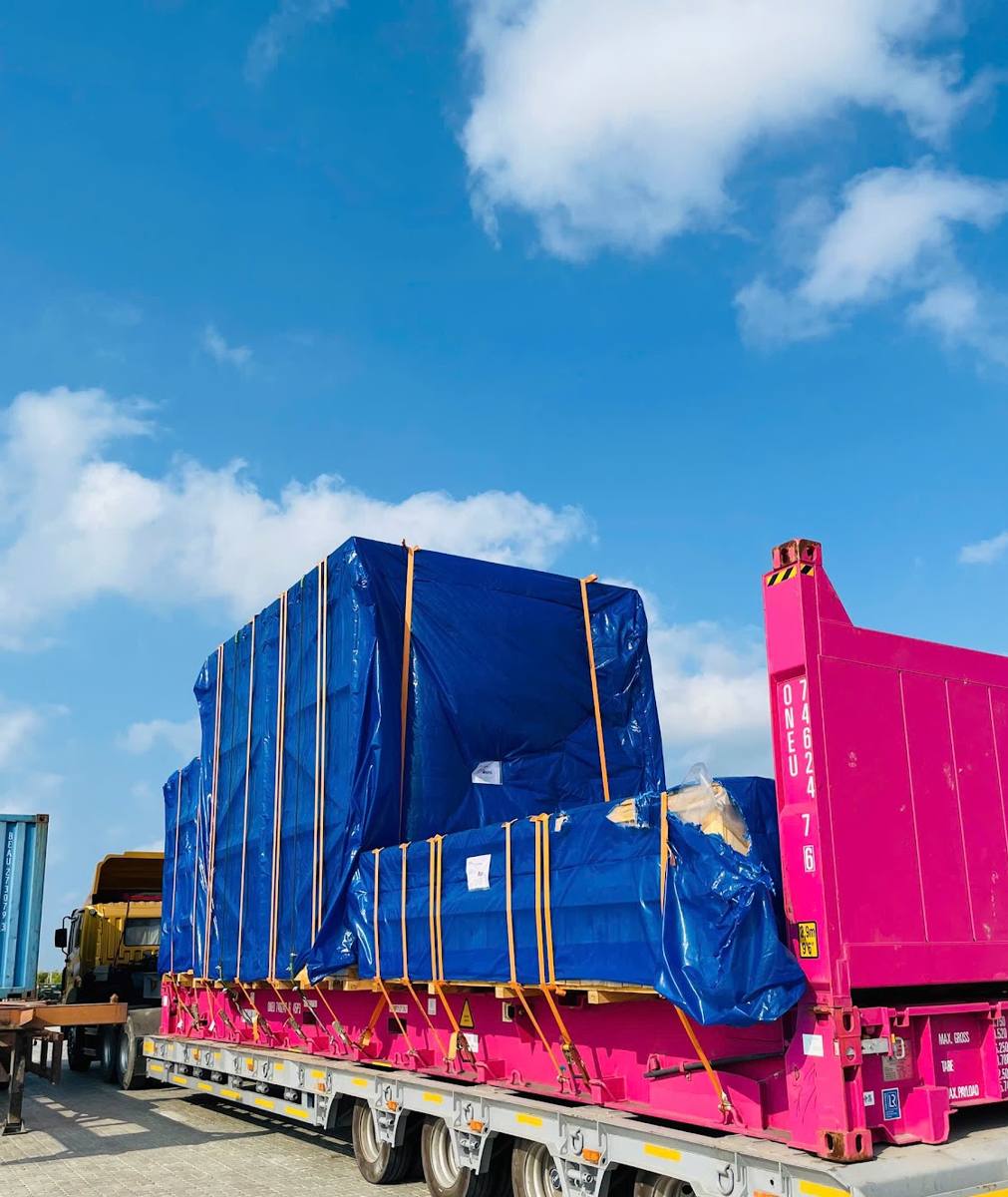
At Cai Mep the cranes are rarely the problem. Paperwork and timing are. This is the list our dispatchers check before a truck leaves for the cluster.
Our internal rule: the consignee sends the D/O, ETA and release documents at least 2 working days before pick-up. Without them, dispatch does not send a truck 70 km to the port to wait.
Local charges at Cai Mep follow the carrier, not the terminal. See our Vietnam local charges tables by shipping line. For the other gateways, go back to the Vietnam ports guide.
Cai Mep or Cat Lai to Phnom Penh by road via Moc Bai or by Mekong barge, with transit customs steps.
Transit to Cambodia →Flat racks and open tops at Cat Lai: the customs supervision line, EIR checks and night truck windows.
Cat Lai port →Cat Lai, the river terminals, Hiep Phuoc, Hai Phong and Da Nang for OOG and project cargo.
Vietnam ports →Route surveys, permits, lashing and door-to-site delivery for plant equipment.
Project cargo →Port members and contacts are listed by the Vietnam Seaports Association. We are a licensed customs agent (Decision 247/QD-TCHQ, 2025) and a member of WCA and OPCA; see our page for agents.
Tony Tuan, CEO: WhatsApp +84 909 411 668 · ceo@projectshipping.vn
Nura Tu, Overseas Department: WhatsApp +84 906 770 650 · overseas@projectshipping.vn
Calling from Vietnam: 0909 411 668
Last updated: October 2026





© 2017 – 2026 Project Shipping. Design by Thiết kế Web DC