☰ Menu

Cai Mep / Cat Lai → Moc Bai → Bavet → Phnom Penh · Mekong barge · Transit customs

Vietnam Cambodia Transit: Cai Mep to Phnom Penh by Road and Barge

Vietnam Cambodia transit for containers, flat racks and project cargo: we file the transit declaration at Cai Mep or Cat Lai, move the cargo 120 to 190 km to the Moc Bai border, or book it on a Mekong barge to Phnom Penh.

For forwarders and agents shipping to Cambodia through a Vietnamese port. · Transit document checklist
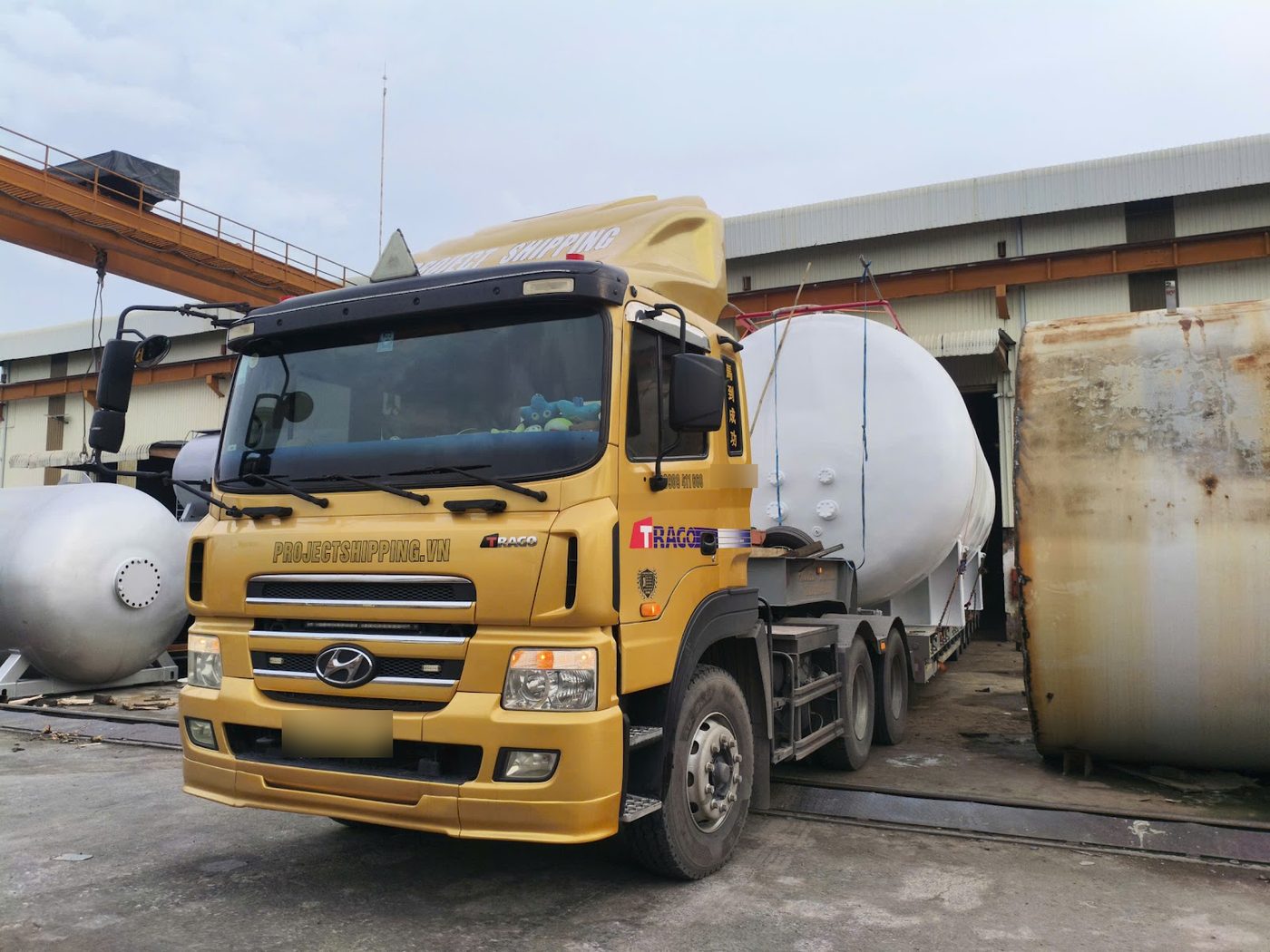
Vietnam Cambodia transit: Project Shipping prime mover and lowbed loading a steel storage tank bound for Moc Bai
Our prime mover and lowbed loading a steel storage tank bound for Cambodia, Bien Hoa, August 2026.
120 kmCat Lai to the Moc Bai border gate by road
190 kmCai Mep to Moc Bai, the usual run for deep-sea arrivals
62 tpayload of our own 6-axle lowbed, 14.5 m deck
2 hoursroute plan and Vietnam-side rate within working hours once we have dimensions
Licensed customs agent · Decision 247/QĐ-TCHQ WCA incl. WCA Projects · ID 135393 OPCA Gold · ID 75121659 Est. 2017 · Ho Chi Minh City

Most cargo for Phnom Penh crosses the sea to a Vietnamese port first. Cai Mep has the deep-sea calls, and Phnom Penh sits only a few hours’ drive from the border.

The risk in a Vietnam Cambodia transit is rarely the sea leg. It is a transit declaration that does not match the B/L, a flat rack that cannot be sealed like a box, or an oversize permit that covers Vietnam but not the road after Bavet.

This page explains the two working routes, road through Moc Bai and barge up the Mekong, with real distances, the customs steps on the Vietnamese side, and two moves our trucks made to the Moc Bai border in August 2026.

Vietnam Cambodia transit: road through Moc Bai or barge up the Mekong?

Pick the route from the cargo and the final address, not from habit. Standard boxes to a warehouse near the river often go by barge. Anything wide, tall or heavy, or anything bound for eastern Phnom Penh and the Bavet zones, usually goes by road.

Road via Moc Bai – BavetMekong barge to Phnom Penh port
Vietnamese portCai Mep (VNCMT) or Cat Lai (VNCLI)Cai Mep or Cat Lai, loaded onto a river barge
Border crossingMoc Bai (Tay Ninh) – Bavet (Svay Rieng)Thuong Phuoc or Vinh Xuong on the Mekong – Kaam Samnor side in Cambodia
Distance in Vietnam120 km from Cat Lai, 190 km from Cai MepRiver passage through the Mekong Delta
Cambodian legAbout 167 km on National Road 1 from Bavet to Phnom PenhBarge to the Phnom Penh port container terminal (LM17), then a short truck run
Best forUrgent cargo, flat racks, open tops, breakbulk, door deliveryRegular 20′ and 40′ boxes, steady volumes, lower cost per box
Watch out forBorder queues, the weight check at the Mekong bridge, permits on both sidesFixed sailing days, low-water season, extra handling for OOG units

Container carriers market the barge as cheaper than trucking at the cost of about one extra day. For project cargo, the deciding factor is usually the largest piece: if it does not fit a standard box, road is the simpler plan.

The road route: Cai Mep or Cat Lai to Moc Bai, Bavet and Phnom Penh

The road corridor for Vietnam Cambodia transit follows the old Saigon–Phnom Penh highway. In Vietnam the cargo runs through Ho Chi Minh City’s northwest to Tay Ninh province, then crosses at Moc Bai into Bavet and follows National Road 1 to the capital.

LegDistanceWhat happens there
Cat Lai port → Moc Baiabout 120 kmPick-up after transit clearance; city truck curfews decide the departure hour
Cai Mep port → Moc Baiabout 190 kmLonger run around Ho Chi Minh City; usual for mainline vessels and heavy lifts
Moc Bai → Bavetborder crossingVietnamese customs confirms the transit exit; Cambodian customs takes over at Bavet
Bavet → Neak Loeung bridgeabout 106 kmNational Road 1 through Svay Rieng and Prey Veng; Bavet special economic zones on the way
Neak Loeung bridge → Phnom Penhabout 61 kmThe 2.2 km Tsubasa bridge over the Mekong has a weighing checkpoint at its eastern end

Vietnamese distances from our own trucking tariff. Cambodian distances from public sources on National Road 1; confirm the exact route with a survey for oversized units.

Next to the gate, the Tan Cang Moc Bai dry port works as a customs supervision location (code 45B1C03) for inspection and transshipment of import, export and transit cargo. Since September 2025, trucks coming in from Cambodia are routed through it instead of the joint control station.

For deep-sea arrivals, see our Cai Mep port guide and the Cat Lai port guide. For the dry port’s own notice, read the Saigon Newport update on Moc Bai routing.
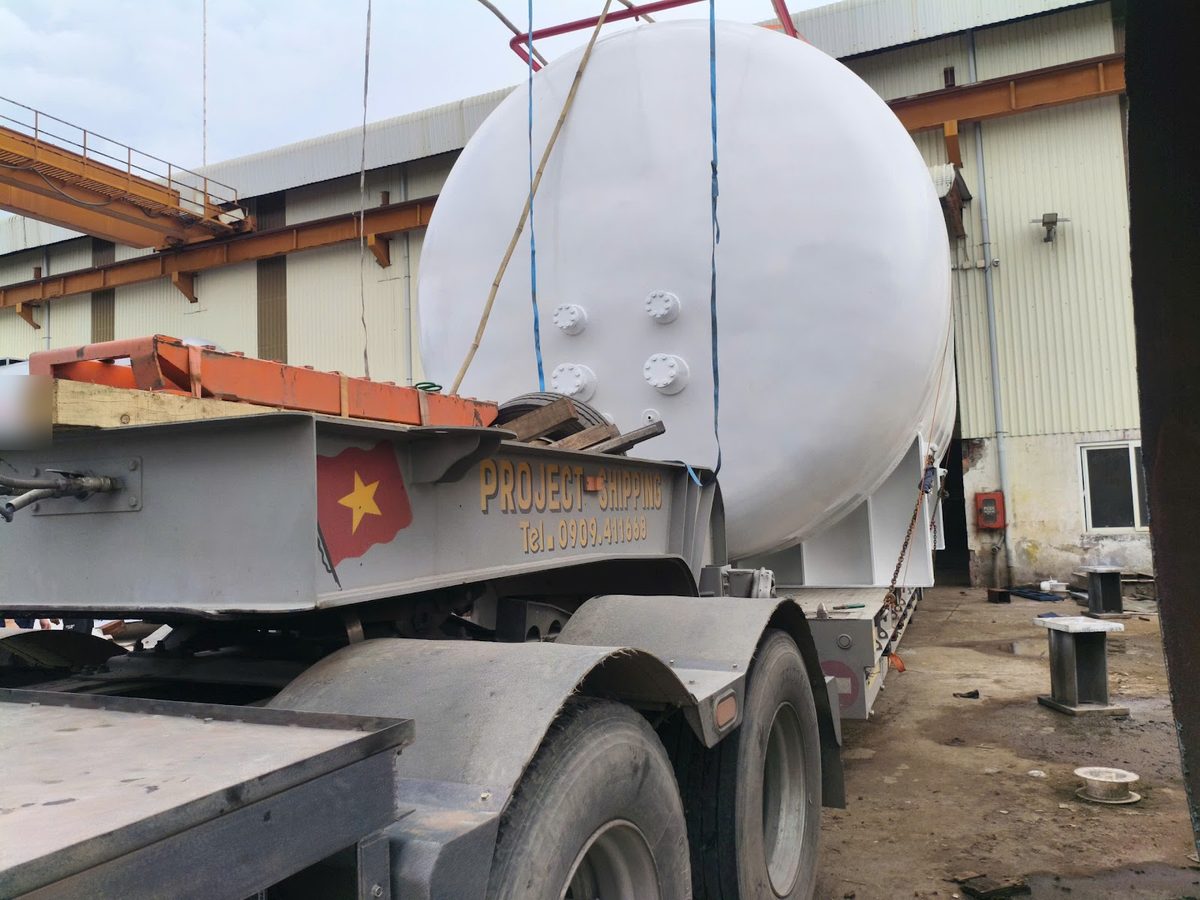
Project Shipping lowbed gooseneck with a white storage tank on deck before the run to Moc Bai
Our lowbed gooseneck with the tank on deck, ready for the run from Bien Hoa to Moc Bai (31 August 2026).

The Mekong barge: Cai Mep to Phnom Penh port

For boxed Vietnam Cambodia transit cargo, river barges link the Vietnamese terminals with the Phnom Penh Autonomous Port container terminal, about 30 km downstream of the city. The barge crosses the border on the Mekong at Thuong Phuoc or Vinh Xuong, where transit cargo is checked out of Vietnam.

  • Fixed weekly services exist. CMA CGM launched a weekly Phnom Penh Express barge from Gemalink in Cai Mep to Phnom Penh port in January 2025. Maersk runs its own cross-border barges with customs at Thuong Phuoc.
  • Built for boxes. Barges carry standard 20′ and 40′ containers well. Flat racks with overwidth or overheight need the barge operator’s approval before booking.
  • Calendar matters. Sailing days are fixed, so a missed cut-off can cost a week. River levels change through the year.
  • Last mile still by truck. From the Phnom Penh port terminal the box goes by truck to the factory or warehouse.

If your carrier’s B/L already covers the barge to Phnom Penh, we can still handle the pieces that do not fit: a crated unit split off to road, or a site delivery on the Cambodian side coordinated with your consignee.

How transit customs works for a Vietnam Cambodia transit

Transit cargo does not pay Vietnamese import duty. It is declared at the first Vietnamese port as goods in transit, moves under customs control, and is confirmed out at the border gate. Vietnam’s transit rules list Moc Bai – Bavet as a border gate pair for transit goods.

1. Before arrivalWe check the B/L, invoice and packing list. Consignee and final destination must show Cambodia, and descriptions must match.
2. Transit declarationFiled electronically at Cai Mep or Cat Lai customs with the route and the exit gate (Moc Bai, or the river gate for barges).
3. Seal or identifyBoxes travel under customs seal. Open flat racks and breakbulk are identified by marks, photos and the packing list.
4. Exit confirmedCustoms at the border confirms the cargo left Vietnam, which closes the transit declaration.

Vietnam and Cambodia also take part in the ASEAN Customs Transit System (ACTS), which went live in late 2020. Vietnam’s first ACTS shipment ran through Moc Bai customs in February 2024. See the ACTS fact sheet.

Documents for Vietnam Cambodia transit cargo

  • Bill of lading showing Phnom Penh or the Cambodian site as final destination, and the consignee in Cambodia.
  • Commercial invoice and packing list with gross weight per piece and packed dimensions in mm.
  • Drawings for oversized pieces with lifting points and centre of gravity, for the permit and the crane plan.
  • Cambodian import paperwork prepared by the consignee’s broker, so Bavet clearance starts when the truck arrives.
  • Licences for controlled goods, if any. Some goods need permission to pass through Vietnam even in transit.

We file the Vietnamese side. The Cambodian import declaration is done by your consignee’s customs broker; we share ETAs, photos and truck details with them so both sides move on the same day. Our Vietnam customs clearance guide covers the import side in more detail.

Send L×W×H + weight, the arrival port and the address in Cambodia. Get a route plan and a Vietnam-side net rate within 2 working hours.

We tell you whether we would use road or barge, which truck, and what the transit declaration needs before the vessel arrives.

Oversized cargo: what changes on the road to Phnom Penh

A sealed 40′ box crosses Moc Bai routinely. A 3.5 m wide crate or a 40 t vessel does not. An oversized Vietnam Cambodia transit needs a plan for two road networks, two permit offices and one border yard.

  • Permits on both sides. The Vietnamese oversize permit ends at Moc Bai. The Cambodian leg needs its own approval, arranged on that side.
  • Route survey before booking. Power lines, toll gates and the bridge checkpoint at Neak Loeung decide the axle layout and the travel hours.
  • Truck change or through truck. Either the cargo is trans-loaded at the border with a crane, or a carrier licensed for cross-border trips runs through. Trans-loading adds a lift and a day.
  • Lashing for a long run. We chain to the saddles or lifting lugs and photograph the lashing before leaving the yard and again at the border.
Our own heavy-haul equipmentSpecTypical use on this corridor
6-axle lowbed14.5 m deck, 3.2 m wide, 62 t payload, 1.6 m gooseneckTanks, transformers, long steel to Moc Bai
4-axle lowbeds (2 units)Low deck for tall piecesCrated machines, open top and flat rack cargo
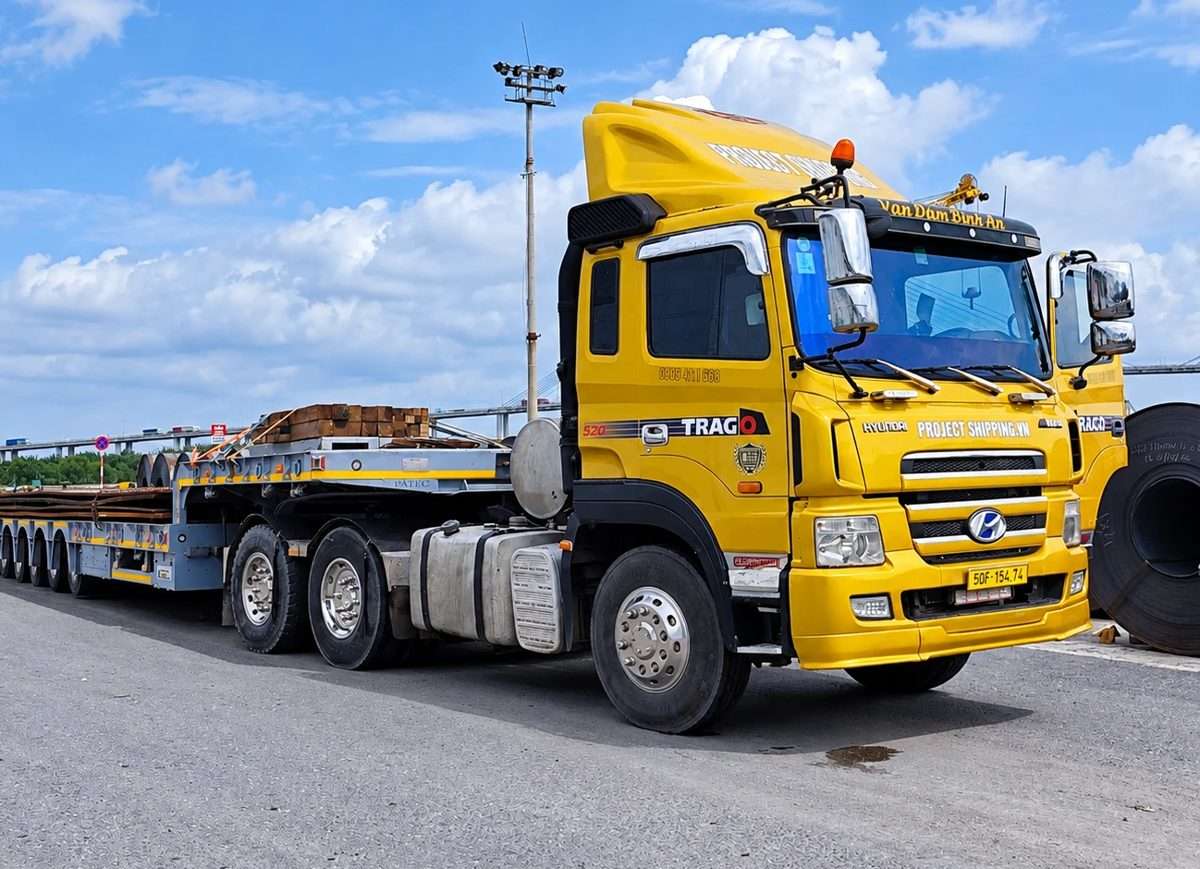
Prime movers6×4 tractors in Project Shipping colorsPort pick-up at Cat Lai and Cai Mep

Mobile cranes, extendable trailers and modular trailers for larger pieces come from partner fleets we hire per job, sized from your drawing. More on equipment in our heavy haulage guide and the OOG cargo page.
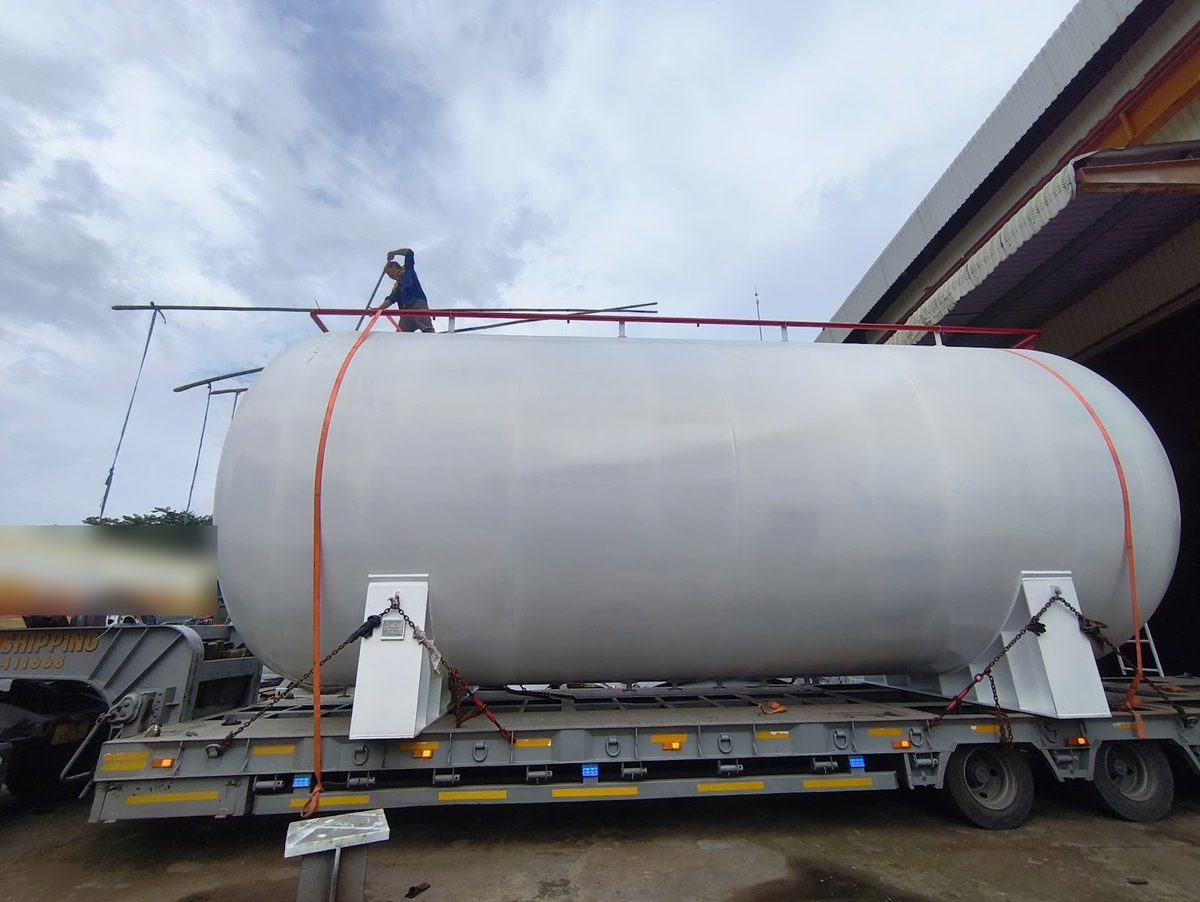
Storage tank chained to its saddles on a lowbed before a Vietnam Cambodia transit run to Moc Bai
Chains on both saddles and straps over the shell, checked by our crew before the truck left the yard.

Two recent moves to the Moc Bai border

Both moves below ran in August 2026 on the road toward Bavet. The first was export cargo for Cambodia; the second was an open top for a factory inside the Moc Bai border economic zone. The road leg and the border approach are the same as for Vietnam Cambodia transit cargo.
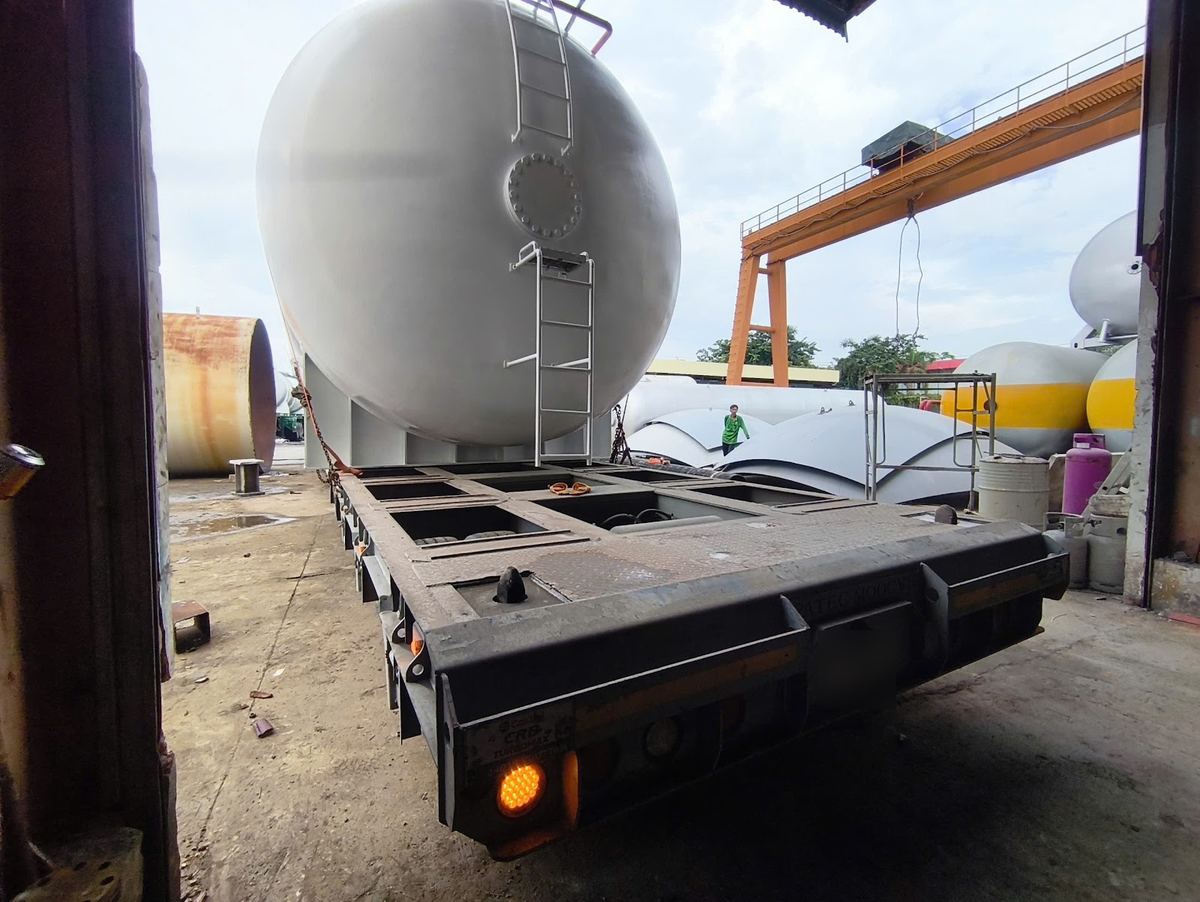
Loaded lowbed with a steel storage tank at a fabrication yard in Bien Hoa before the run to Moc Bai

Steel storage tanks bound for Cambodia

Cargo
Steel storage tanks, each loaded on its own saddles
Route
Fabrication yard in Bien Hoa (Dong Nai) → Moc Bai, Tay Ninh
Equipment
3 lowbeds: 2 of our own trucks and 1 partner truck, one convoy
Challenge
Wide, tall tanks on a long run through Ho Chi Minh City’s outskirts, with a route permit and border-gate fees
Result
All three trucks delivered on 31 August 2026, supervised by our Ops team
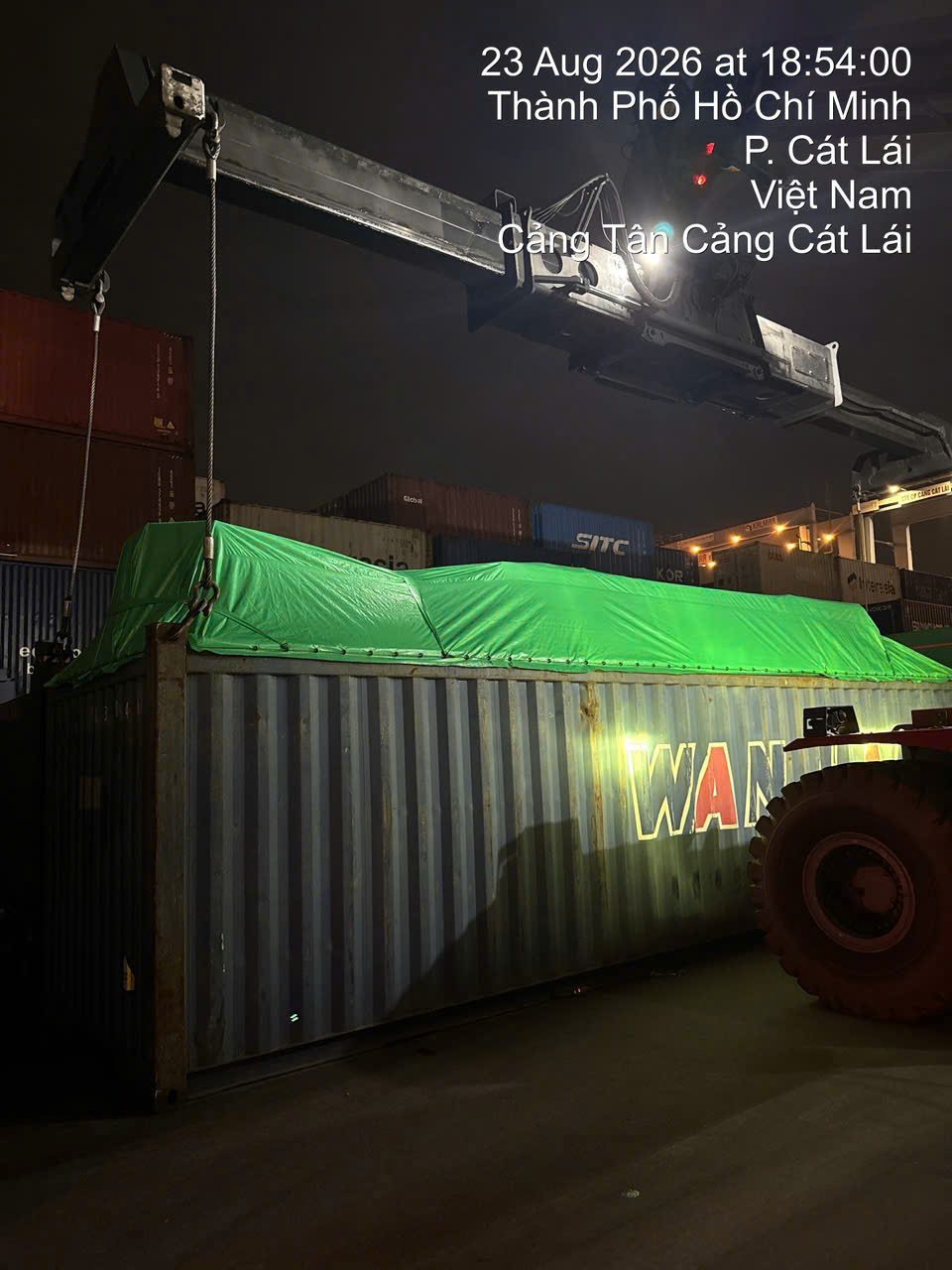
40ft open top container with tarpaulin lifted by reach stacker at Cat Lai port for delivery to Moc Bai

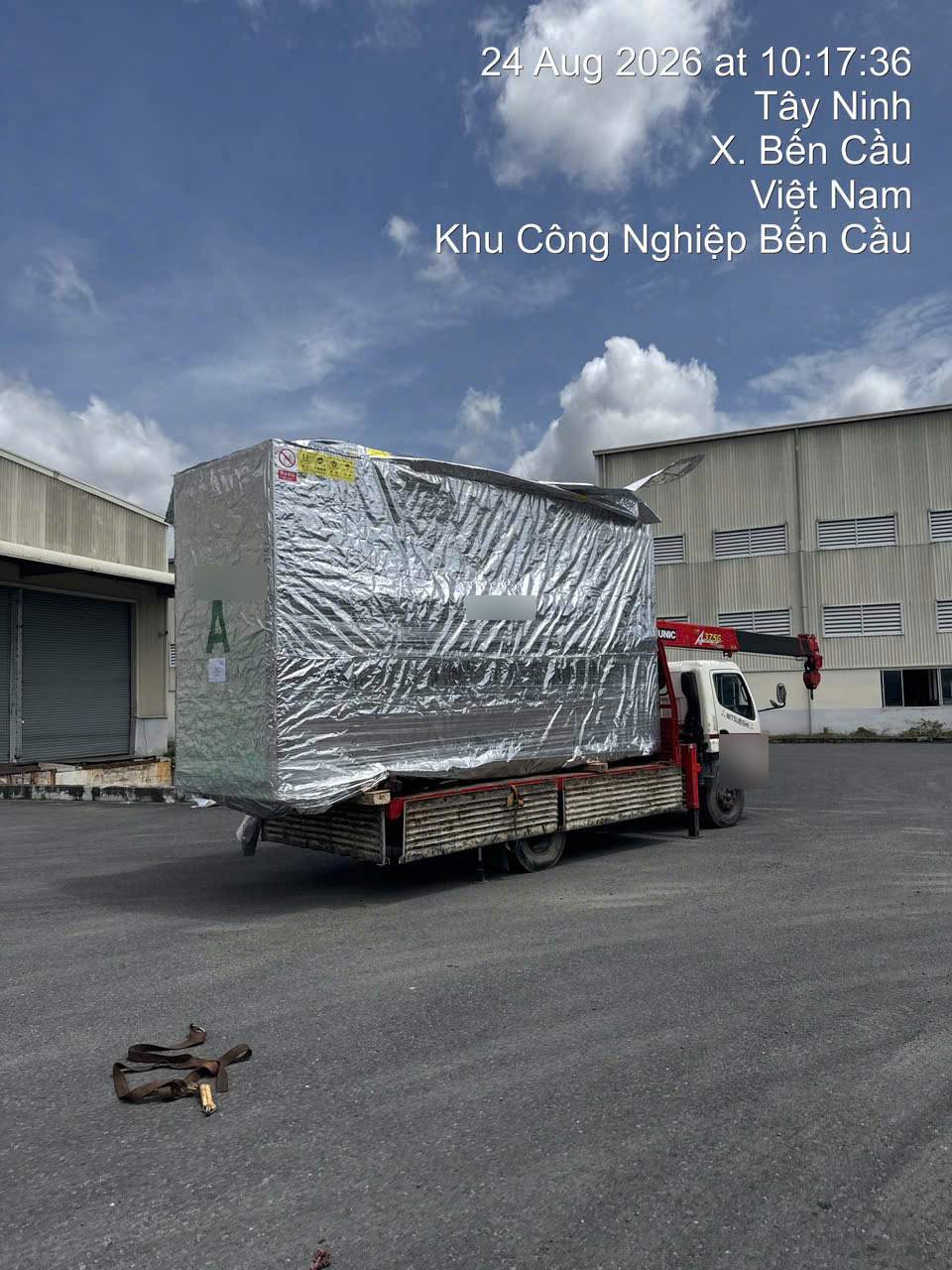
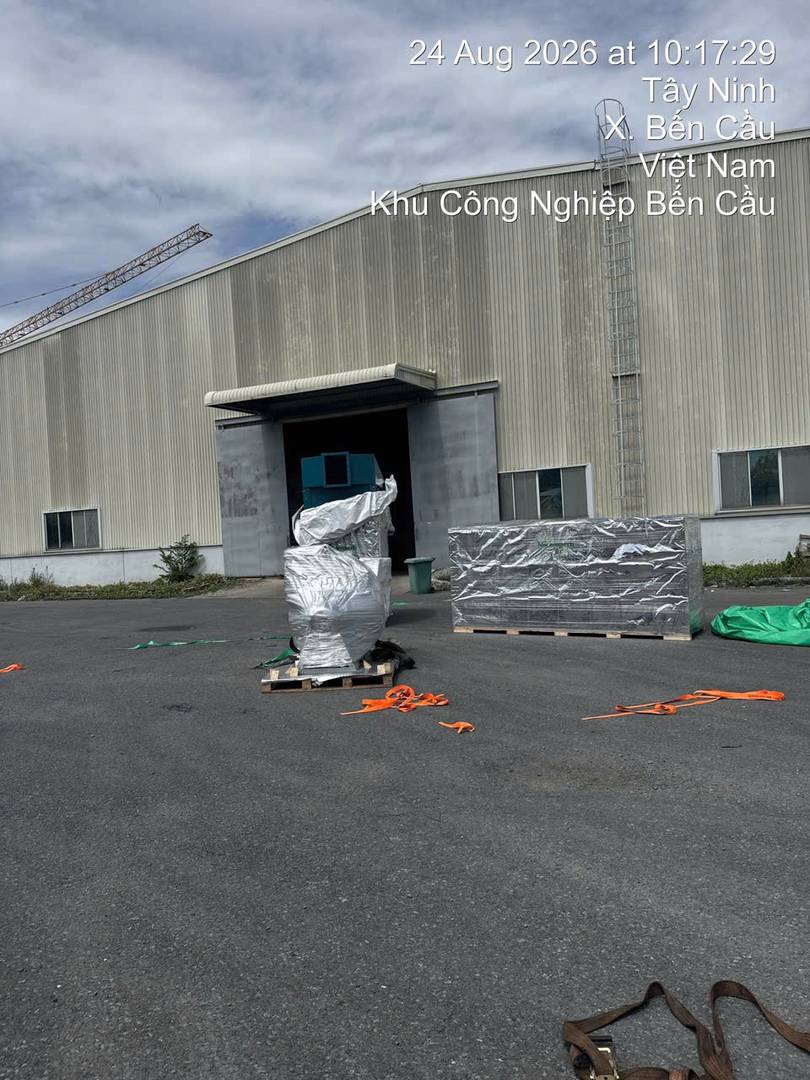
40′ open top: Cat Lai to the Moc Bai border economic zone

Cargo
Foil-wrapped production equipment in a 40′ open top under tarpaulin
Route
Cat Lai port → industrial park in the Moc Bai border gate economic zone, Ben Cau, Tay Ninh
Equipment
Our truck for the box; a hired truck crane to unload at site
Challenge
Evening pick-up at Cat Lai, about 120 km to the border district, unloading with no fixed crane at the warehouse
Result
Lifted at Cat Lai on the evening of 23 August, unloaded at site the next morning

Costs and lead times for Vietnam Cambodia transit cargo

We quote every Vietnam Cambodia transit per shipment, because the piece size changes everything. The table shows what moves the price and how long each step usually takes on the Vietnamese side.

Cost itemWhat drives itUsual time
Port charges (THC, D/O, cleaning)Carrier and terminal; see our local charges tablesD/O on arrival
Transit declarationNumber of B/Ls and pieces; inspection if selectedSame day when documents match
Trucking to Moc Bai120 or 190 km, truck type, curfew hoursSame day for standard boxes
Oversize permit (Vietnam)Width, height, axle load and routeAbout 2 working days once documents are complete
Lifting at border or siteCrane size from weight and radiusBooked with the truck
Barge (if used)Carrier tariff per box, sailing dayWeekly sailings; about one day more than road

Cambodian duties, taxes and the Bavet clearance are charged by the consignee’s broker, so we leave them out unless you ask us to collect a figure from them.
Three mistakes that hold Vietnam Cambodia transit cargo at the border

  • Vietnam shown as final destination. A Vietnam Cambodia transit starts with the right B/L. If it names a Vietnamese consignee, the cargo is treated as an import. Fixing it after arrival means an amendment and days of storage.
  • Descriptions that do not match. The transit declaration, invoice and the Cambodian import papers must describe the same goods, by piece and weight. One mismatch stops the truck at Moc Bai.
  • Permit for one side only. A wide load cleared to Moc Bai waits at the border if nobody has arranged the Cambodian approval or the trans-loading crane.
Foil-wrapped equipment unloaded in front of a warehouse in Ben Cau, Tay Ninh, near the Moc Bai border
Unloading planned before the truck left the port: the crane was booked for the morning the open top arrived in Ben Cau.

How we work with forwarders shipping to Phnom Penh

Most of our Vietnam Cambodia transit work comes from overseas forwarders who own the ocean leg to Vietnam. We act as their Vietnam desk for the transit declaration, trucking or barge booking, and the handover at the border.

1. Details inSend L×W×H, weight, arrival port, ETA and the address in Cambodia.
2. Route and rateRoad or barge, truck type, permits, and a Vietnam-side rate within 2 working hours.
3. Before arrivalDocuments checked, transit declaration prepared, permit applied for, Cambodian broker briefed.
4. Port to borderPick-up, run to Moc Bai or barge loading, exit confirmed, photos to you at each step.
  • We never contact your customer. Updates, photos and documents go to you unless you ask otherwise.
  • Net rates for network members. WCA (including WCA Projects) and OPCA members get net rates on the Vietnam side.
  • One desk in Vietnam. Customs, trucking, permits and lifting sit with one team in Ho Chi Minh City.

Partners can read our short page at projectshipping.vn/agents or download the company profile (PDF).

FAQ: Vietnam Cambodia transit

Which border gate is used for road transit from Vietnam to Phnom Penh?
Moc Bai in Tay Ninh province, opposite Bavet in Cambodia. It is about 120 km from Cat Lai and 190 km from Cai Mep, and about 167 km from Bavet to Phnom Penh on National Road 1.
Is road or barge better from Cai Mep to Phnom Penh?
Barge suits regular containers to the Phnom Penh port area and costs less per box, with about one extra day. Road suits urgent cargo, door delivery and anything oversized that does not fit a standard box.
Does transit cargo pay import duty in Vietnam?
No. Goods declared in transit to Cambodia do not pay Vietnamese import duty. They move under customs control and the declaration closes when customs at the border confirms the exit.
Can flat racks and breakbulk go in transit through Vietnam?
Yes. Since they cannot be sealed like a closed box, customs identifies them by marks, photos and the packing list. Oversized pieces also need a road permit in Vietnam and a separate approval in Cambodia.
Who clears the cargo into Cambodia?
The consignee’s Cambodian customs broker files the import at Bavet or at Phnom Penh port. We file the Vietnamese transit side and share ETAs, photos and truck details with the broker.
How long does an oversize permit take in Vietnam?
About 2 working days once the documents are complete. Send the drawing with the booking so the permit is ready when the vessel arrives.
Will you contact our customer in Cambodia?
Only for customs and delivery, as you instruct. We never contact your customer for sales. Updates and photos go to you.

Related pages

Cai Mep port

Deep-sea terminals, OOG handling and trucking times from Cai Mep–Thi Vai.

Cai Mep guide →

Project cargo

Door-to-site plans for plant equipment and heavy units.

Project cargo →

Export from Vietnam

Export customs, flat racks and breakbulk out of Vietnamese ports.

Export guide →

Heavy haulage

Lowbeds, permits and route surveys for heavy units in Vietnam.

Heavy haulage →

Shipping to Phnom Penh through a Vietnamese port?

Tony Tuan, CEO: WhatsApp +84 909 411 668 · ceo@projectshipping.vn
Nura Tu, Overseas Department: WhatsApp +84 906 770 650 · overseas@projectshipping.vn
Calling from Vietnam: 0909 411 668

Last updated: October 2026

Request a quote Reply within 2 working hours · plan and net rate in one message

We use your details only to answer this request. We never contact your customer.

DOWNLOAD BẢNG GIÁ