Europe → Vietnam · Genoa · Hamburg · Rotterdam · Antwerp · Breakbulk, flat rack, LCL machinery
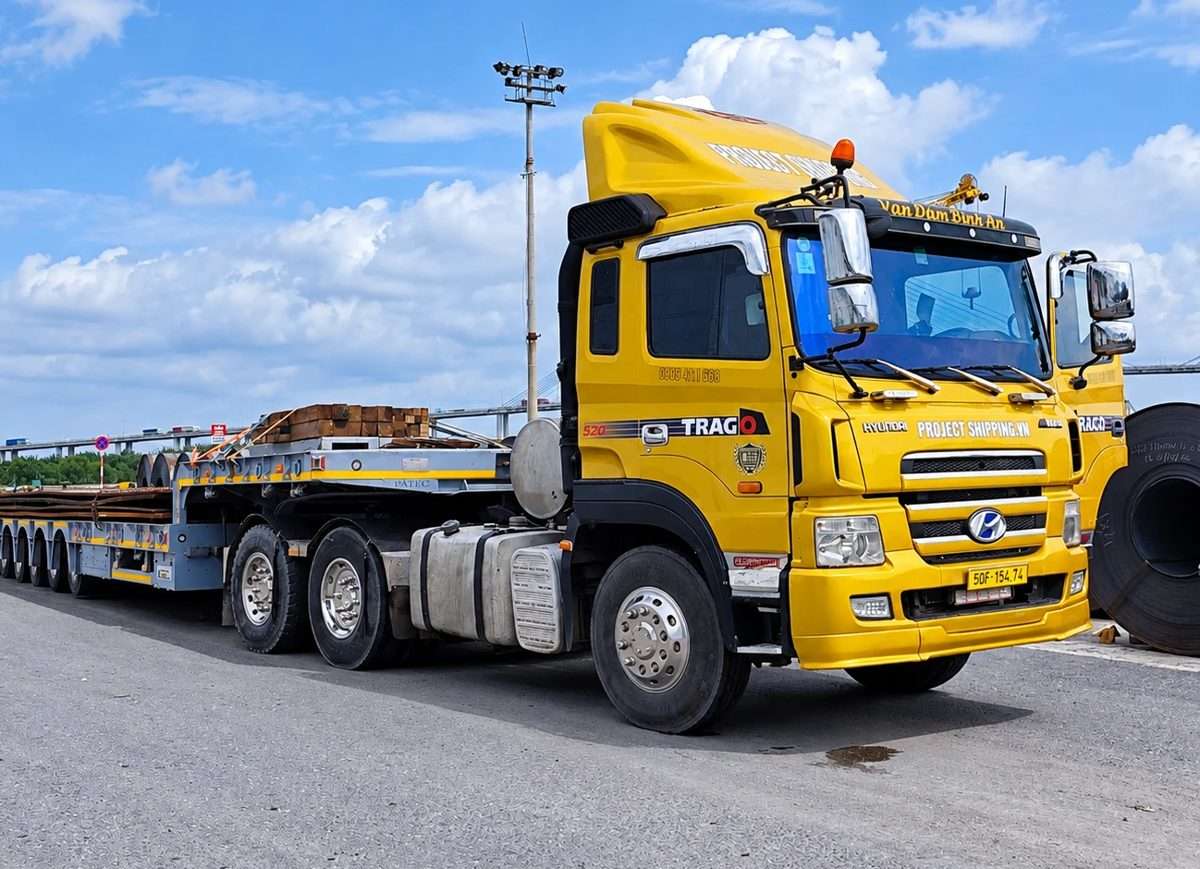
Shipping Europe to Vietnam takes 30 to 60 days at sea, and a heavy piece can still lose a week after it lands. The usual causes are a terminal that cannot lift it, a truck permit written for the wrong height, or an origin statement that customs rejects. We run that Vietnam side for European forwarders.
For European forwarders, project freight agents, OEM shipping teams and EPC contractors. · Our real files from Italy
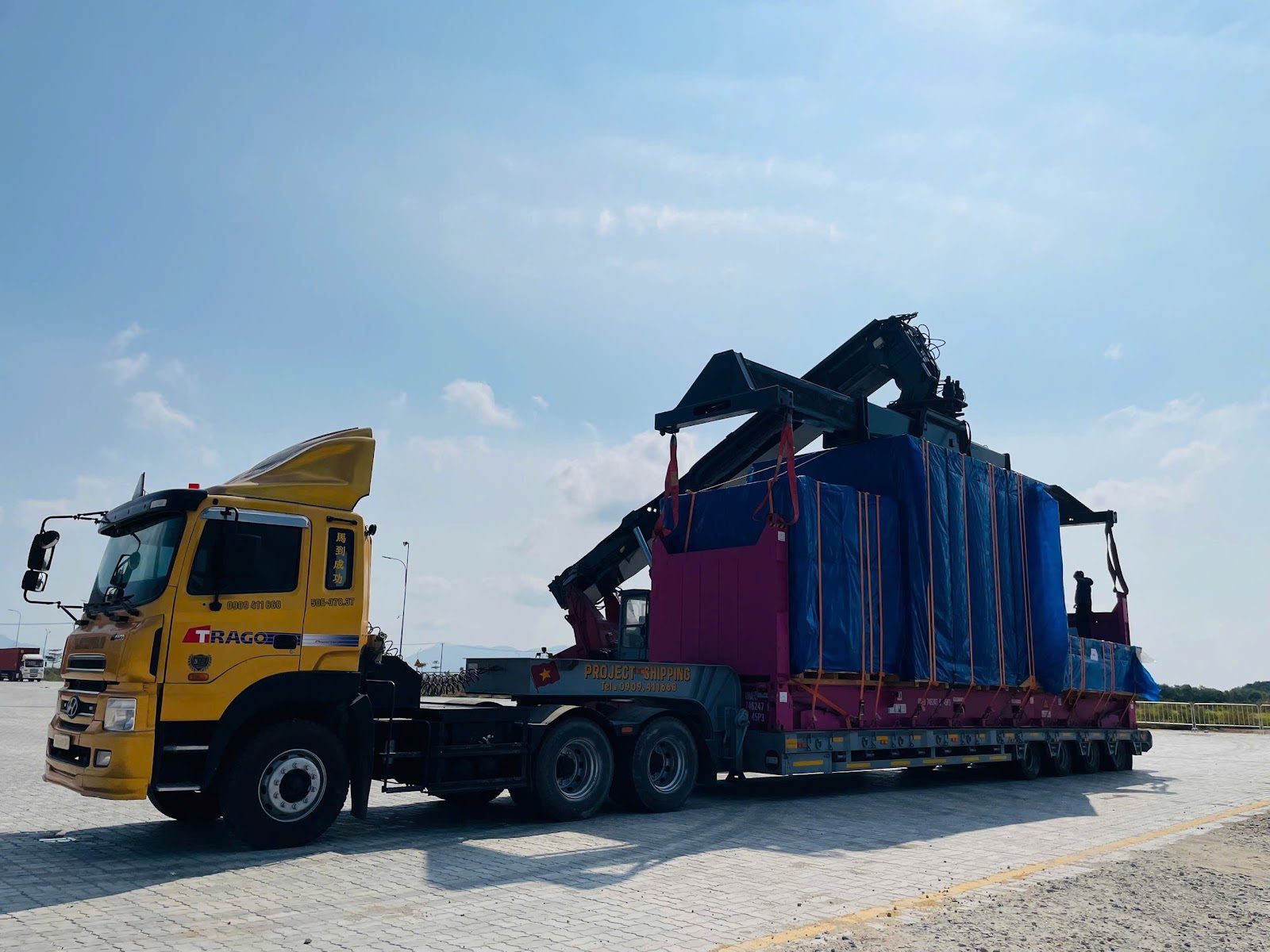
European equipment arrives in Vietnam for factories, power plants and process lines. The sea leg is booked from Europe. What happens after discharge is decided in Vietnam: which berth, which crane, which trailer, which papers.
This guide to shipping Europe to Vietnam is written from the Vietnam end. It shows our own files from Italy, public transit times with their sources, the cranes at Cai Mep, the EVFTA origin rule, and the sum that decides your truck permit.
These are the Europe-loaded imports on our current system. Both are LCL machinery from Italy, which is a small sample, so we show them as working examples, not as a volume claim. Customer names are removed.
| Cargo | Terms | Route | Vessel and dates |
|---|---|---|---|
| Coffee machines, 1,400 kg, LCL in a 40′ HC consol | EXW | Genoa (ITGOA) → Cat Lai, Ho Chi Minh City | YM Willpower 002E; sailed 22 April, ETA 16 June 2026 |
| Machinery, 1,952 kg, LCL in a 40′ HC consol | EXW, picked up near Florence | Scarperia (FI) → Genoa → Ho Chi Minh City | HMM Garam 022E; ETA 3 November 2026 |
Three lessons from these files apply to most plans for shipping Europe to Vietnam, including much heavier cargo:
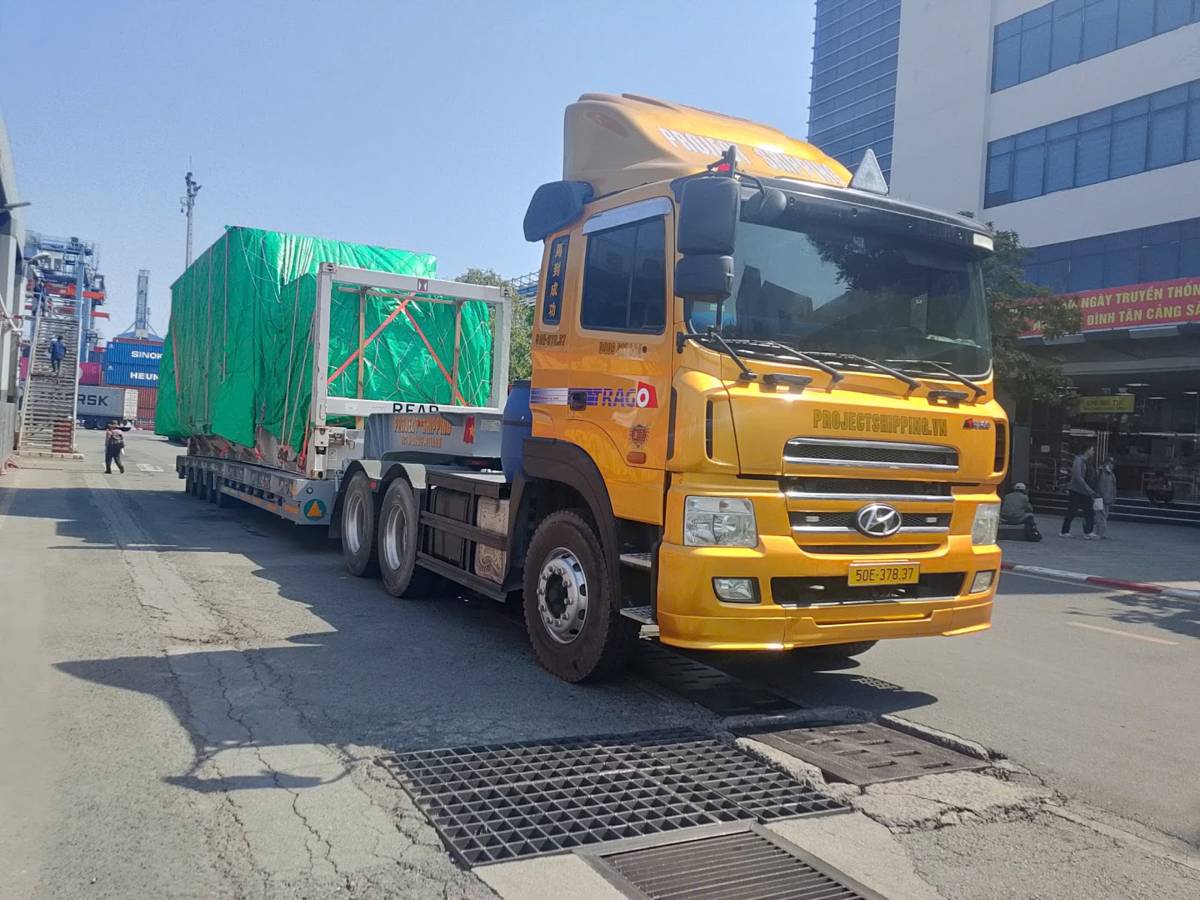
Plan on about 30 to 45 days port to port from North Europe to Ho Chi Minh City, and up to 60 days with transfers or a Cape routing. Published figures disagree, so here is each one with its source.
| Lane | Sea transit | Source |
|---|---|---|
| Genoa → Cat Lai (LCL) | 55 days, sailing to ETA | Our own file, April to June 2026 |
| Rotterdam → Ho Chi Minh City (FCL) | 30 to 45 days | FreightAmigo route guide |
| Rotterdam → Hai Phong (FCL) | 35 to 50 days | FreightAmigo route guide |
| Hamburg → Ho Chi Minh City (FCL) | 35 to 45 days | FreightAmigo route guide |
| Hamburg → Hai Phong (FCL) | 45 to 60 days | FreightAmigo route guide |
Container services that avoid the Red Sea and sail round the Cape add days to every figure above. Ask the carrier for the actual rotation and transfer port of your vessel, not a lane average.
Breakbulk and heavy lift vessels sail on their own schedules. A cargo that needs one should be fixed weeks ahead, and the Vietnam side must be ready before the vessel arrives. A new oversize road permit takes about 2 working days once documents are complete.
For a tender, send the transport drawing and we add a route note and a transport budget.
When shipping Europe to Vietnam, start from the largest piece as packed, with its lifting points and center of gravity. Then pick the equipment, and only then compare ocean rates.
| Cargo from Europe | Usual equipment | What decides it |
|---|---|---|
| Spare parts, small machines | LCL or 40′ HC FCL | Fits inside; weight per box and floor load |
| Presses, CNC machines, tall crates | 20′ or 40′ open top | Loaded from above; height over the box |
| Wide frames, skids, small tanks | 40′ flat rack | Width over the rack and rack payload |
| Mobile machinery, cranes on wheels | Ro-Ro | Can drive or be towed on and off |
| Transformers, columns, turbines, long modules | Breakbulk on a heavy lift or multipurpose vessel | Weight and length beyond any rack; crane reach at both ends |
Rack sizes and payloads are in our flat rack container dimensions guide. For wheeled units, see Ro-Ro shipping in Vietnam. If you are weighing several flat racks against one breakbulk lot, our container vs breakbulk comparison sets out the trade-offs.
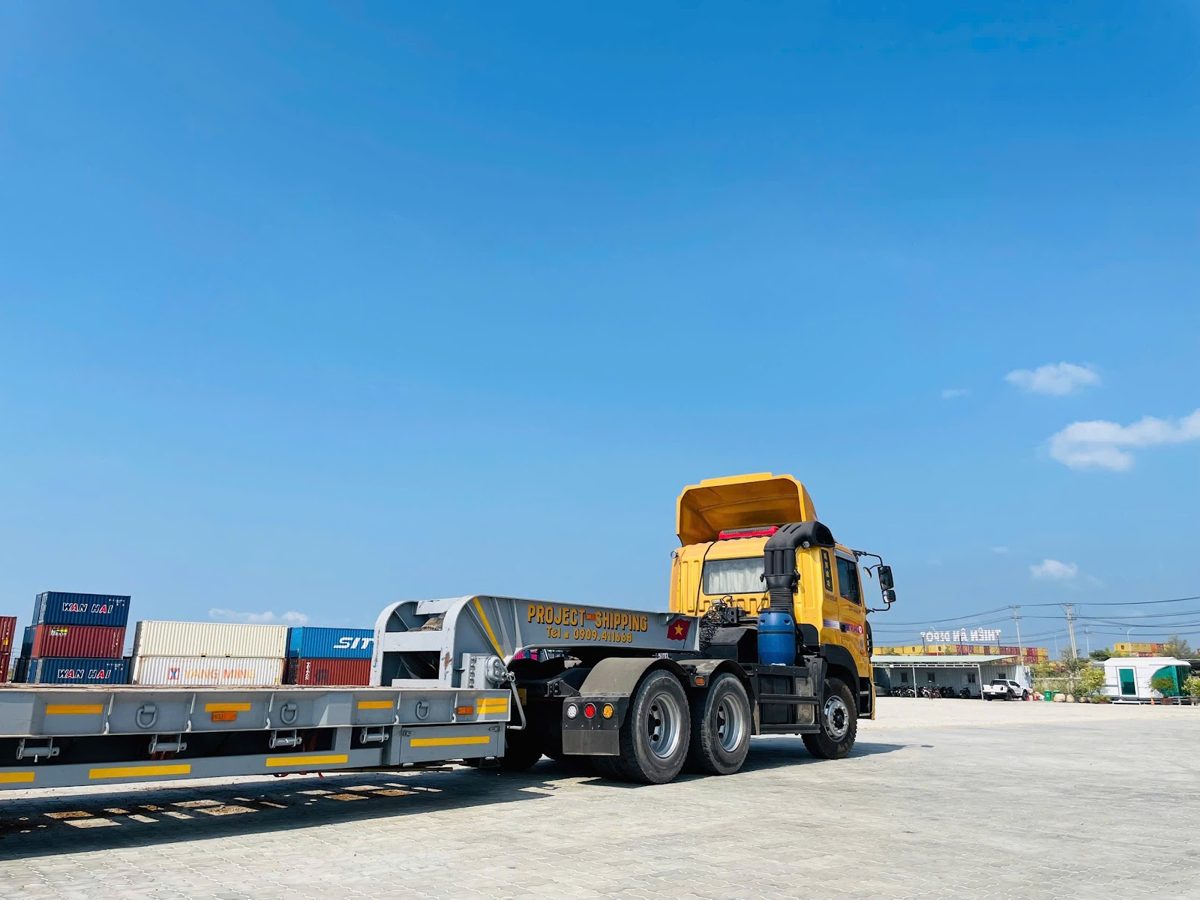
When shipping Europe to Vietnam with heavy breakbulk for the south, most cargo discharges in the Cai Mep–Thi Vai port area, a deep-water gateway south-east of Ho Chi Minh City. The terminal you discharge at decides the lift, so check its cranes before the vessel is fixed.
| Terminal | Published data | Fit for project cargo |
|---|---|---|
| PTSC Phu My | Main wharf 385 m, draft 14.5 m, vessels to 80,000 DWT; 2 × 40 t and 2 × 30 t Liebherr cranes | General and project cargo port; pieces over 40 t need ship’s gear or a mobile crane |
| TCIT | Draft at berth 16.8 m, vessels to 173,724 DWT | Mainline container services; flat racks and OOG units |
| TCTT | Draft at berth 16 m, vessels to 166,000 DWT | Container services; our flat rack pick-ups in this guide |
| SSIT, Gemalink, CMIT | Container terminals; ask us for current berth data | Flat racks and breakbulk packages on container services |
Terminal figures as published by the operators; details and sources on our Cai Mep port guide.
Pieces bound for northern Vietnam usually discharge at Hai Phong instead. River ports in Ho Chi Minh City take smaller vessels closer to the site. Our breakbulk and heavy lift in Vietnam page covers lifting plans and surveys in more depth.
For shipping Europe to Vietnam, pick the port from the site and the heaviest piece, not from the lowest ocean rate. A cheap discharge at the wrong end of the country can cost more on the road than it saved at sea.
| Vietnam port | Best for | Watch out for |
|---|---|---|
| Cai Mep–Thi Vai | Mainline services from North Europe and the Mediterranean, breakbulk and heavy lifts for the south | Longer road leg to sites around Ho Chi Minh City; check the terminal on the arrival notice |
| Cat Lai | LCL consols and flat racks for factories around Ho Chi Minh City and Dong Nai, as on our Genoa files | Night truck windows and a customs supervision step for flat racks and open tops |
| Tan Thuan, Ben Nghe, Lotus (Ho Chi Minh City) | Breakbulk on smaller vessels; our trucks made 245 breakbulk and OOG moves from these ports in 18 months | Crane booking, trailer access to the berth, discharge order |
| Hai Phong and Lach Huyen | Northern sites from Bac Ninh to Quang Ninh | Longer published transit from Europe than to the south |
Our Vietnam ports overview compares every main gateway for OOG cargo.
Goods of EU origin can enter Vietnam at the preferential EVFTA rate. The proof is a statement on origin written on the invoice by the exporter; above EUR 6,000 per consignment the exporter must be registered in the EU’s REX system. The EU does not issue an EUR.1 for exports to Vietnam.
We clear imports under our own customs agent license, recognized by Vietnam Customs (Decision 247/QĐ-TCHQ, 26 February 2025). Filing runs on VNACCS, and each declaration lands in the green, yellow or red channel.
For project cargo, shipping Europe to Vietnam usually goes wrong at customs in one of four places:
The document list and channel steps are in our customs clearance guide for machinery.
Under Circular 12/2025/TT-BXD, as amended by Circular 19/2026/TT-BXD, a load needs a road permit when the loaded vehicle exceeds any of these limits. The official text of Circular 12/2025/TT-BXD has the full rules.
| Limit | Oversize or overweight when |
|---|---|
| Length | Over 20.0 m |
| Width | Over 2.5 m |
| Height | Over 4.2 m (over 4.35 m for container vehicles) |
| Gross weight | Vehicle and cargo over 48 t |
These limits apply to the truck and the cargo together, and they are where many plans for shipping Europe to Vietnam slip. A crate 3.6 m tall on a lowbed deck of about 1.5 m stands over 5 m from the road. That height decides the permit, the route and the bridges you can pass under.
| Equipment | Capacity | Typical use |
|---|---|---|
| Own 6-axle lowbed | 62 t, 14.5 m deck, 3.2 m wide | Presses, tanks, long frames |
| Own 4-axle lowbeds (2 units) | 44 t each | Mid-size machines, wide flat rack cargo |
| Hydraulic modular trailers | Up to 270 t per 6-axle trailer, through partners | Transformers and heavy units beyond lowbed capacity |
| Mobile cranes and SPMT | Cranes 25–500 t, through partners | Lifting at port, transloading and site installation |
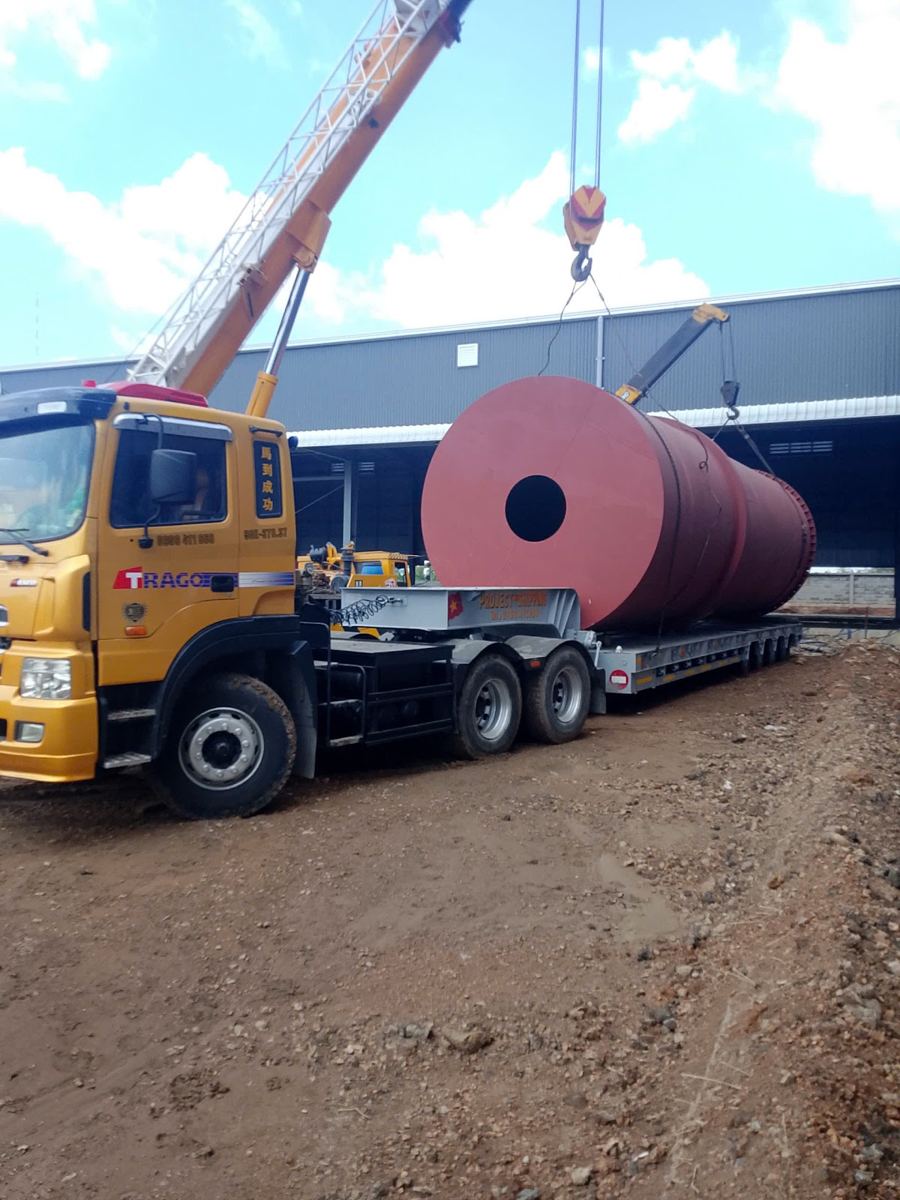
Our heaviest single piece so far is 135 t. Route surveys and police escorts are covered on our heavy haulage in Vietnam page, and transformer moves on power transformer transport in Vietnam.
Rates on this lane move with fuel, routing and vessel space, so we quote per enquiry and do not publish them. On heavy cargo, the Vietnam side can be a large share of the total cost of shipping Europe to Vietnam.
| Cost element | What moves the price |
|---|---|
| Origin pickup | EXW factory location, loading equipment, export clearance in Europe |
| Ocean freight | Container, flat rack or breakbulk; lost slots for OOG; routing and transfers |
| Destination local charges | THC, D/O, CIC, CFS for LCL, set by each carrier or consolidator |
| Port handling | Lifting, hook-to-truck or quay storage, customs supervision, storage after free time |
| Customs | Declaration, physical check, origin proof, used-machinery inspection |
| Trucking, permit and escort | Distance, size, weight, truck type, night windows, police escort |
| Duty and VAT | HS line, EVFTA statement on origin, project exemption |
The fastest way to a firm number is the measured size and weight of each piece, the port of loading, the Incoterm and the site address.
European forwarders usually own the shipper and the sea leg of shipping Europe to Vietnam. We act as their Vietnam desk for discharge, customs, trucking and unloading.
Partners can read our short page at projectshipping.vn/agents or download the company profile (PDF).
Lifting plans, surveys and heavy units into Vietnamese ports.
Breakbulk in Vietnam →Tony Tuan, CEO: WhatsApp +84 909 411 668 · ceo@projectshipping.vn
Nura Tu, Overseas Department: WhatsApp +84 906 770 650 · overseas@projectshipping.vn
Calling from Vietnam: 0909 411 668
Last updated: November 2026





© 2017 – 2026 Project Shipping. Design by Thiết kế Web DC