Insight · Road permits · Updated November 2026
Oversize permit Vietnam rules in one line: you need one once the loaded truck is wider than 2.5 m, taller than 4.2 m, longer than 20 m or heavier than 48 t gross. The permit itself takes about two working days. The survey and paperwork before it decide whether your cargo leaves the port this week or next month.
Written by our heavy-haul desk in Ho Chi Minh City. · Jump to the limits table
You need an oversize permit in Vietnam when the vehicle with its load passes any one of four limits. The rules look at the loaded truck, not the cargo alone. They are set by Circular 12/2025/TT-BXD of the Ministry of Construction, in force since 1 July 2025 and amended by Circular 19/2026/TT-BXD.
| Limit | Threshold (vehicle + cargo) | What it makes the move |
|---|---|---|
| Width | over 2.5 m | Oversize (out-of-gauge cargo) |
| Height from road to top point | over 4.2 m; over 4.35 m for container vehicles | Oversize |
| Length | over 20 m | Oversize |
| Gross combination weight | over 48 t | Overweight (super-heavy cargo) |
A standard 40′ flat rack is 2.438 m wide, so almost any over-width cargo on it pushes the truck past 2.5 m. Height is the same story: a 40′ rack sits about 1.9 m above the road on a container chassis, so cargo taller than about 2.4 m already needs a lower trailer or an oversize permit.
Gross weight means tractor, trailer, cargo, dunnage and lashing together. A 30 t machine plus tractor, trailer and flat rack can pass 48 t gross.
Some oversize permit Vietnam files cannot succeed no matter how complete they are. We check these points before we accept a booking, because a refused file costs more time than a slow one.
Two more rules are our own. We do not file for cargo that can reasonably be split to fit the limits, and we do not file with a guessed weight. If the shipper has no reliable figure, we weigh or ask for a certified weight first.
Under Circular 12/2025, the oversize permit Vietnam issues comes from a provincial Department of Construction. The permit is valid for the whole route stated on it, across provinces. The department can be the one where the applicant is registered, where the cargo starts, or where it ends.
In practice the transport operator applies, not the consignee or the forwarder. The permit names the tractor and trailer plates, so it belongs to the truck that will carry the cargo. That is why you cannot buy an oversize permit first and choose a trucker later.
| Party | Role in the oversize permit |
|---|---|
| Department of Construction | Checks the file, issues the permit, sends it to the traffic police on the route |
| Transport operator (us, on our own plates) | Prepares the file, the survey and the loading plan; signs the application |
| Overseas agent / shipper | Supplies dimensions, weight, drawing and pick-up and site details |
| Consignee | Confirms site access, unloading crane and receiving hours |
For a truck on foreign plates, for example a cross-border move from Cambodia or Laos, the file also needs the foreign registration and inspection papers, and a power of attorney to the Vietnamese party that files. Papers not in Vietnamese or bilingual must be translated. See our Vietnam–Cambodia transit page for those moves.
The oversize permit file is short on paper but long on measurements. Every number on it must match the cargo that turns up at the port.
We also attach the vehicle registration and inspection certificate, plus photos of the cargo and the loaded truck. They are not always required, but they save a round of questions from the department.
On paper, two working days. Once the file is complete, the department issues the permit within two working days, whether it is filed in person, by post or online through the National Public Service Portal. An online file is checked within one working day.
The real lead time is the work before the file is complete. These are the oversize permit Vietnam planning figures we use with agents:
| Type of move | Plan for | What drives it |
|---|---|---|
| Over-width flat rack, about 3.3 m, on our trucks | Usually no permit wait | Fits a permit we already hold for our plates; we confirm per move |
| Simple oversize load on a route we know | 3–5 working days | Standard file, existing survey |
| Oversize load that needs a field survey | 5–10 working days | Survey report, photos, measured control points |
| Super-heavy load, complex bridges | 10–20 working days | Axle load and bridge checks with the road authority |
| Reinforcement, several provinces, police, night moves | 15–30 working days | Coordination between provinces and traffic police |
Book the trucking when you book the vessel, not when it arrives. If the cargo lands before the permit, storage and demurrage at the port start counting. Our Cat Lai port guide lists the free time you get.
Add a drawing if you have one. We tell you whether the move fits our standing permit, needs a new one, or needs a survey, with an honest lead time.
For an oversize permit Vietnam file, a route survey is mandatory when the move passes the axle or gross limits, or when the loaded truck is taller or wider than the threshold for the road class it uses. It is also needed when the route crosses a published restricted bridge or point that the truck exceeds.
| Road class | Survey if height is over | Survey if width is over |
|---|---|---|
| Expressway | 4.75 m | 3.0 m (2.8 m on phased expressways) |
| Class I, II and lowland class III | 4.50 m | 3.0 m |
| Mountain class III | 4.50 m | 2.8 m |
| Lowland class IV | 4.35 m | 2.8 m |
| Other roads | 4.35 m | 2.5 m |
The last kilometres decide most surveys. Port roads and expressways are wide; the provincial road into an industrial park, the factory gate and the power lines across it are not.
A survey report can be reused. On a surveyed route it stays valid for 6 months for a vehicle of equal or smaller size. On expressways and class I–III lowland roads it stays valid for 9 months when the overall width is 3.3 m or less.
That rule is why a fleet that runs the same port-to-park routes every week can move over-width flat racks without a new survey, as long as the report is still valid and the route has not changed.
We survey anyway when the official rules do not require it: loads from 2.8 m wide, 4.3 m tall or 16 m long, and anything near 45 t gross. A map route is not a survey. More on what we measure is in our heavy haulage guide.
An oversize permit Vietnam issues is valid for up to 90 days, or up to 30 days when conditions apply. It never runs past the vehicle inspection certificate or the survey report it relies on.
| Case | Maximum validity |
|---|---|
| No mandatory lane, no escort, no warning vehicle, no reinforcement; route fully upgraded | 90 days from issue |
| Same, but the route is not fully upgraded | 30 days from issue |
| Mandatory lane, escort or warning vehicle, or reinforcement needed | 30 days from issue |
| Self-propelled tracked machines | Per trip, up to 30 days |
For an agent, the practical point is this: a permit on our plates for a common width can cover several moves within its validity. Wider or heavier loads, such as a 4 m tank, normally get their own permit and survey.
Agents often ask for a “police escort”. In Vietnam three different things hide behind that phrase, and the police never issue the oversize permit Vietnam requires.
| Task | Who handles it | When it applies |
|---|---|---|
| Oversize permit | Department of Construction issues it; the transport operator applies | Every move above the limits |
| Notice to traffic police | The issuing department sends the permit to the traffic police of each province on the route | Automatic with the permit |
| Escort vehicle | The transport operator’s pilot cars and crew | When the permit or the route requires it |
| Police coordination | The transport operator sends a written request to local traffic police | Wrong-way sections, weak bridges, toll plazas, night runs, very wide loads in town |
Our own escort rules sit on top of the permit. Over 2.8 m wide or 20 m long we run at least one warning car. Over 3.0 m wide or 4.35 m tall we run a lead and a rear car. In town, at roundabouts and at narrow gates we add spotters on foot.
For loads over 3.3 m wide or 4.5 m tall in built-up areas, and for super-heavy convoys over 48 t, we send the police request early. It is part of the lead time in the table above, not a surprise on the day.
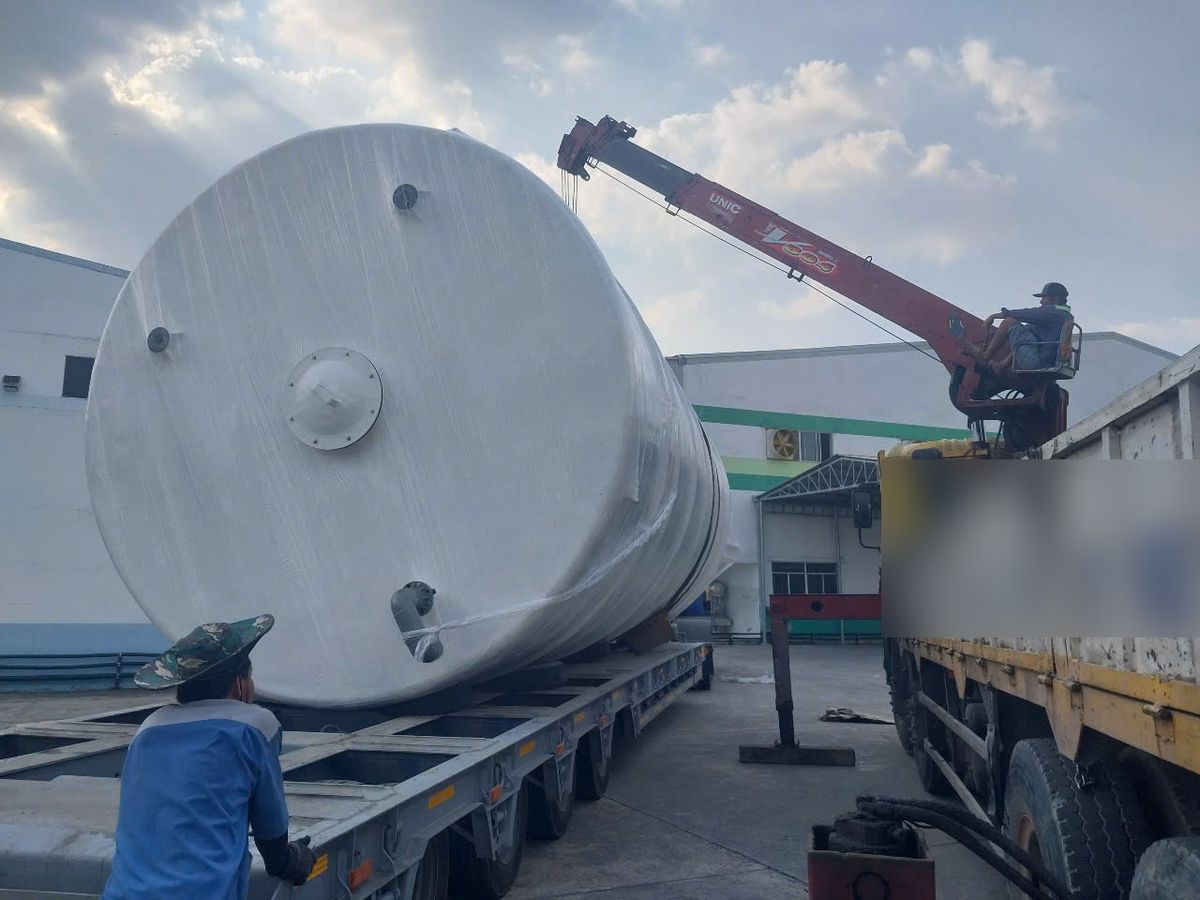
An oversize permit protects the truck only if every line matches the cargo on the trailer. We check every oversize permit Vietnam authorities issue to us line by line after loading, not when the paper arrives.
The case we use in driver training: a permit covering 29.6 t of cargo and 47.5 t gross. The truck was loaded with 44 t of cargo, about 61.9 t gross. The permit was valid and showed the right plates, but it did not protect the truck at the weigh station. Right plate, wrong weight, no permit.
If the cargo arrives bigger than the drawing, we stop and fix the oversize permit before the truck moves. That costs a day or two. Moving on a permit that does not match costs the fine, the hold and often the delivery date.
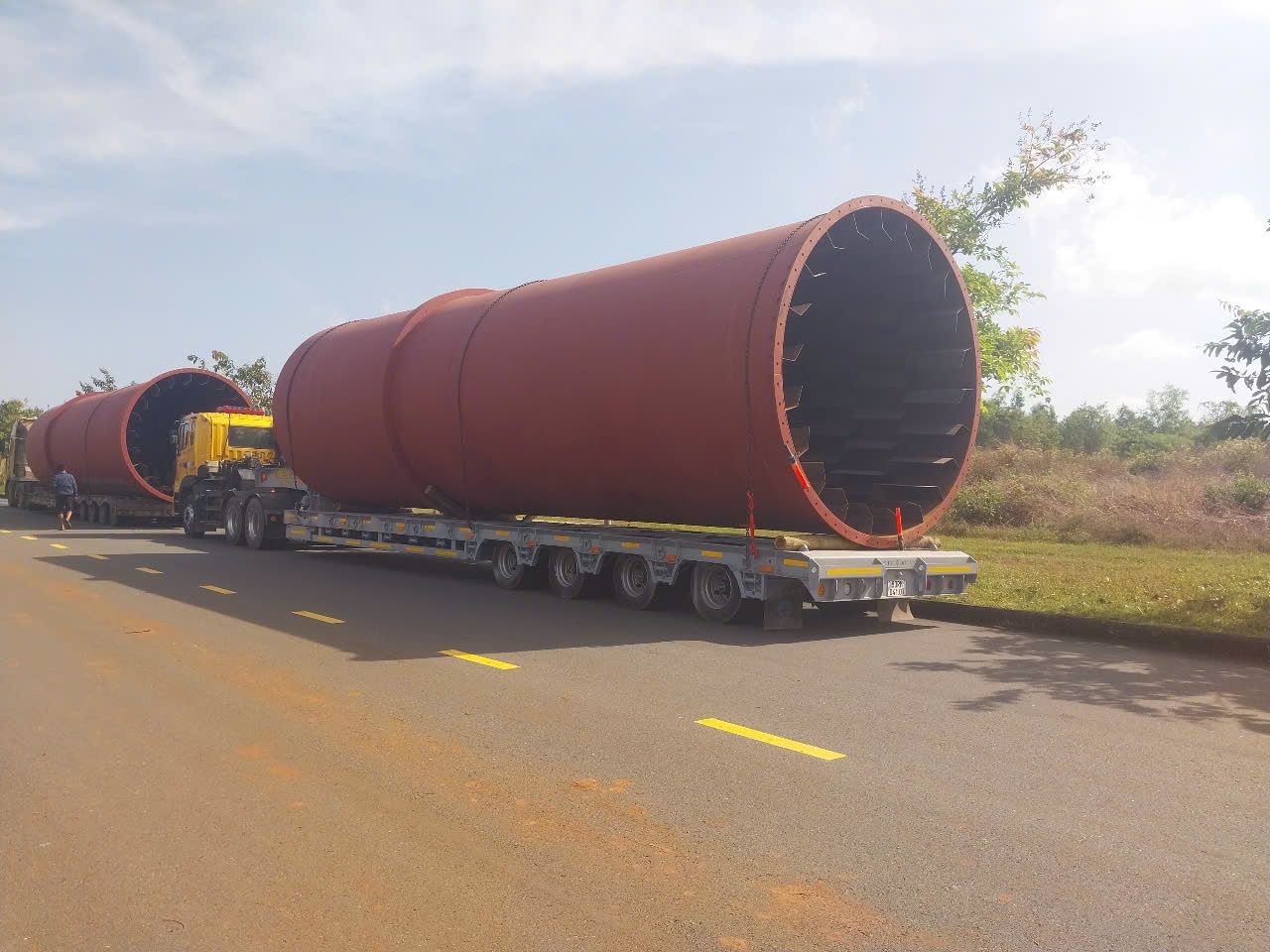
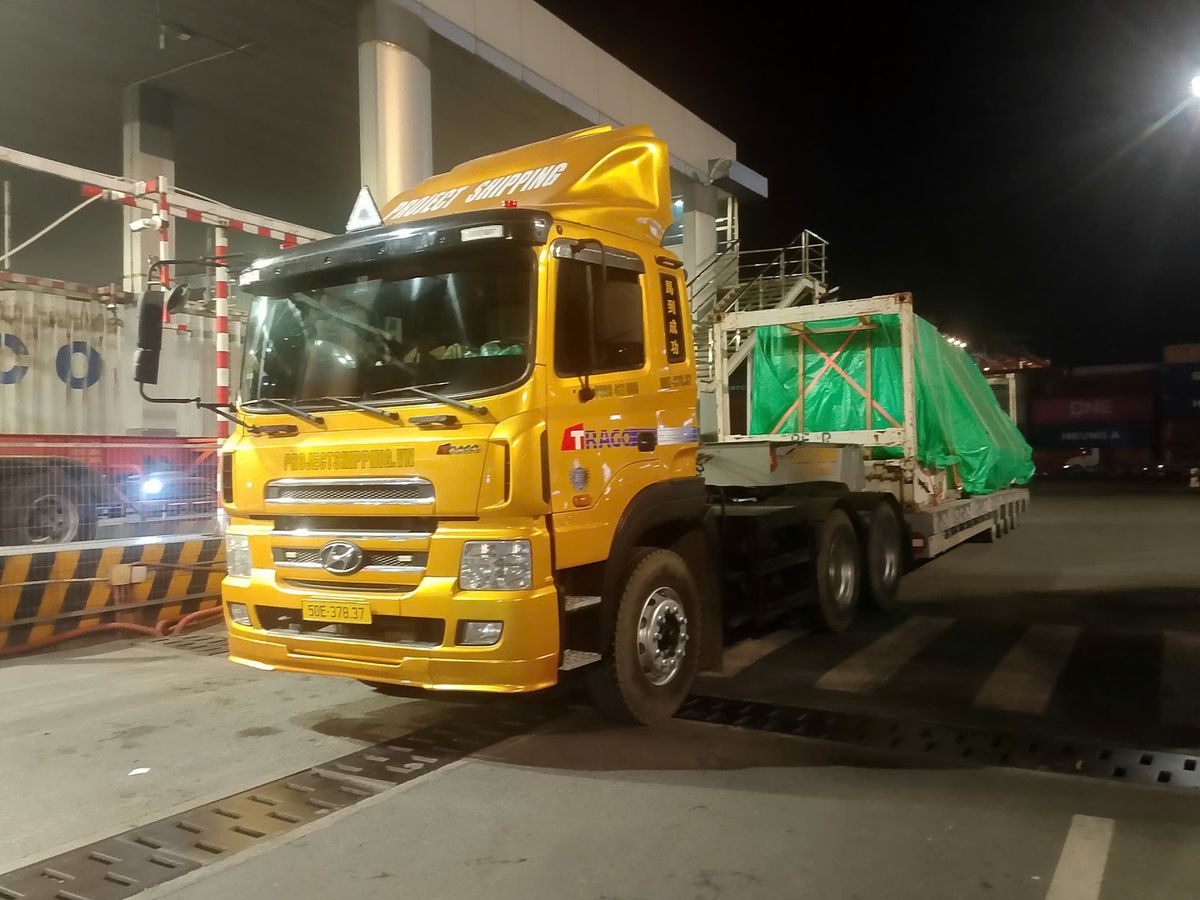
Most over-width flat racks we move fit the oversize permit Vietnam authorities already issued for our plates. Bigger pieces get their own oversize permit and survey. Three moves from 2026 show the difference.
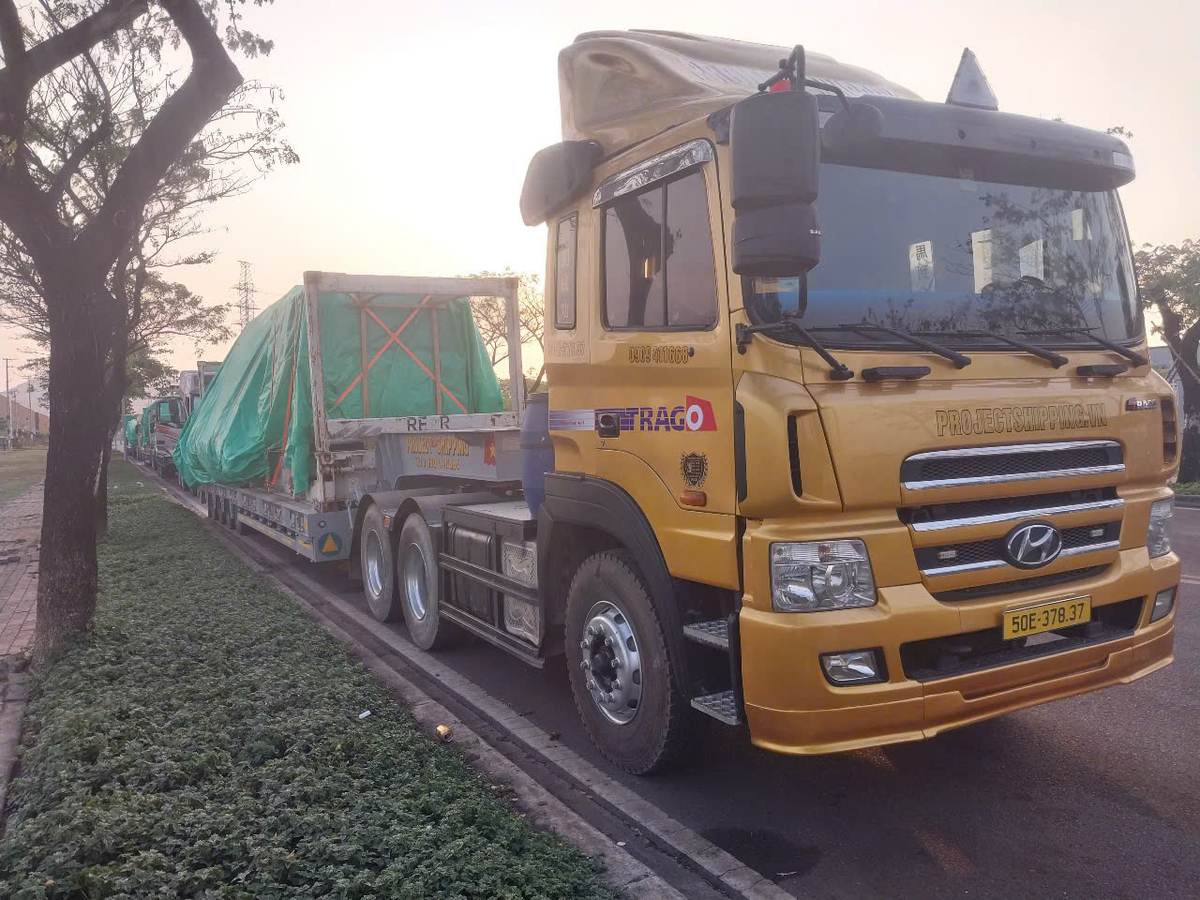
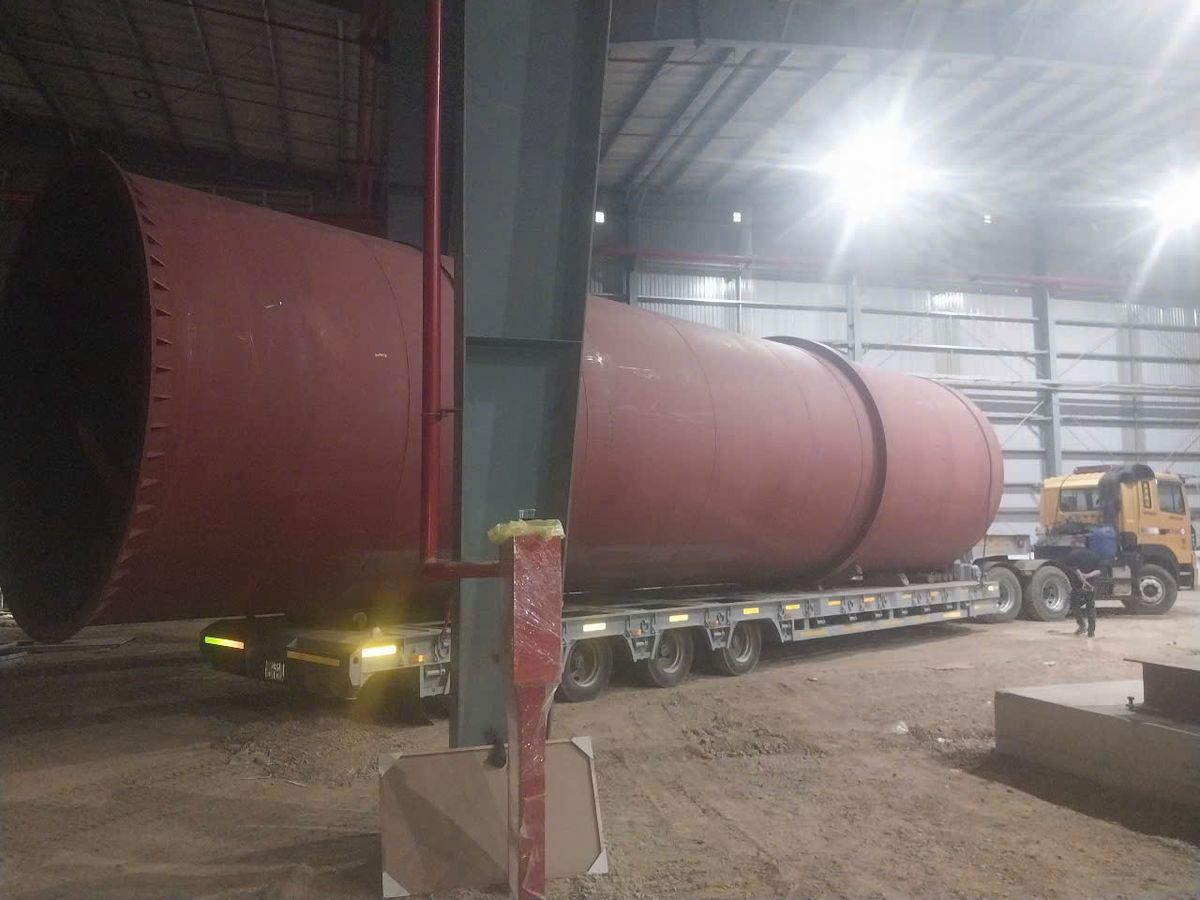
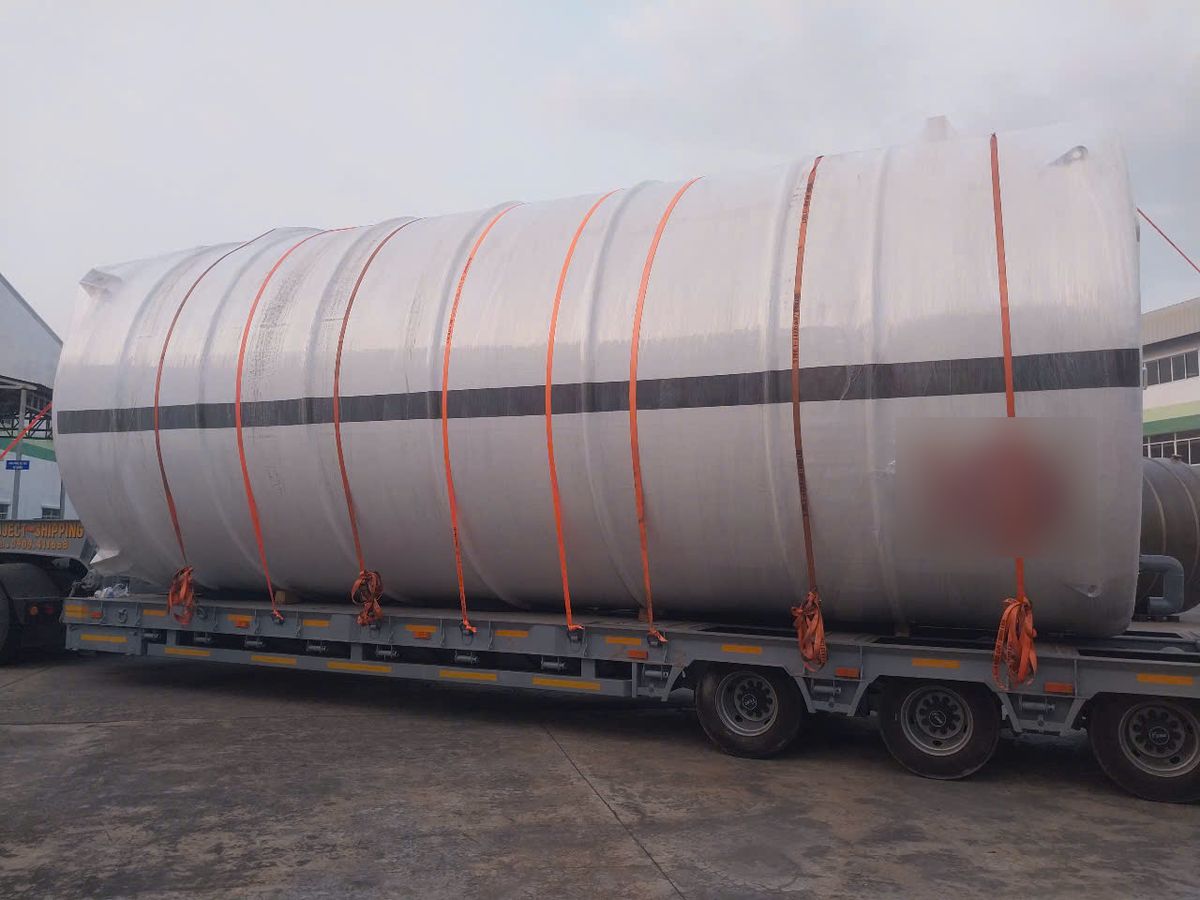
The third move was the 4 m process tank pictured above, Dai Dang → Tan Dong Hiep in March 2026. Same logic as the drums: its own permit, a checked route and escort cars.
The common point for an agent: the width of the cargo decides the lead time more than the distance. Send the width first. For cargo that goes from vessel to site in one plan, see our project cargo page or the power transformer transport page for the heaviest units.
The oversize permit itself is not where the money goes. The cost sits in the work around it, so we price each oversize permit Vietnam move from the dimensions.
| Factor | Why it matters |
|---|---|
| Width band | About 3.3 m fits the standing permit on our plates; wider loads are checked case by case and usually need a new permit, a survey and escort cars |
| Gross weight | Over 48 t brings bridge checks, more axles and a longer lead time |
| Route and last mile | Narrow provincial roads, power lines and factory gates drive survey work |
| Time windows | City truck curfews and night moves add crew hours and police coordination |
| Waiting time | Cargo at the port before the permit is ready means storage and demurrage |
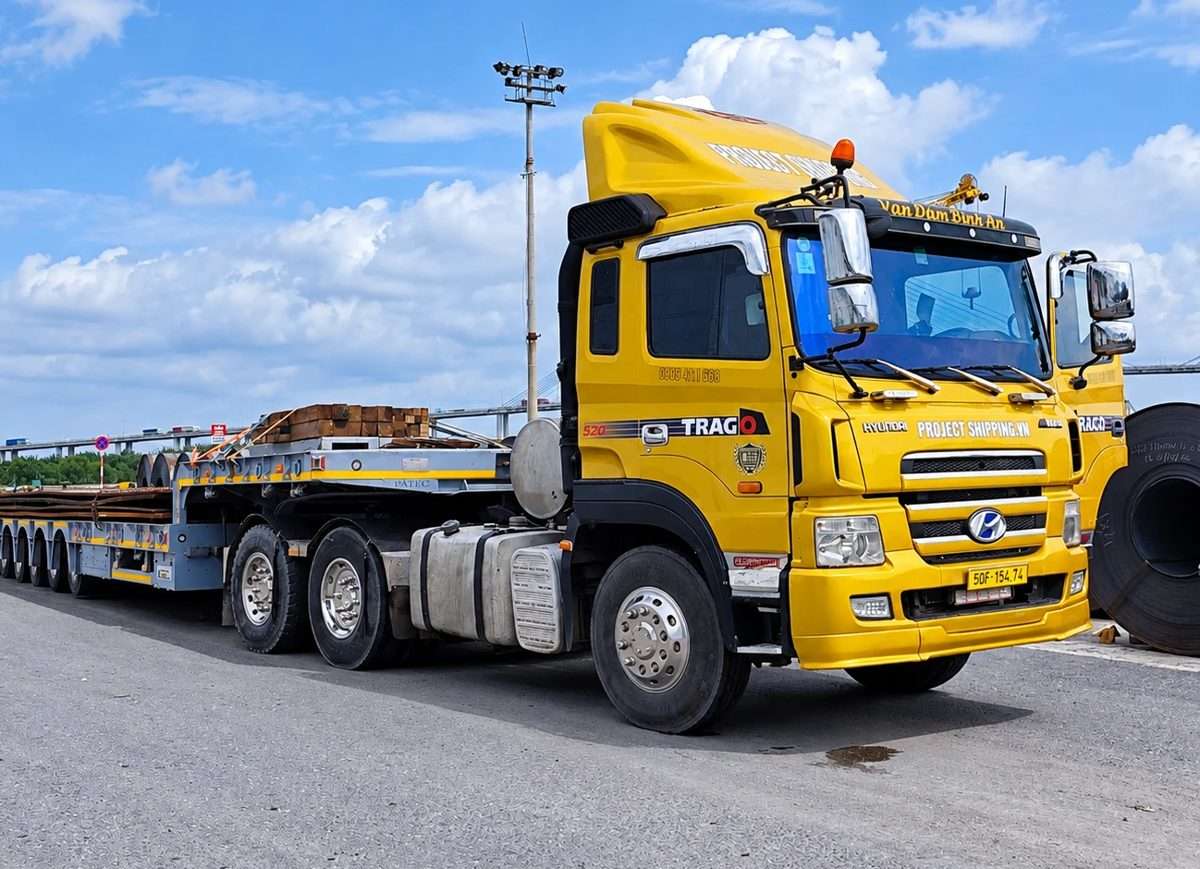
Our own fleet covers most moves: a 6-axle lowbed with a 14.5 m deck, 3.2 m wide, rated up to 62 t, and two 4-axle lowbeds rated up to 44 t. Hydraulic modular trailers, SPMT and mobile cranes of 25–500 t come from long-term partners, and we say so in the quote.
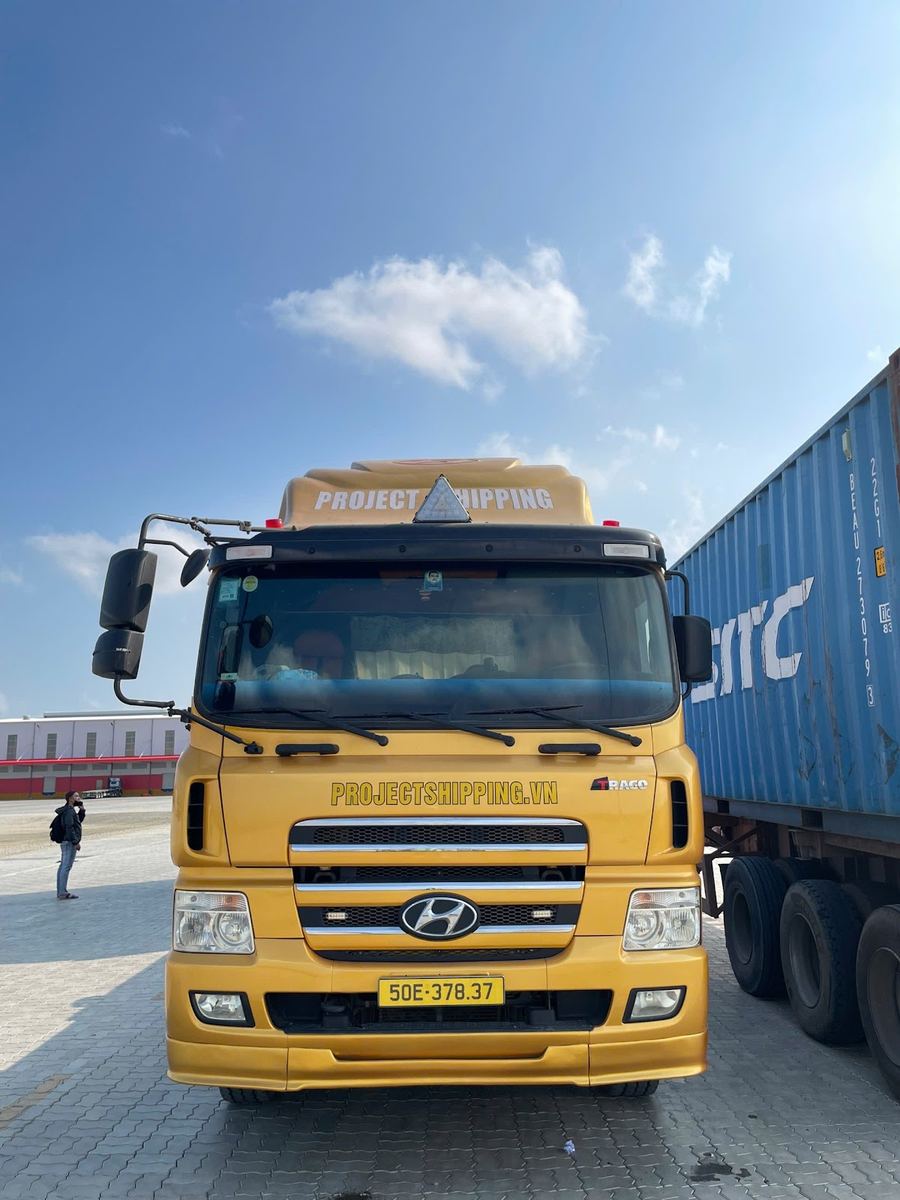
Our 6-axle 62 t and 4-axle 44 t lowbeds, cargo height under 4.2 m, loading rules and how rates are built.
Lowbed guide →Our own lowbed fleet, route surveys and escort from port to site.
Heavy haulage →Flat rack and open top handling through Cat Lai, Cai Mep and Hai Phong.
OOG service →Send the width, height and weight. We reply with the permit class and lead time within 2 working hours. We never contact your customer.
Tony Tuan, CEO: WhatsApp +84 909 411 668 · ceo@projectshipping.vn
Nura Tu, Overseas Department: WhatsApp +84 906 770 650 · overseas@projectshipping.vn
Network partners: agent page · Calling from Vietnam: 0909 411 668
Last updated: November 2026 · By Tony Tuan, CEO, Project Shipping






© 2017 – 2026 Project Shipping. Design by Thiết kế Web DC