Guide · Import customs · Machinery · Project cargo
A machine sitting on a flat rack at Cat Lai costs you storage every day it waits for a customs release. Customs clearance Vietnam for machinery is electronic and fast when the papers agree. It slows down when the HS code, the description or the used-machinery file is weak.
Written by our customs desk in Ho Chi Minh City. · Skip to the document checklist
Short answer: to import machinery or project cargo into Vietnam, the importer of record (or its customs agent) files an electronic declaration in VNACCS, gets a green, yellow or red channel, pays import duty and VAT, and collects the cargo. For used machines and oversized units, extra papers and an inspection plan decide how many days it takes.
This customs clearance Vietnam guide is for freight agents, EPC contractors and factory owners shipping equipment into Vietnam. It follows the order our customs desk works a file. Below are the documents customs reads first, what each channel costs in time, and the five mistakes that keep machines at the port longest.
The declaration is filed in the name of the Vietnamese importer of record, usually the factory, the EPC contractor’s local entity or the project owner. A foreign company without a Vietnamese entity cannot be the importer. The file is signed with a digital signature, either the importer’s or the customs agent’s.
Customs will not release a machine until these papers agree with each other. Weight on the B/L must match the packing list, and the description must match the catalogue.
| Document | Needed for | What we check before filing |
|---|---|---|
| Commercial invoice | All imports | Model, quantity, unit price, Incoterm, currency |
| Packing list | All imports | Per-piece L×W×H and weight, gross and net weight, number of packages |
| Bill of lading | All imports | Consignee name exactly as the importer, weight and package count |
| Sales contract | Value checks | Price and payment terms, used if customs questions the declared value |
| Catalogue or technical drawing | HS code defence | Function, capacity, power, manufacturer and model on the nameplate |
| Certificate of origin (C/O) | Lower FTA duty | Form, HS code, invoice number and B/L date all matching |
| Used-machinery file | Second-hand units | Year of manufacture, inspection certificate, proof of use for production |
| Specialized inspection registration | Some HS codes | Filed on the National Single Window before the vessel arrives |
| Exemption list or temporary import papers | Project imports | List registered and quantities left, or re-export commitment |
Send us drafts before loading, not originals after arrival. A wrong weight on the B/L is a 10-minute fix at origin and a correction request with fees in Vietnam.
This is the customs clearance Vietnam sequence our desk follows on every import file. Steps 1 to 3 happen before the vessel berths.
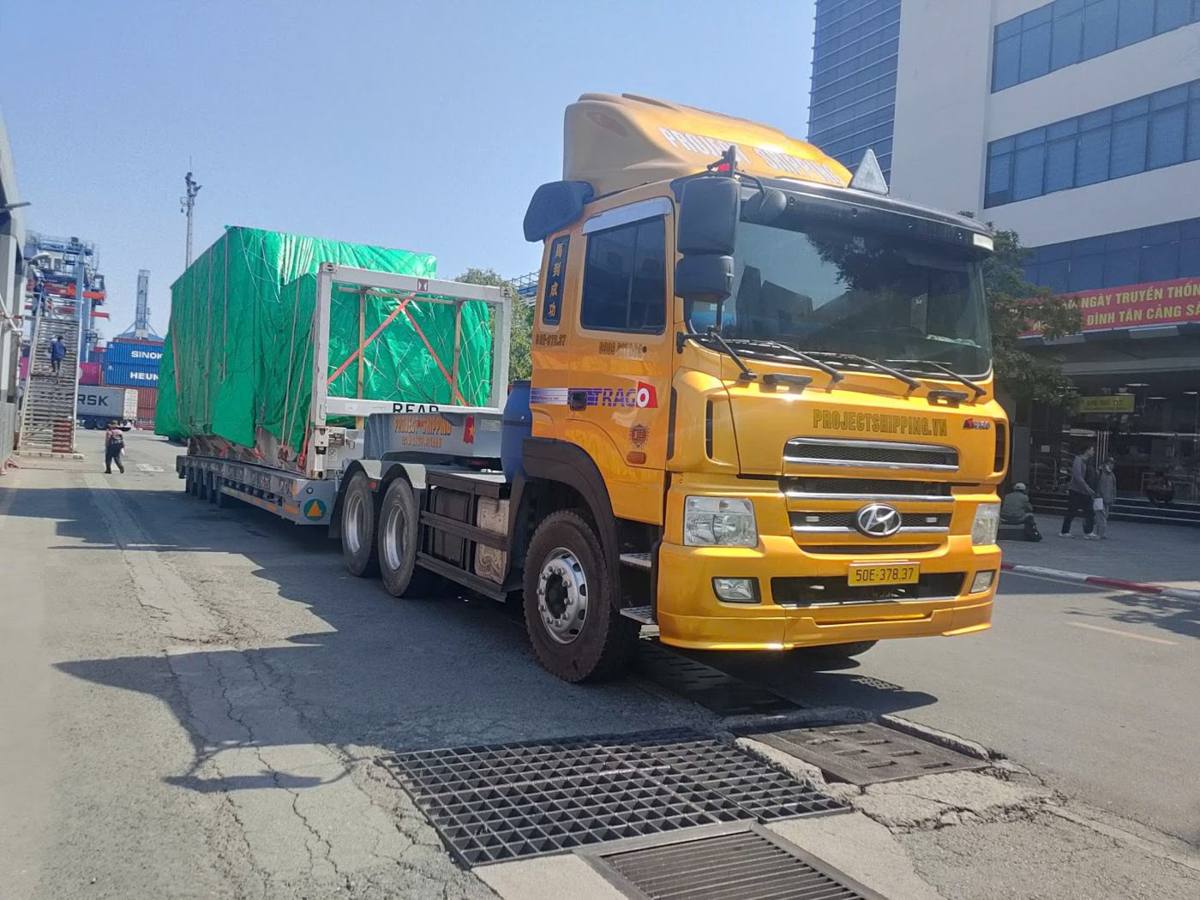
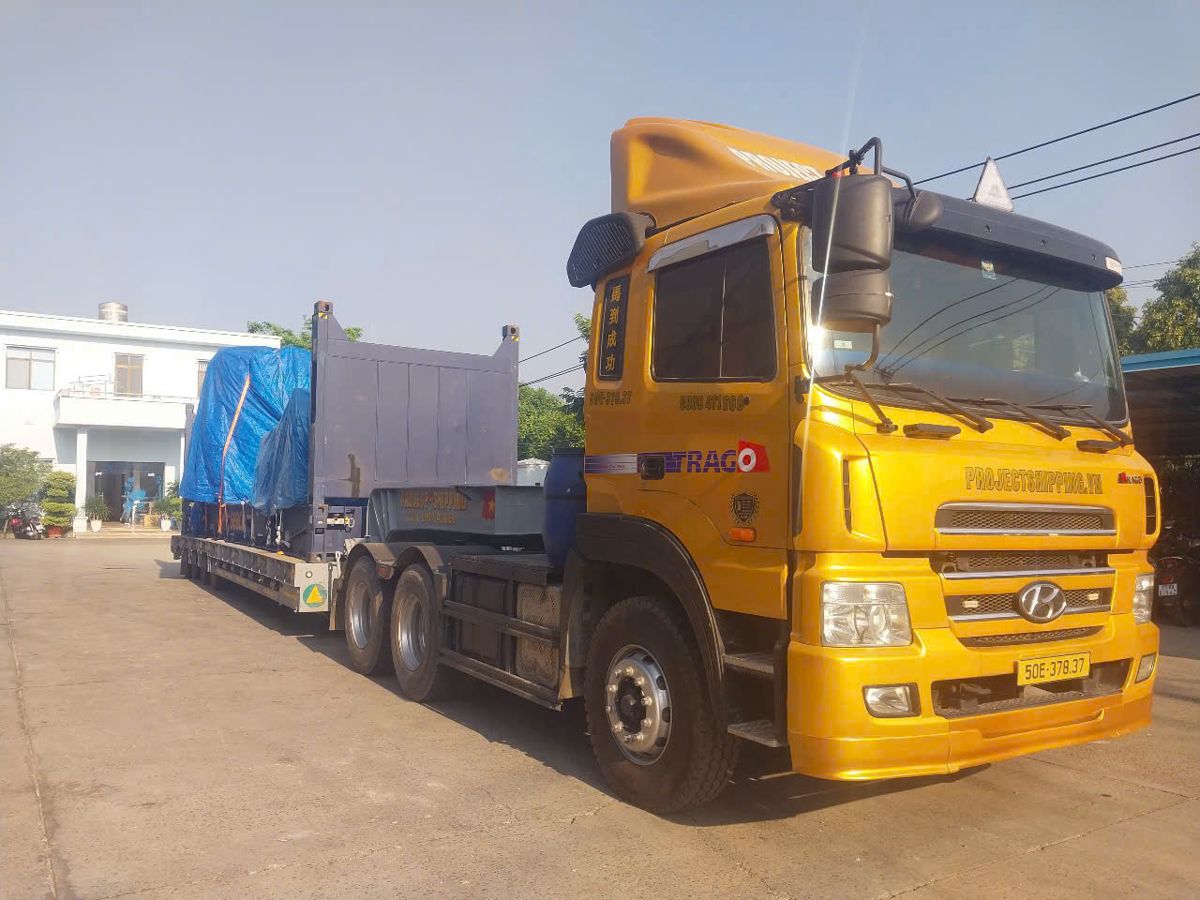
Step 7 is where customs and trucking meet. If the release comes at 4 p.m. and no lowbed is booked, the cargo waits another day. That is why most of our customers buy clearance and OOG trucking as one job.
VNACCS assigns every declaration a channel based on risk: HS code, value, origin and the importer’s record. After a reduced-inspection program, about 70% of declarations nationwide went green, according to VnEconomy (January 2026).
| Channel | What customs checks | What changes for machinery and OOG |
|---|---|---|
| Green | Nothing before release | Release once duty is paid. Customs may still ask for documents after clearance. |
| Yellow | Documents only | Catalogue and contract are reviewed. A clear description saves a second round of questions. |
| Red | Documents and the cargo | An officer examines the unit at the terminal. Crates may need opening and heavy pieces may need a crane or forklift. |
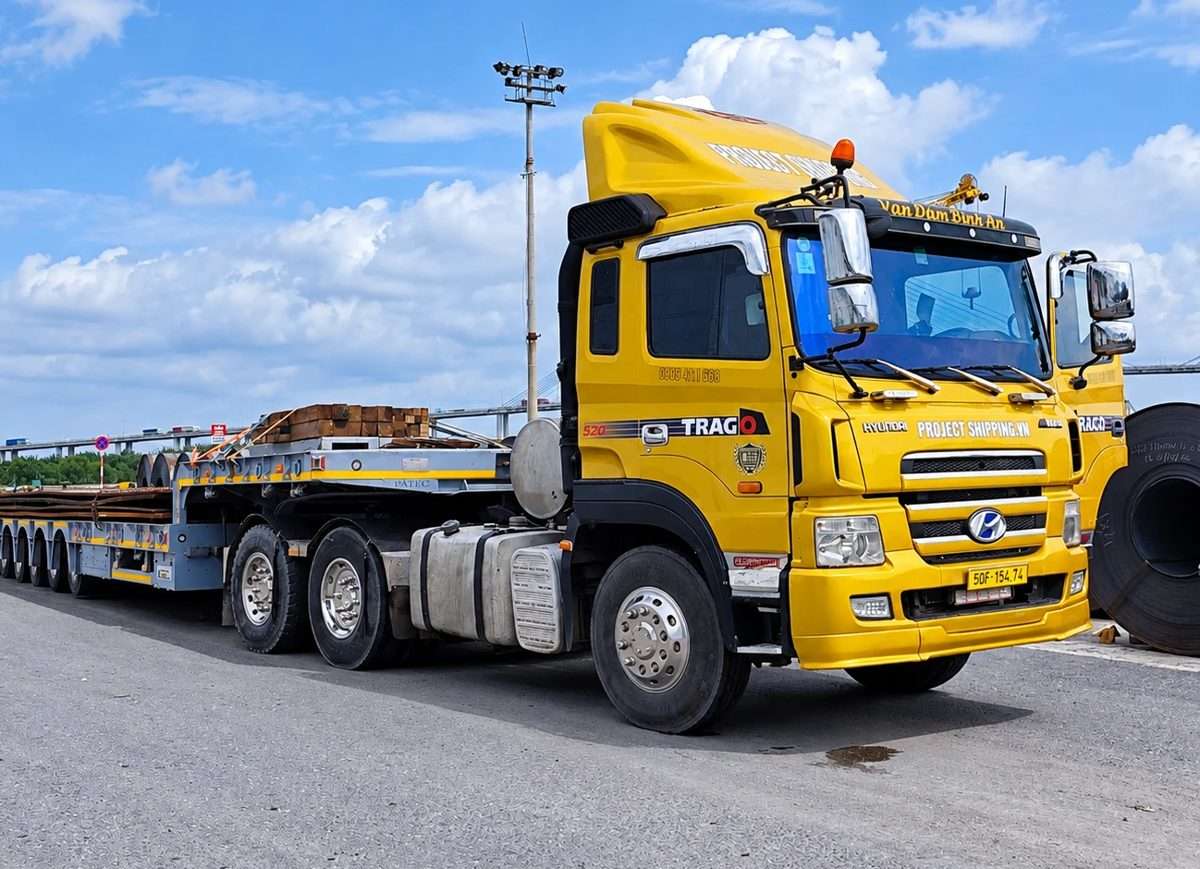
For a flat rack or open top, a red channel in customs clearance Vietnam means more than paperwork. The seal is cut, covers come off and the nameplate must be readable. We book the inspection slot and the lifting gear, then photograph the unit for the importer.
At Cat Lai, every flat rack and open top we clear also needs customs supervision at the terminal, both in-gauge and out-of-gauge units. We quote it as a separate line so it never appears as a surprise. Terminal details are in our Cat Lai port guide.
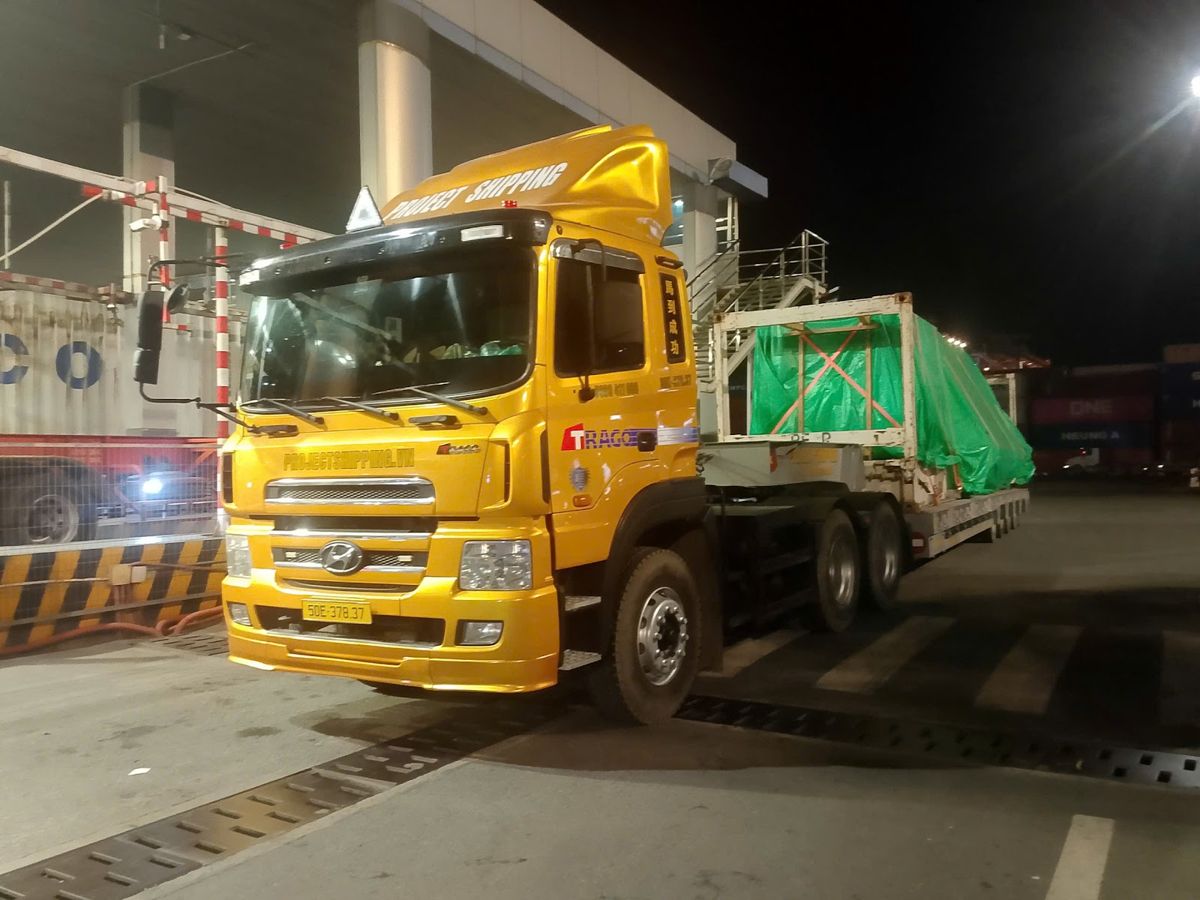
For oversized units, add L×W×H and weight per piece and the delivery site.
Second-hand machines are where customs clearance Vietnam files fail most often. The rules cover used machinery, equipment and production lines under HS chapters 84 and 85, and they were amended again in 2026. We check the current text for every shipment rather than relying on last year’s file.
Our advice: get the year of manufacture from the nameplate photo before the machine is crated. If the plate is missing or the age is close to the limit, decide at origin. Shipping first and arguing later is the expensive option.
Two procedures matter most for project cargo. Both have to be set up before the first shipment arrives.
| Procedure | Typical use | What to prepare |
|---|---|---|
| Duty exemption for fixed assets | Machinery and equipment for an investment project that qualifies for incentives | Exemption list registered with customs before the first import; each declaration deducts from it |
| Temporary import, re-export | Cranes, piling rigs and tools used on a project for a fixed period (VNACCS type code G12) | Contract, re-export plan and deadline; the same unit must leave again |
Exemption covers import duty. Import VAT is a separate question, so confirm it on the investment certificate before you budget. Shipments split over many vessels need one person tracking the quantities left on the list, or the last lots arrive with nothing left to deduct.
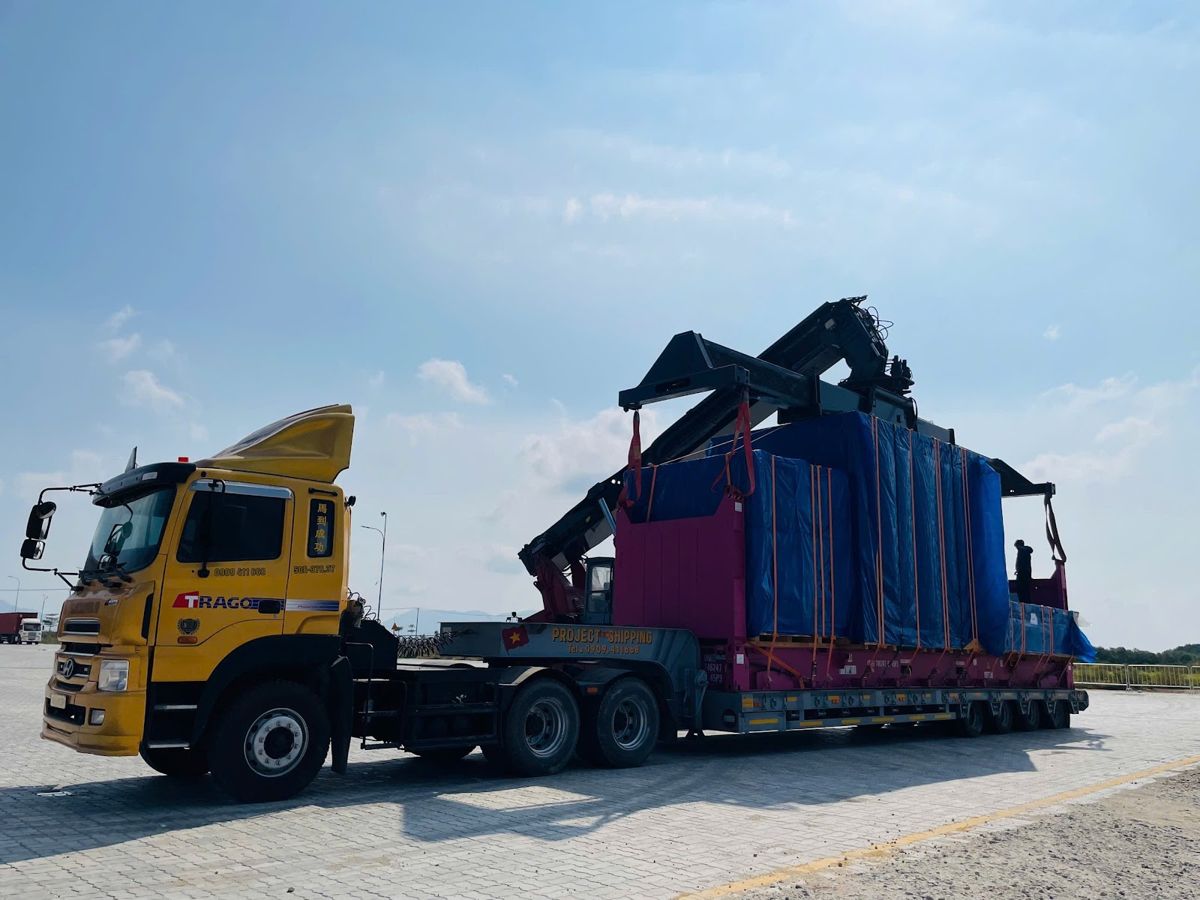
When documents are complete and duty money is ready, the declaration itself is fast. Most of the time goes into what happens before filing and after the channel result.
| Situation | Plan for |
|---|---|
| Green channel, duty paid | Release the same working day |
| Yellow channel, file complete | Same or next working day |
| Red channel, standard crate | One extra working day for the inspection |
| Red channel, OOG unit needing a crane | One to two extra working days, depending on lifting gear and terminal slots |
| Specialized inspection not registered before arrival | Several days, with storage running |
In the north, Hai Phong area declarations have been processed under a centralized clearance model since 1 June 2026, as KPMG summarizes. Physical inspections still take place at the port.
Our customs service fee starts at VND 1,200,000 per container for green and yellow channel declarations. These lines are quoted separately, so you can see the real total:
Line local charges such as D/O, THC and CIC differ by carrier. Our Vietnam local charges table lists them by shipping line, so your landed-cost estimate starts from real numbers.
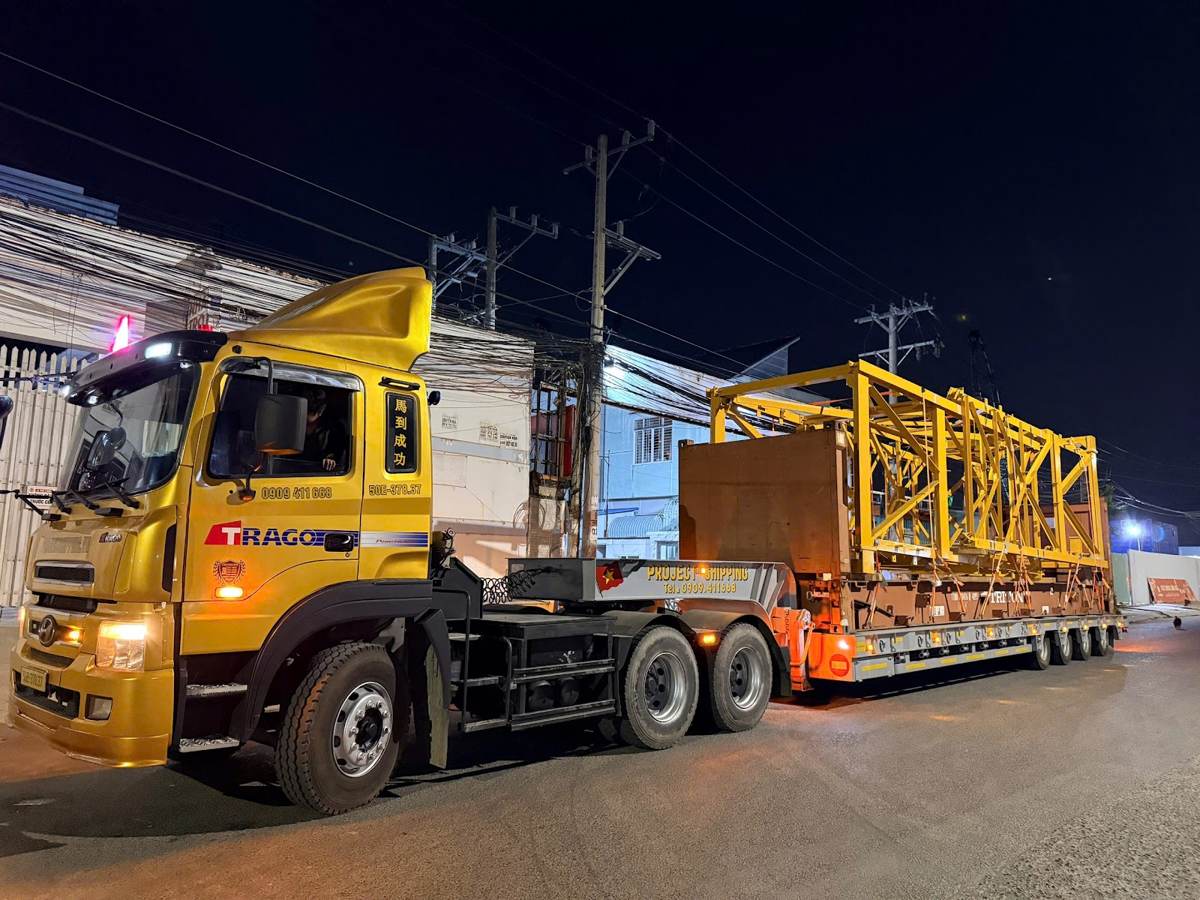
In a review of 160 recent shipments where we handled customs, 153 also moved on our trucks and 151 were flat rack, open top or other OOG cargo. Customs clearance Vietnam and heavy haulage are one job for us, planned together.
Shipping the other way? Our export from Vietnam guide covers export customs, C/O forms and cut-offs.
Tony Tuan, CEO: WhatsApp +84 909 411 668 · ceo@projectshipping.vn
Nura Tu, Overseas Department: WhatsApp +84 906 770 650 · overseas@projectshipping.vn
Calling from Vietnam: 0909 411 668
Last updated: October 2026 · Tony Tuan, CEO, Project Shipping





© 2017 – 2026 Project Shipping. Design by Thiết kế Web DC